- Plants
- ›Vascular Plants
- ›flowering plants
- ›monocots
- ›grasses, sedges, cattails, and allies
- ›grasses
- ›Pooideae
- ›melic grasses, manna grasses, and relatives
- ›Melica
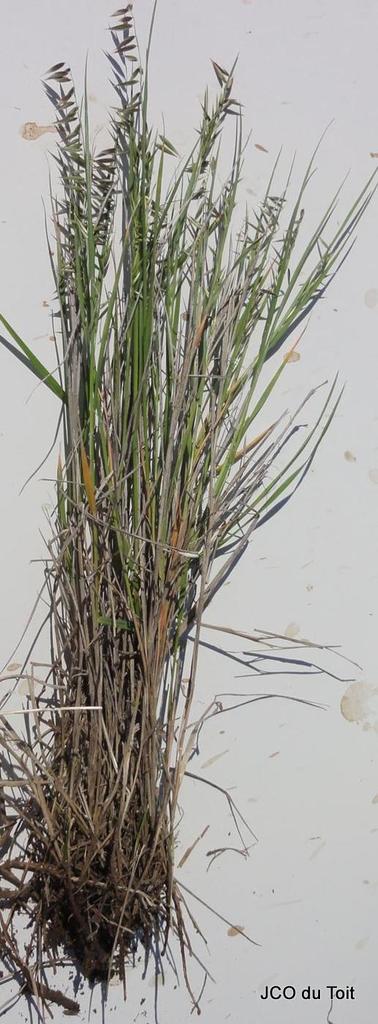
Staggers Grass
Melica decumbens
Danthonia decumbens (formerly Sieglingia decumbens) is a species of grass commonly known as the heath grass, heath-grass, or staggers grass It is a tussock grass native to Europe and adjacent parts of Asia and North Africa. It may also be native to Newfoundland and Nova Scotia.
From the article Danthonia decumbens on Wikipedia (CC BY-SA), quoted section by section
Description
Danthonia decumbens is a perennial plant with a decumbent habit; it lies on the ground with the tips turned upward. It has narrow, bright green leaves taper to a sharp point and are rather hairy. A long upper leaf sheath clasps the delicate stem. The stem is 15–30 centimetres (5.9–11.8 in) high and slightly bent at the base, smooth with 1 to 3 nodes. The ligule consists of a ring of hairs, as in the purple moor grass, Molinia caerulea, except that in this plant each end has a tuft of longer hairs. The panicle consists of 4 or 5 large erect glaucous silvery green or purplish awnless spikelets. These are arranged alternately on the upper part of the stem. The bunchgrass flowers in the summer months.
What it does
The plant is found on acid pastures and heathland, on sandy or peat soils, which are also often damp. The grass, having no domestic forage value, is not grown agriculturally.
Wikipedia: “Ecology”
Where it lives
Recorded sightings
—
geo-referenced records in GBIF, from museums, herbaria and field observers.
Drag the globe to turn it. Dots are where records exist, not a range map; darker means more records.
In the stacks
Searching the stacks…
Every page naming Melica decumbens in the Biodiversity Heritage Library →
This page is assembled live from iNaturalist, GBIF, Wikipedia, the Source Library and the Internet Archive. It is not yet part of the hand-edited codex. iNaturalist taxon 589753.