- Plants
- ›Vascular Plants
- ›flowering plants
- ›Dicots
- ›saxifrages, stonecrops, and allies
- ›stonecrop family
- ›Crassuloideae
- ›Crassula
- ›Disporocarpa
- ›Helophytum
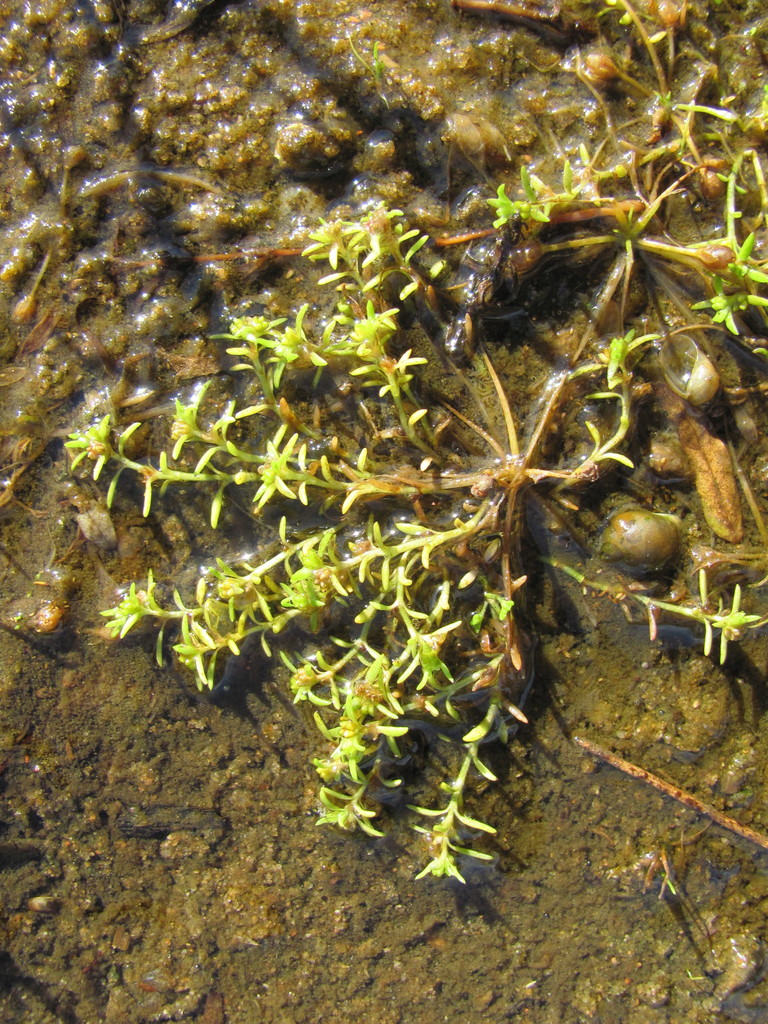
Aquatic pygmyweed
Crassula aquatica
Crassula aquatica is a succulent plant known by the common names water pygmyweed, common pygmyweed and just pigmyweed. It is an annual plant of salt marshes, vernal pools, wetlands, and other fresh to brackish water bodies. It is at least partially aquatic, living in areas which are submersed much of the time. It also lives along muddy banks and in tidally-active areas of estuaries.
From the article Crassula aquatica on Wikipedia (CC BY-SA), quoted section by section
Description
Crassula aquatica is a small plant forming thin mats or small patches on mud and sand, and growing more erect when exposed to open air for longer periods. The flesh of the plant is greenish-yellow to bright red or purplish. The tiny fleshy pointed leaves are only a few millimeters long. A flower grows on a short stalk from the intersection of each oppositely-arranged pair of leaves. The flower is only about two millimeters long and wide. The fruit is a minute follicle containing several seeds.
Range & habitat
This plant is widespread across North America and Eurasia. It is an annual plant of salt marshes, vernal pools, wetlands, and other fresh to brackish water bodies. It is at least partially aquatic, living in areas which are submersed much of the time. It also lives along muddy banks and in tidally-active areas of estuaries.
Wikipedia: “Distribution and habitat”
Where it lives
Recorded sightings
—
geo-referenced records in GBIF, from museums, herbaria and field observers.
Drag the globe to turn it. Dots are where records exist, not a range map; darker means more records.
In the stacks
Searching the stacks…
Every page naming Crassula aquatica in the Biodiversity Heritage Library →
This page is assembled live from iNaturalist, GBIF, Wikipedia, the Source Library and the Internet Archive. It is not yet part of the hand-edited codex. iNaturalist taxon 58135.