- Plants
- ›Vascular Plants
- ›flowering plants
- ›Dicots
- ›Roses, Elms, Figs, and Allies
- ›rose family
- ›Amygdaloideae
- ›Maleae
- ›Pyracantha
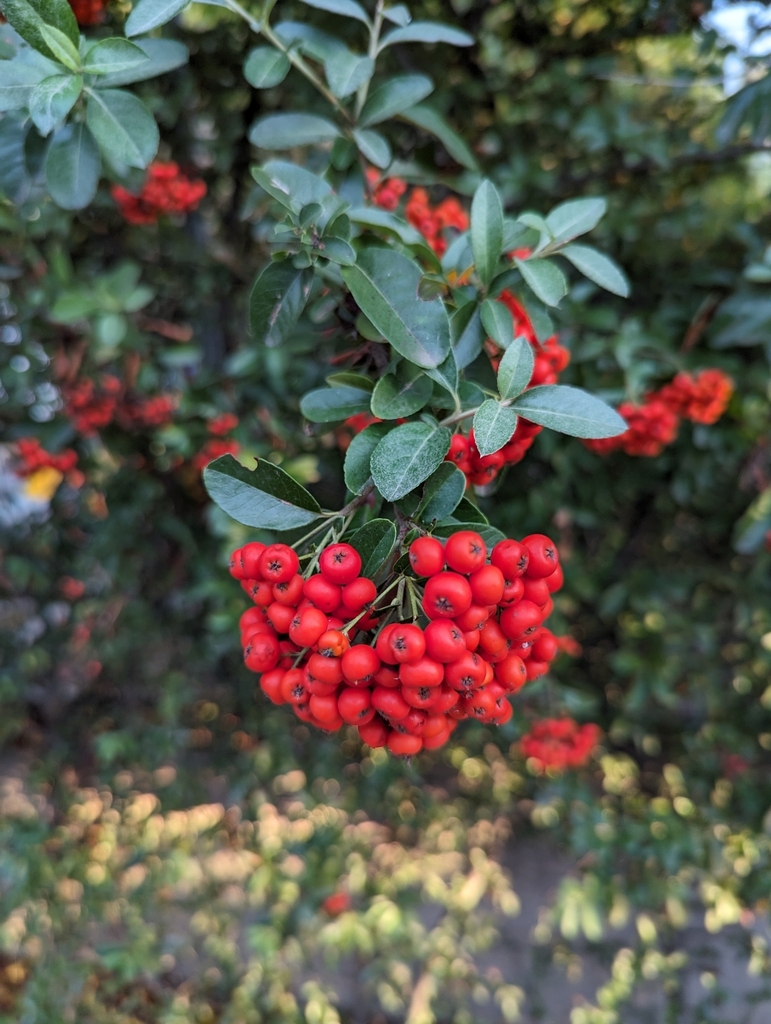
Firethorn
Pyracantha coccinea
Pyracantha coccinea, the scarlet firethorn is the European species of firethorn or red firethorn that has been cultivated in gardens since the late 16th century. The tree has small white flowers. It produces small, bright red berries. The fruit is bitter and astringent, making it inedible when raw. The fruit can be cooked to make jellies, jams, sauces and marmalade. It ranges from southern Europe to western Asia. It has been introduced to North America and...
From the article Pyracantha coccinea on Wikipedia (CC BY-SA), quoted section by section
Range & habitat
It is native to Albania, Bulgaria, France, Greece, Iran, Italy, Crimean Peninsula, Lebanon, Syria, North Caucasus, Balkan Peninsula, Spain, Switzerland, Transcaucasus, and Turkey.
Wikipedia: “Distribution and habitat”
At the table
In England, since the late 18th century, it has been used to cover unsightly walls.
Wikipedia: “Uses”
In human culture
The genus name Pyracantha, from the Greek pyr meaning fire and akantha meaning thorn, refers to the thorny branches and the bright red fruit. The specific epithet coccinea, from the Latin coccineus, means deep red.
Wikipedia: “Etymology”
Where it lives
Recorded sightings
—
geo-referenced records in GBIF, from museums, herbaria and field observers.
Drag the globe to turn it. Dots are where records exist, not a range map; darker means more records.
In the stacks
Searching the stacks…
Every page naming Pyracantha coccinea in the Biodiversity Heritage Library →
This page is assembled live from iNaturalist, GBIF, Wikipedia, the Source Library and the Internet Archive. It is not yet part of the hand-edited codex. iNaturalist taxon 57254.