- Plants
- ›Vascular Plants
- ›flowering plants
- ›monocots
- ›grasses, sedges, cattails, and allies
- ›grasses
- ›Pooideae
- ›Wheats, ryes, barleys and relatives
- ›barleys, ryes, and relatives
- ›Leymus
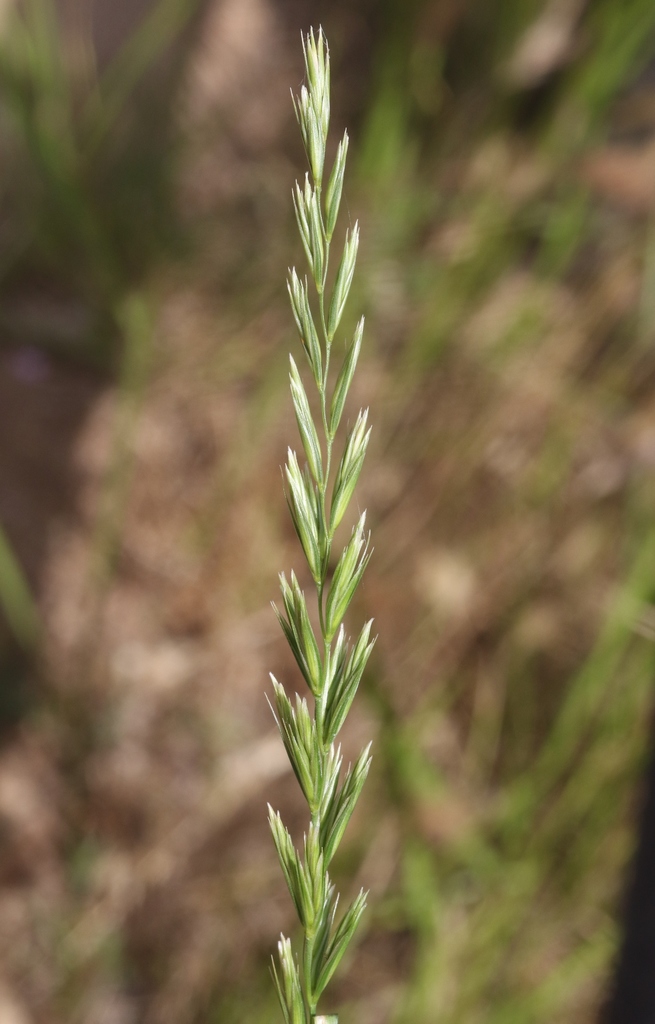
Creeping wild rye
Leymus triticoides
Leymus triticoides, with the common names creeping wild rye and beardless wild rye, is a species of wild rye. It is native to western North America from British Columbia to California and Texas.
From the article Leymus triticoides on Wikipedia (CC BY-SA), quoted section by section
Description
This rhizomatous, turf-forming perennial grass reaches 1.3 meters in maximum height. The stiff, slender green to blue-green leaves stand away from the stems at an obvious angle. The inflorescence is a narrow spike of flowers up to 20 centimeters long. This is a good rangeland grass for grazing, and it is used to stabilize waterways because of its soil-retaining rhizome network. Leymus triticoides is an important native plant in California chaparral and woodlands habitat restoration projects.
Range & habitat
Leymus triticoides often grows in moist habitat, sometimes with heavy and saline soils. It forms a solid root system which allows it to grow at water's edge and prevent the soil from eroding.
Wikipedia: “Habitat”
Where it lives
Recorded sightings
—
geo-referenced records in GBIF, from museums, herbaria and field observers.
Drag the globe to turn it. Dots are where records exist, not a range map; darker means more records.
In the stacks
Searching the stacks…
Every page naming Leymus triticoides in the Biodiversity Heritage Library →
This page is assembled live from iNaturalist, GBIF, Wikipedia, the Source Library and the Internet Archive. It is not yet part of the hand-edited codex. iNaturalist taxon 57184.