- Plants
- ›Vascular Plants
- ›flowering plants
- ›Dicots
- ›Mints, Plantains, Olives, and Allies
- ›broomrape family
- ›Pedicularideae
- ›Esterhazya
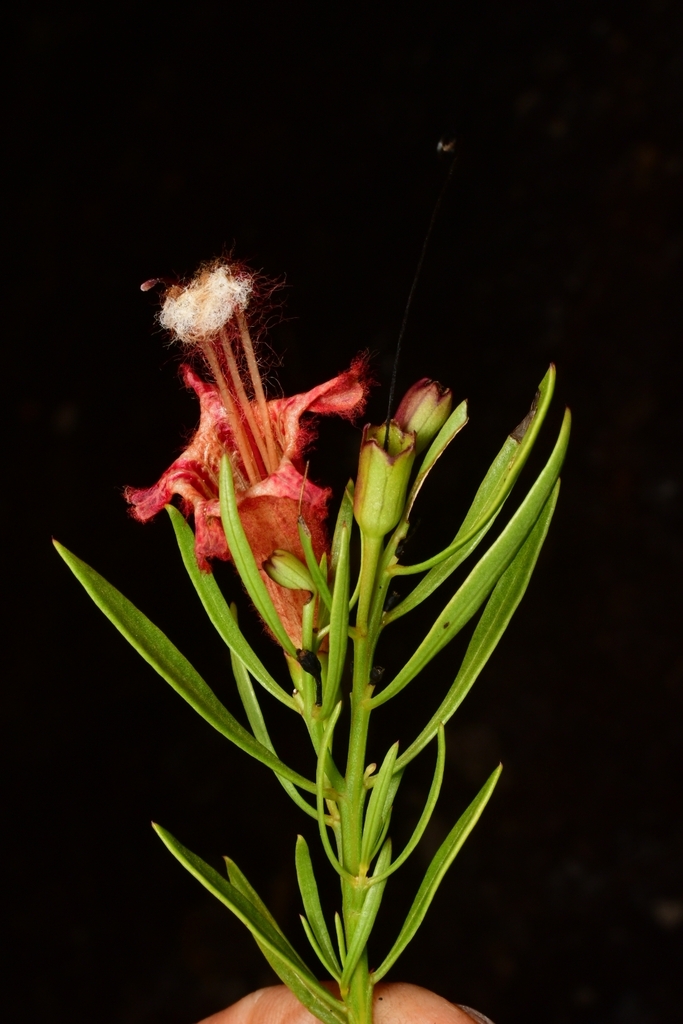
Esterhazya nanuzae
Esterhazya nanuzae is a species of parasitic flowering plant in the Orobanchaceae family. It is native and endemic to Southeast Brazil, specifically the state of Minas Gerais.
From the article Esterhazya nanuzae on Wikipedia (CC BY-SA), quoted section by section
Description
A root-specific hemiparasitic subshrub or shrub, as evidenced by the existence of haustoria, which are modifications of the same organs. Additionally, the habit is upright and 1–1.7 meters (3.3–5.6 ft) tall. Usually simply or slightly branched. Leaves are arranged oppositely, subsessile, with an elliptic, rarely elliptic-lanceolate shape, appreased to the stem and lacking hairs. Calyx is glabrous like the leaves, with as rounded and apiculate lobes. Corolla is salmon, between orange and red in hue, with glabrous to slightly pubescent outer tubes and nearly circular lobes. The fruit is a capsule that contains multiple endospermic seeds.
== References ==
Where it lives
Recorded sightings
—
geo-referenced records in GBIF, from museums, herbaria and field observers.
Drag the globe to turn it. Dots are where records exist, not a range map; darker means more records.
In the stacks
Searching the stacks…
Every page naming Esterhazya nanuzae in the Biodiversity Heritage Library →
This page is assembled live from iNaturalist, GBIF, Wikipedia, the Source Library and the Internet Archive. It is not yet part of the hand-edited codex. iNaturalist taxon 558722.