On eBird ↗
Ceara Gnateater
Live sightings near you, the range map, bar charts of when it is seen, and Macaulay Library photos and recordings.
Ceara Gnateater
Conopophaga cearae
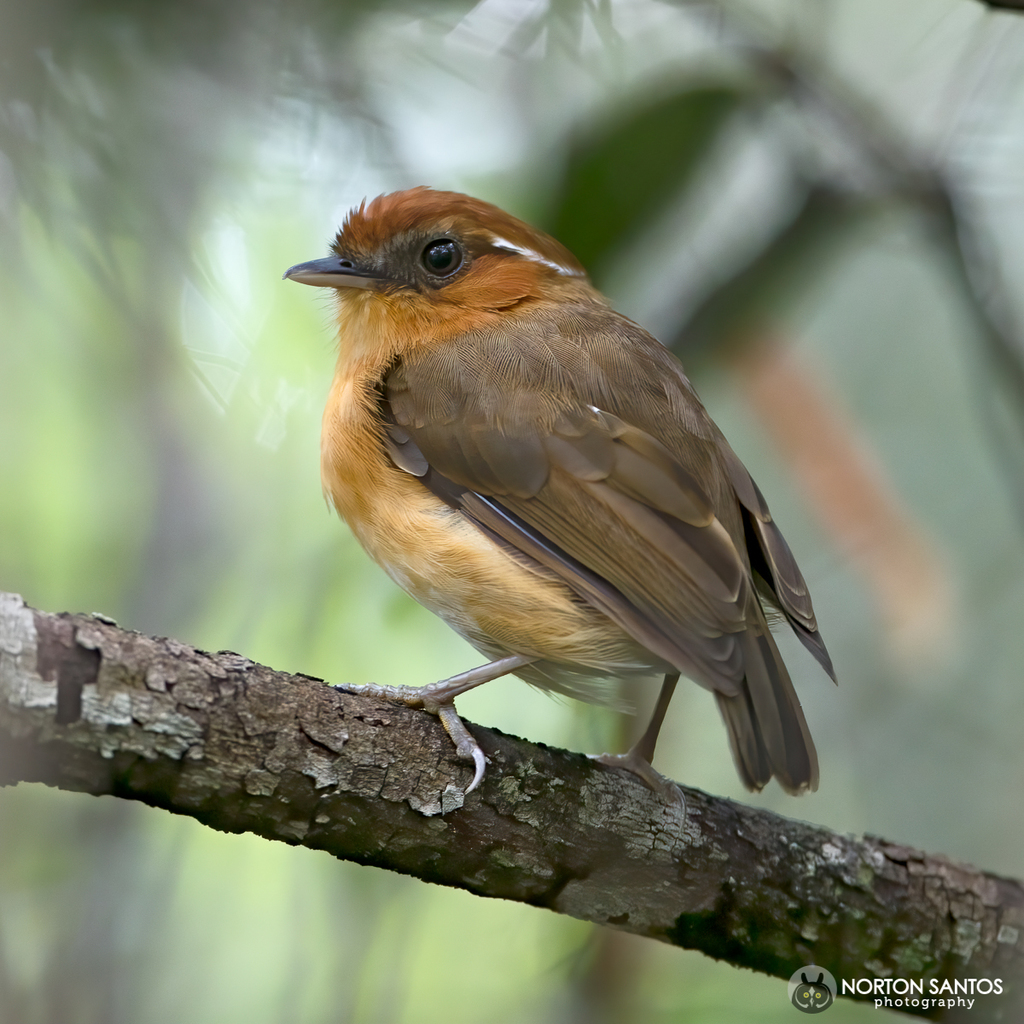
The Ceará Gnateater or Caatinga Gnateater (Conopophaga cearae) is a passerine bird of the gnateater family, Conopophagidae. It is found in forest understory and bushes in northeastern Brazil.
The Ceara Gnateater is locally called "chupa-dente", or "tooth-sucker" in Portuguese due to the sound it produces when it vocalizes.
From the article Ceará gnateater on Wikipedia (CC BY-SA), quoted section by section
Description
They are about 11.5 to 14 cm (4.5 to 5.5 in) long and weigh on average 24.5g (0.86 oz). The Ceará Gnateater used to be considered a subspecies of the Rufous Gnateater (Conopophaga lineata), but genetic evidence showed they are distinct species. They were split into two different independent taxa in 2015. The vocalization of the two species is similar, but the Ceara Gnateater has a lower-pitched song that is slightly slower than that of the Rufous Gnateater. They are also different in appearance. Ceará Gnateaters have a more vivid orange or apricot color with a white belly patch and a bight eye line, while Rufous Gnateaters have a dirty orange to brown color with a light grey belly and a duller grey eye line.
Wikipedia: “Appearance”
Range & habitat
Ceará Gnateaters are endemic to a small region in northeastern Brazil in isolated patches of Atlantic Forest in higher elevations. They can be found in these Brazilian states: Ceará, Pernambuco, Paraíba, Rio Grande Do Norte, and Alagoas. They are predominantly found in dense understory where they nest and forage.
Wikipedia: “Distribution and habitat”
What it does
As their name would imply, Ceara Gnateaters are insectivores. They dominate the understory and forage close to the forest floor usually perching in vertical branches. Once prey is captured, such as small arthropods or beetles, they head to the safety of dense underbrush. They forage alone or with their mate. While their territories are generally small, Ceara Gnateaters do not mix with other groups to forage, a behavior observed in all other species of the family Conopophagidae.
Wikipedia: “Diet”
Listen
Looking for field recordings…
Where it lives
Recorded sightings
—
geo-referenced records in GBIF, from museums, herbaria and field observers.
Drag the globe to turn it. Dots are where records exist, not a range map; darker means more records.
In the stacks
Searching the stacks…
Every page naming Conopophaga cearae in the Biodiversity Heritage Library →
This page is assembled live from iNaturalist, GBIF, Wikipedia, the Source Library and the Internet Archive. It is not yet part of the hand-edited codex. iNaturalist taxon 558501.