- Animals
- ›Arthropods
- ›Hexapods
- ›Insects
- ›Winged and Once-winged Insects
- ›Ants, Bees, Wasps, and Sawflies
- ›Narrow-waisted Wasps, Ants, and Bees
- ›Proctotrupomorpha
Gall Wasps and Allies
Cynipoidea
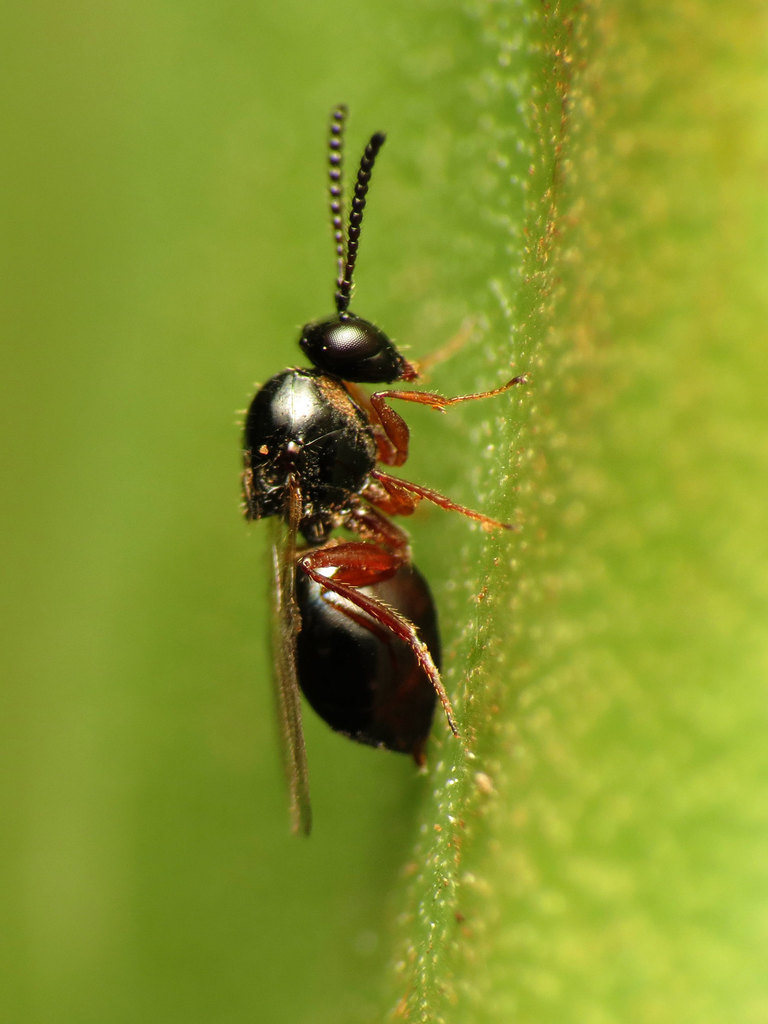
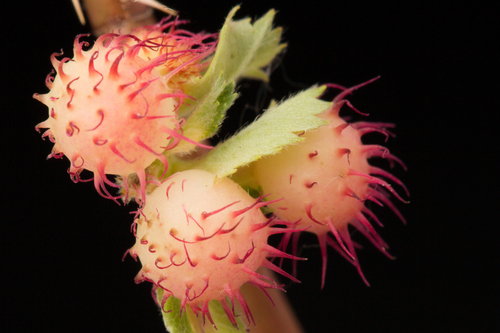
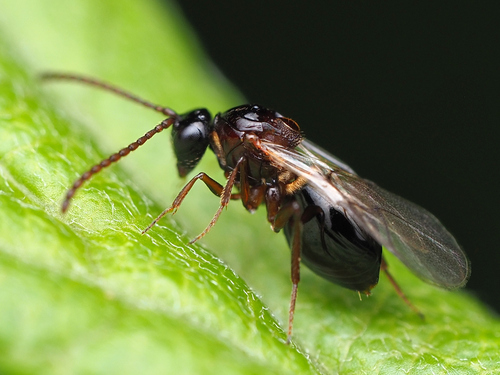
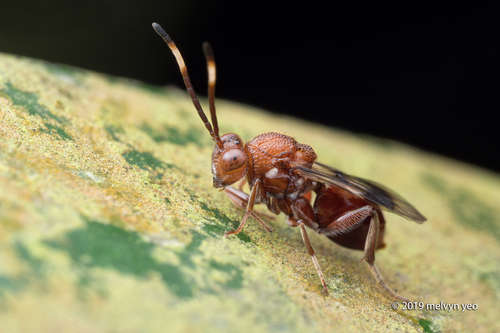
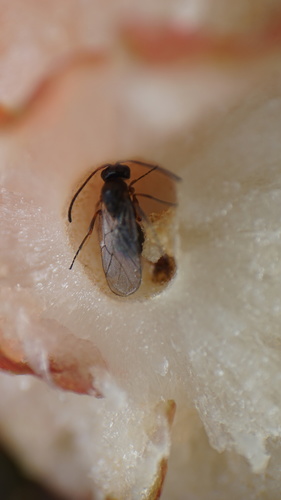
The Cynipoidea are a moderate-sized hymenopteran superfamily that presently includes seven extant families and three extinct families, though others have been recognized in the past. The most familiar members of the group are phytophagous, especially as gall-formers, though the actual majority of included species are parasitoids or hyperparasitoids. They are typically glossy, dark, smooth wasps with somewhat compressed bodies and somewhat reduced wing venation. It is common for various metasomal segments to be fused in various ways (often diagnostic for families or subfamilies), and the petiole is very short, when present .
With the exception of the Cynipidae (the gall wasps), it is a poorly known group as a whole, though there are nearly 3000 known species in total, and a great many species are still undescribed, mostly in the Figitidae. Each of the constituent families differs in biology, though life histories of one of the families (Liopteridae) are still largely unknown. In July 2020, an identification key for the superfamily was published, enabling identification to the family/tribe level. Several groups formerly included in Cynipidae were elevated to family status in 2023.

Where it lives
Recorded sightings
—
geo-referenced records in GBIF, from museums, herbaria and field observers.
Drag the globe to turn it. Dots are where records exist, not a range map; darker means more records.
In the stacks
Searching the stacks…
Every page naming Cynipoidea in the Biodiversity Heritage Library →
This page is assembled live from iNaturalist, GBIF, Wikipedia, the Source Library and the Internet Archive. It is not yet part of the hand-edited codex. iNaturalist taxon 55593.