- Animals
- ›Arthropods
- ›Hexapods
- ›Insects
- ›Winged and Once-winged Insects
- ›Butterflies and Moths
- ›Owlet Moths and Allies
- ›Oenosandrid Moths
- ›Discophlebia
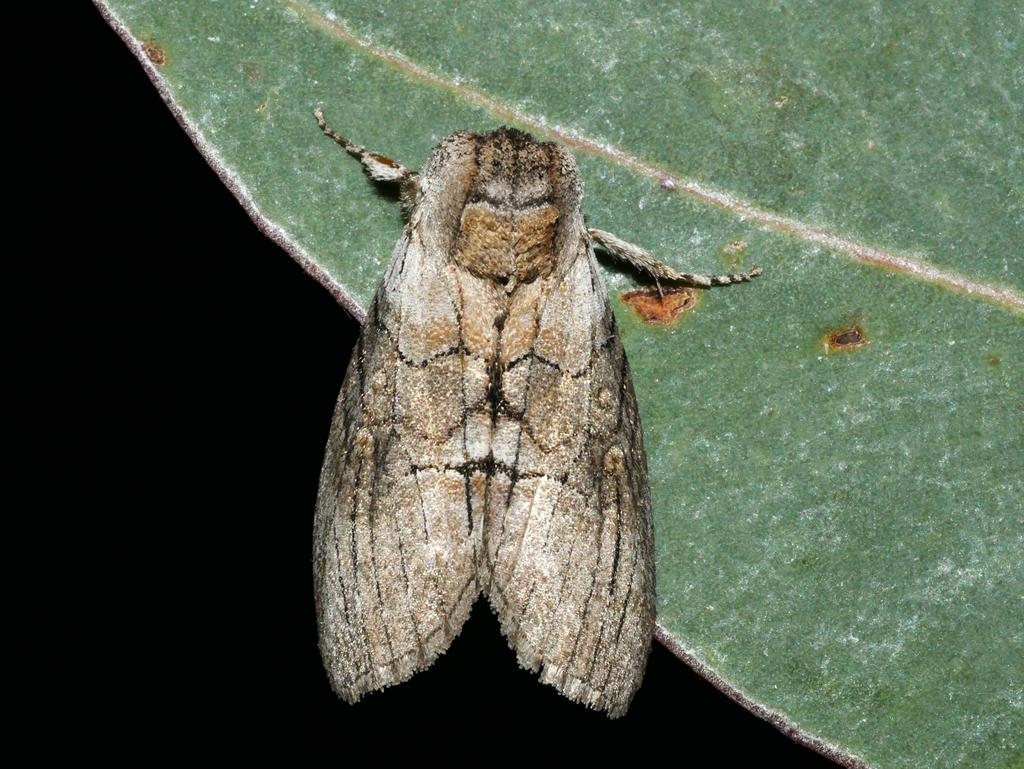
Discophlebia catocalina
Discophlebia catocalina, the yellow-tailed stub moth is an Australian moth species found in the south-eastern quartile of Australia. It is classified within the Oenosandridae moth family in the Noctuoidea Superfamily, the largest superfamily of the Order Lepidoptera. It is visually recognised by its characteristic pointed yellow tail and is a medium-sized moth species with a wingspan range of 40mm-60mm depending on gender. Discophlebia Catocalina have evolved to feed on various species of eucalypt.
From the article Discophlebia catocalina on Wikipedia (CC BY-SA), quoted section by section
Range & habitat
Discophlebia Catocalina is mostly found within the south-eastern regions of Australia. Moths of the Oenosandridae family are only found in Australia. Most Genera of the Noctuoidea Superfamily are found throughout the Australasian regions, though some Noctuoidea are spread world-wide.
Observations: Ku-rin-gai Chase National Park. The Ku-rin-gai national park is a wildlife preservation park located in the North of Sydney, Australia and is a notable site for observations of Discophlebia Catocalina. This park is known for its biodiversity due to its soil fertility, allowing for a wide array of plant and insect species to inhabit. The soil mainly consists of Hawkesbury sandstone and Wianamatta and Narrabeen shale, which has high phosphorus content and allows for a richness of rainforest genera in flora and fauna to occur. It has a diversity of Eucalyptus species found in the region which Discophlebia Catocalina is known to feed on. Early observations of Discophlebia Catocalina are recorded in 1971. Australian Entomological magazine recorded two observations that year – one in January, and in one November. They recorded only two specimens observed that year.
Wikipedia: “Distribution and habitat”
What it does
Discophlebia Catocalina is nocturnal in larvae and adult stages. It sleeps during the day and takes flight at nighttime and is drawn to warm lights. Discophlebia Catocalina feeds on live Eucalyptus. Studies done on captive Larvae of this species show that larvae will consume mature, drier leaves of eucalyptus including eucalyptus odorata and are purely nocturnal feeders once past the initial instar stages (stages of moulting in the process of sheding the exoskeleton on the way to reaching adult moth form). Oenosandridae larvae need to take shelter during the day and will pupate in sheltered habitats. During the day they may take refuge in bark and other crevices. At night, Oenosandridaie larvae will emerge to feed on tree foliage, often eucalypts. Notable Instar Behaviour The initial instar larval disposable is an important stage in this species. After the first dispersal, they will still exhibit socialising behaviours (resting closely together with other moths when taking shelter in the day) when smaller, but become solitary creatures once reaching full maturity. Adults will take flight around mid November to march, with peak periods in late December to early February.
Wikipedia: “Larvae and Adult Behaviour”
Listen
Looking for field recordings…
Where it lives
Recorded sightings
—
geo-referenced records in GBIF, from museums, herbaria and field observers.
Drag the globe to turn it. Dots are where records exist, not a range map; darker means more records.
In the stacks
Searching the stacks…
Every page naming Discophlebia catocalina in the Biodiversity Heritage Library →
This page is assembled live from iNaturalist, GBIF, Wikipedia, the Source Library and the Internet Archive. It is not yet part of the hand-edited codex. iNaturalist taxon 554722.