- Animals
- ›Arthropods
- ›Hexapods
- ›Insects
- ›Winged and Once-winged Insects
- ›Ants, Bees, Wasps, and Sawflies
- ›Sawflies, Horntails, and Wood Wasps
- ›Horntails and Allies
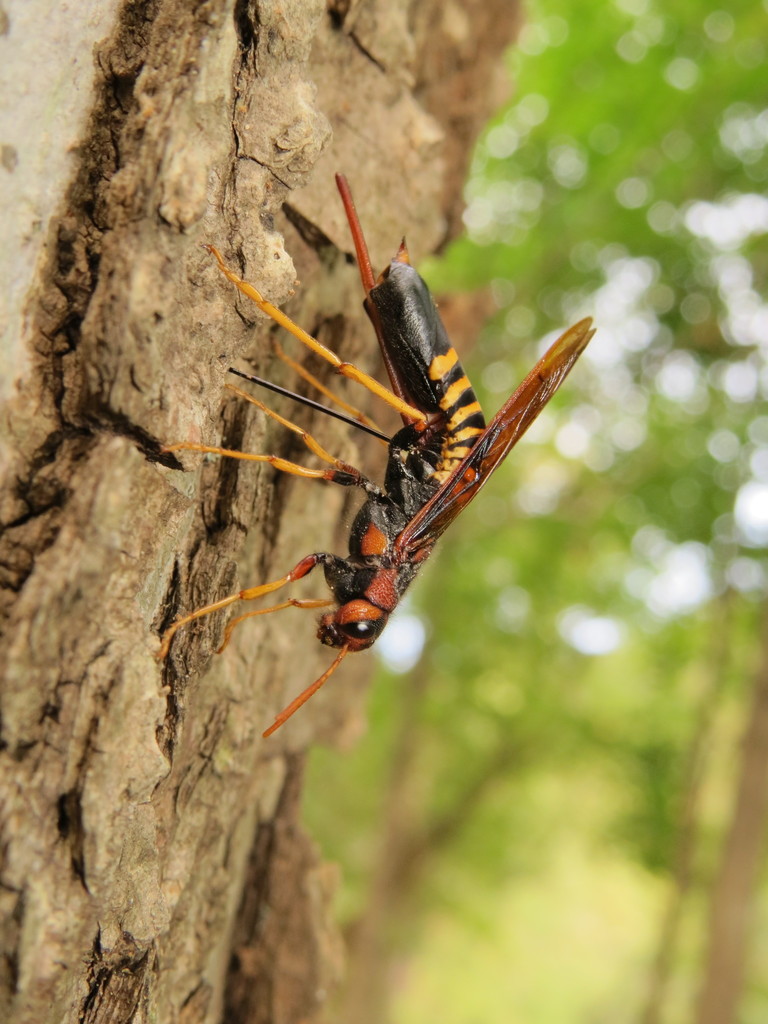
Horntails
Siricidae
Horntails or wood wasps are any of the 150 non-social species of the hymenopteran family Siricidae, a type of wood-eating sawfly. The common name "horntail" derives from the stout, spine-like structure at the end of the adult's abdomen which is present in both sexes. The ovipositor in females is typically longer and also projects posteriorly, but it is not the source of the name. Though they are not true wasps, they are sometimes called wood wasps as the appearance of some species resembles one due to mimicry. A typical adult horntail is brown, blue, or black with yellow or red parts, and may often reach up to 4 cm (1.6 in) long. The pigeon horntail (Tremex columba) can grow up to 5 cm (2.0 in) long (not counting the ovipositor), among the longest of all Hymenoptera.
This family was formerly believed to be the sole living representative of the superfamily Siricoidea, a group well represented in Paleogene and Mesozoic times, but the family Anaxyelidae has been linked to this group as well. Siricidae has two subfamilies, Siricinae and Tremecinae. Siricinae infest needle-leaved trees and Tremecinae infest broad-leaved trees. There are ten living genera placed in the family, and an additional three genera described from fossils.
2 branches of this family, most-observed first
See this branch on the Wheel of Life →

Where it lives
Recorded sightings
—
geo-referenced records in GBIF, from museums, herbaria and field observers.
Drag the globe to turn it. Dots are where records exist, not a range map; darker means more records.
In the stacks
Searching the stacks…
Every page naming Siricidae in the Biodiversity Heritage Library →
This page is assembled live from iNaturalist, GBIF, Wikipedia, the Source Library and the Internet Archive. It is not yet part of the hand-edited codex. iNaturalist taxon 53256.