- Animals
- ›Arthropods
- ›Hexapods
- ›Insects
- ›Winged and Once-winged Insects
- ›Beetles
- ›Water, Rove, Scarab, Long-horned, Leaf, and Snout Beetles
- ›Elateriform Beetles
- ›Click, Firefly, and Soldier Beetles
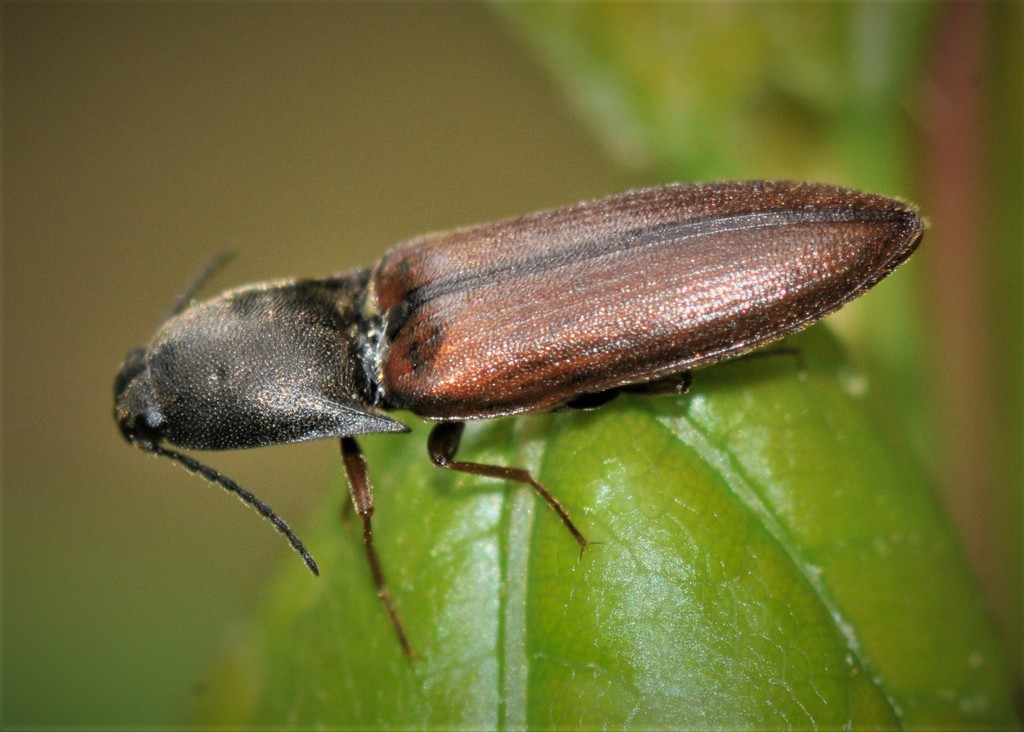
Click Beetles
Elateridae
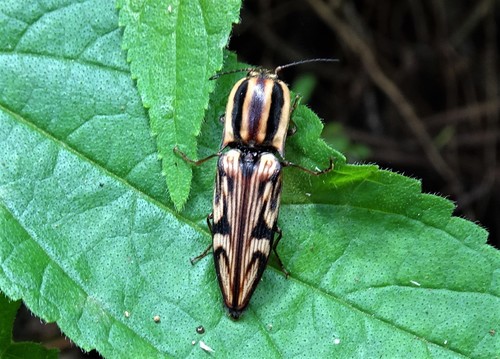
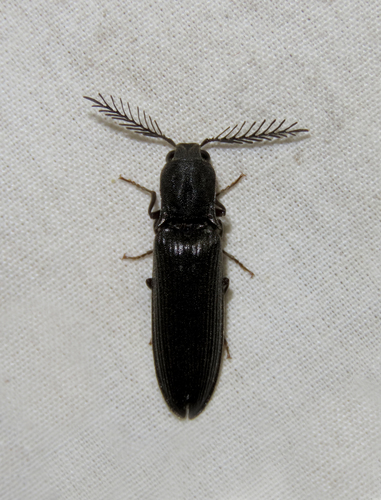
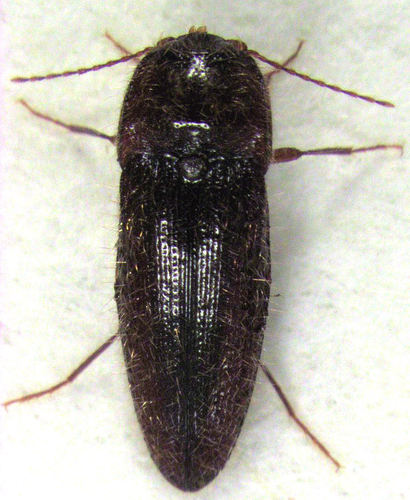
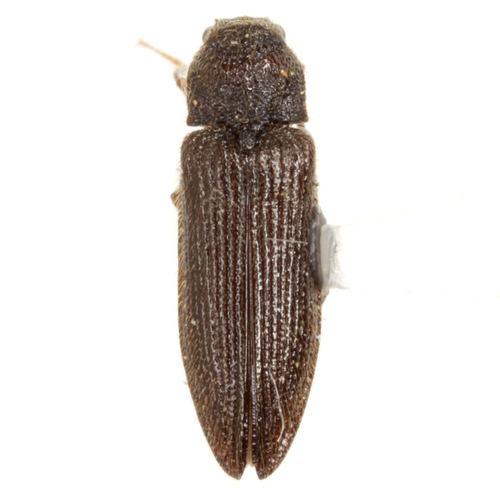
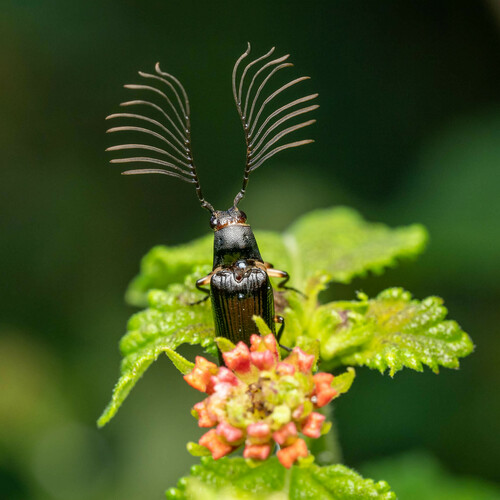
Elateridae or click beetles (or "typical click beetles" to distinguish them from the related families Cerophytidae and Eucnemidae, which are also capable of clicking) are a family of beetles. Other names include elaters, snapping beetles, spring beetles or skipjacks. This family was defined by English zoologist William Elford Leach (1790–1836) in 1815. They are a cosmopolitan beetle family characterized by the unusual click mechanism they possess. There are a few other families of Elateroidea in which a few members have the same mechanism, but most elaterid subfamilies can click. A spine on the prosternum can be snapped into a corresponding notch on the mesosternum, producing a violent "click" that can bounce the beetle into the air. The evolutionary purpose of this click is debated: hypotheses include that the clicking noise deters predators or is used for communication, or that the click may allow the beetle to "pop" out of the substrate in which it is pupating. It is unlikely that the click is used for avoiding predators as it does not carry the beetle very far (<50 cm), and in practice click beetles usually play dead or flee normally. There are about 9300 known species worldwide, and 965 valid species in North America.
20 branches of this family, most-observed first

Agrypninae
subfamilyAgrypninae

Dendrometrinae
subfamilyDendrometrinae

Elaterinae
subfamilyElaterinae
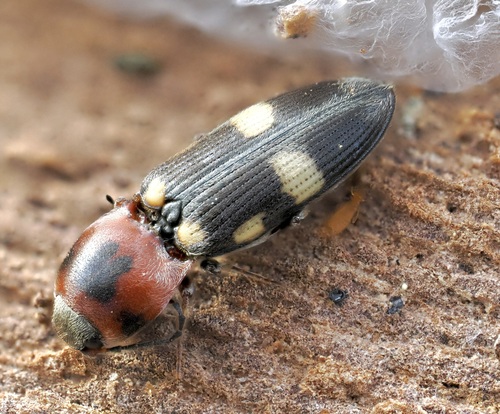
Cardiophorinae
subfamilyCardiophorinae
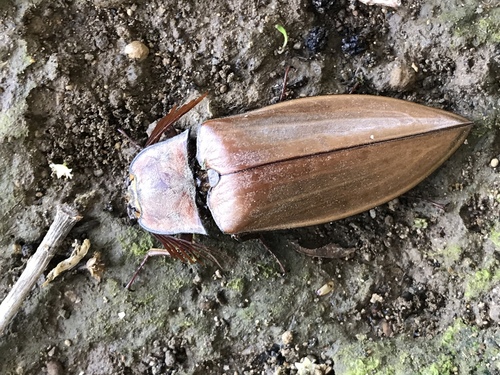
Oxynopterinae
subfamilyOxynopterinae

Semiotinae
subfamilySemiotinae

Cebrioninae
subfamilyCebrioninae

Hemiopinae
subfamilyHemiopinae

Lissominae
subfamilyLissominae
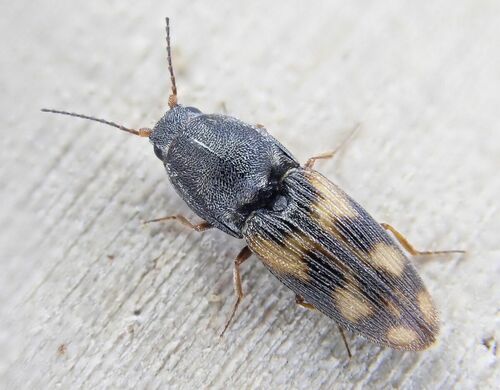
Negastriinae
subfamilyNegastriinae
Parablacinae
subfamilyParablacinae
Pityobiinae
subfamilyPityobiinae
Hapatesinae
subfamilyHapatesinae
Oestodinae
subfamilyOestodinae
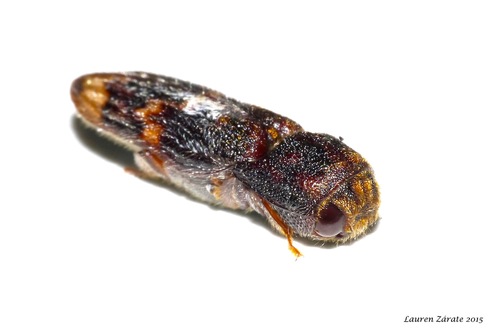
Thylacosterninae
subfamilyThylacosterninae
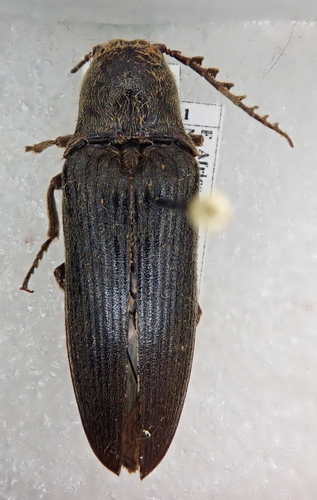
Eudicronychinae
subfamilyEudicronychinae
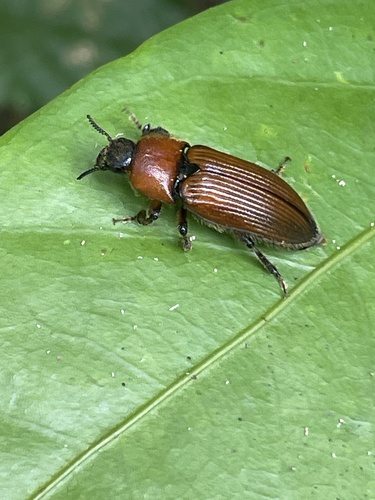
Physodactylinae
subfamilyPhysodactylinae
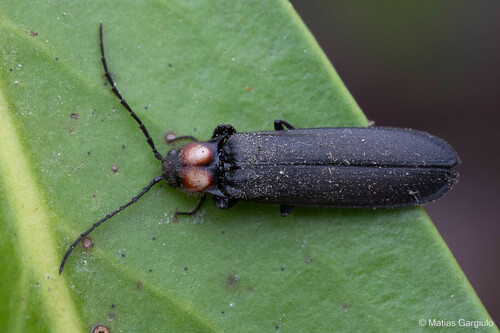
Campyloxeninae
subfamilyCampyloxeninae
Morostomatinae
subfamilyMorostomatinae
Itodacne
genusItodacne
Where it lives
Recorded sightings
—
geo-referenced records in GBIF, from museums, herbaria and field observers.
Drag the globe to turn it. Dots are where records exist, not a range map; darker means more records.
In the stacks
Searching the stacks…
Every page naming Elateridae in the Biodiversity Heritage Library →
This page is assembled live from iNaturalist, GBIF, Wikipedia, the Source Library and the Internet Archive. It is not yet part of the hand-edited codex. iNaturalist taxon 53248.