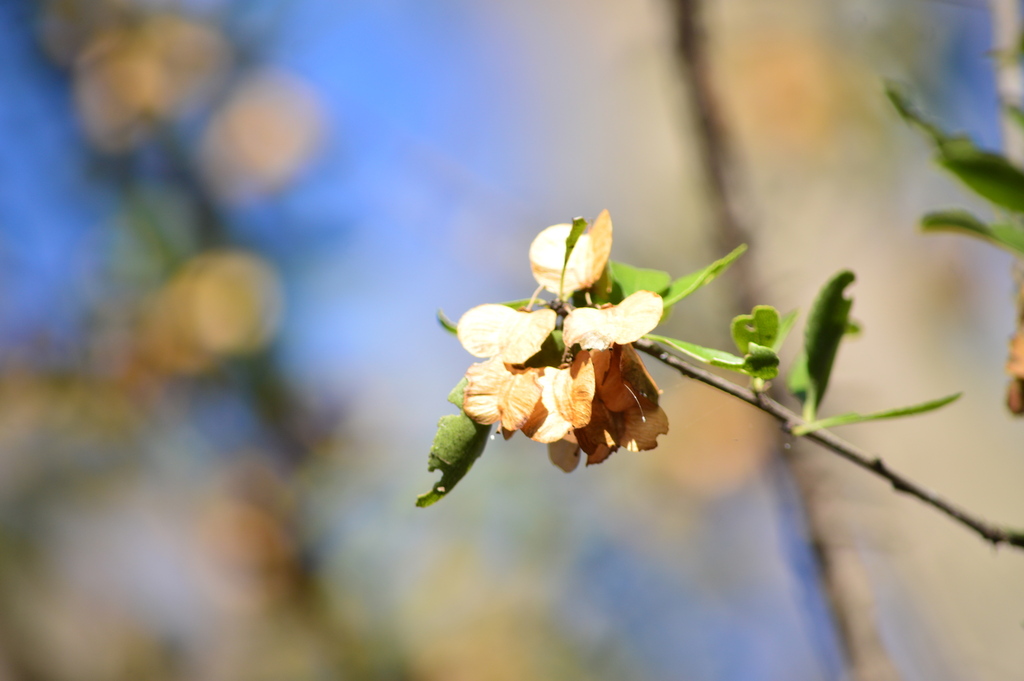
Wimmeria mexicana
Wimmeria mexicana is a large shrub or small tree, often reaching 8 metres (26 ft) in height, that is common in the Southeastern United States and in regions of Mexico, including the states of Oaxaca, Chihuahua, and central to eastern Sonora. It is commonly called papelío and algodoncillo.
From the article Wimmeria mexicana on Wikipedia (CC BY-SA), quoted section by section
Description
The branches and trunk, 30 centimetres (12 in) in diameter, are erect to ascending, making it more tall than wide. Large, flaky, papery, gray plates cover its smooth, white bark. Young twigs, petioles, and flower axils sometimes have short, tiny hairs, but are mostly glabrous. The crown is spread out and sparse. The leaves, exstipulate and 2–6 cm in length, alternate and vary in shape between lanceolate, elliptic, and obovate. Flowers tend to be 7.5–8 mm wide, white to cream colored, bisexual, with 5 petals on 5 sepals, and arranged in axillary cyme. The fruits, 1–1.4 cm across, are papery, one-seeded, three-lobed samaras, similar to species of Dodonaea. Wimmeria mexicana mass flowers around July to October, or often after heavy Autumn rain, attracting a large number of insects, particularly bees and flies. The leaves have serrated edges due to insects.
At the table
Wood from the tree is commonly used to make fence posts, house beams, and firelogs. Also, the Guarijío prepare herbal tea, malo en el cuerpo (pain in the body), from W. mexicana, chamomile, and cilantro.
Wikipedia: “Uses”
Where it lives
Recorded sightings
—
geo-referenced records in GBIF, from museums, herbaria and field observers.
Drag the globe to turn it. Dots are where records exist, not a range map; darker means more records.
In the stacks
Searching the stacks…
Every page naming Wimmeria mexicana in the Biodiversity Heritage Library →
This page is assembled live from iNaturalist, GBIF, Wikipedia, the Source Library and the Internet Archive. It is not yet part of the hand-edited codex. iNaturalist taxon 528475.