- Animals
- ›Arthropods
- ›Hexapods
- ›Insects
- ›Winged and Once-winged Insects
- ›Ants, Bees, Wasps, and Sawflies
- ›Narrow-waisted Wasps, Ants, and Bees
- ›Ants, Bees, and Stinging Wasps
- ›Bees and Apoid Wasps
- ›Bees
- ›Honey Bees, Bumble Bees, and Allies
- ›Apine Bees
- ›Bombini
- ›Bombus
- ›Pyrobombus
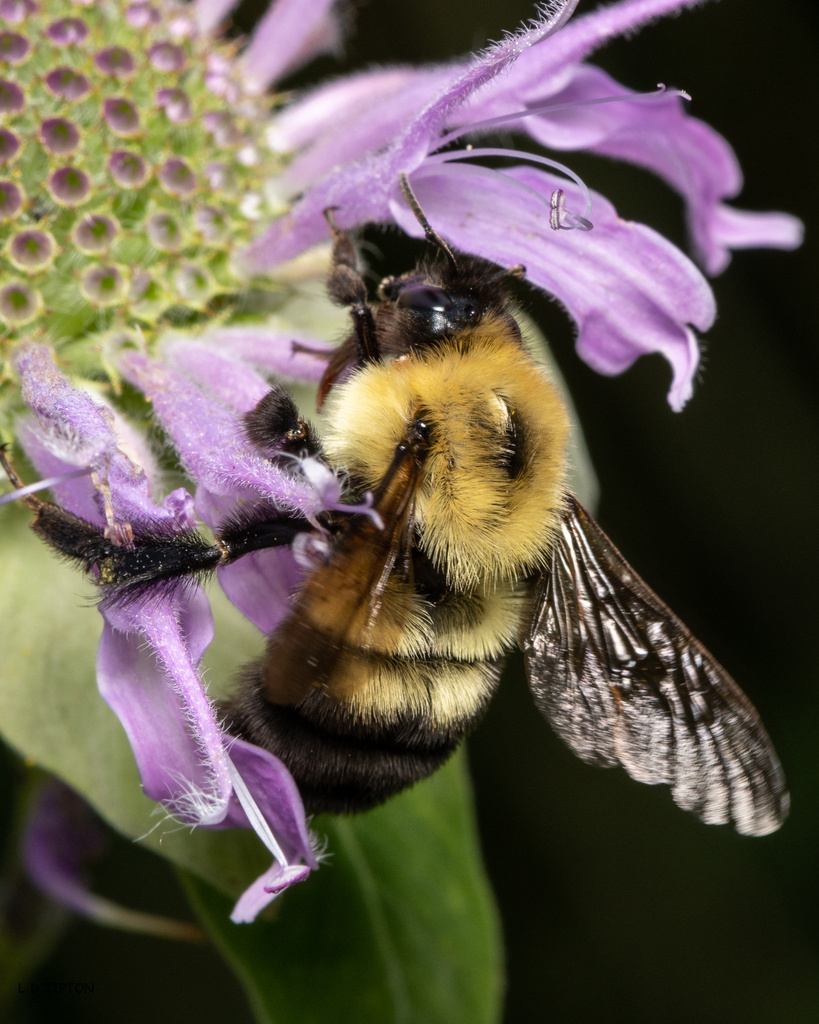
Two-spotted Bumble Bee
Bombus bimaculatus
The two-spotted bumble bee (Bombus bimaculatus) is a species of social bumble bee found in the eastern half of the United States and the adjacent south-eastern part of Canada. In older literature this bee is often referred to as Bremus bimaculatus, Bremus being a synonym for Bombus. The bee's common name comes from the two yellow spots on its abdomen. Unlike many of the other species of bee in the genus Bombus, B. bimaculatus is not on the decline, but instead is very stable. They are abundant pollinators that forage at a variety of plants.
From the article Two-spotted bumble bee on Wikipedia (CC BY-SA), quoted section by section
Range & habitat
B. bimaculatus is mainly found in eastern temperate forest regions throughout the United States and the southeastern part of Canada. It can also live in the coastal plains of the southeastern United States, the eastern Boreal forest, and the eastern Great Plains. This bee lives in underground nests, preferably in or around wooden areas and gardens. Nests can be anywhere from 6 inches to a foot below the surface. Tunnels traveling to the nest range from 9 inches to 4 feet long. B. bimaculatus can also nest above ground or in cavities. Bees do not build nests and instead rely on finding abandoned rodent dens, hollow logs, suitable man-made structures, or tussocks. Queens will hibernate in loose dirt or rotting logs. This bumble bee is very common and has been experiencing steady growth unlike many other bumble bees that are in decline.
Wikipedia: “Distribution and habitat”
What it does
Bumble bees eat nectar and pollen from plants. B. bimaculatus is known to pollinate a wide variety of plants, but they seem to have favorites. Queens can be found on willow and plum. Workers are found on red clover and mint. Males are found on mint and sweet clover.
As a species they have been found foraging at the following plants:
Zenobia pulverulenta Gelsemium sempervirens Lyonia lucida Solanum dulcamara Aquilegia species Dicentra species Mertensia species Pedicularis species Aesculus glabra Camassia scilloides Delphinium tricorne Hydrophyllum appendiculatum
Wikipedia: “Diet”
Listen
Looking for field recordings…
Where it lives
Recorded sightings
—
geo-referenced records in GBIF, from museums, herbaria and field observers.
Drag the globe to turn it. Dots are where records exist, not a range map; darker means more records.
In the stacks
Searching the stacks…
Every page naming Bombus bimaculatus in the Biodiversity Heritage Library →
This page is assembled live from iNaturalist, GBIF, Wikipedia, the Source Library and the Internet Archive. It is not yet part of the hand-edited codex. iNaturalist taxon 52779.