- Animals
- ›Arthropods
- ›Hexapods
- ›Insects
- ›Winged and Once-winged Insects
- ›Beetles
- ›Water, Rove, Scarab, Long-horned, Leaf, and Snout Beetles
- ›Cucujiform Beetles
- ›Darkling Beetles and Allies
- ›Blister Beetles
- ›Meloinae
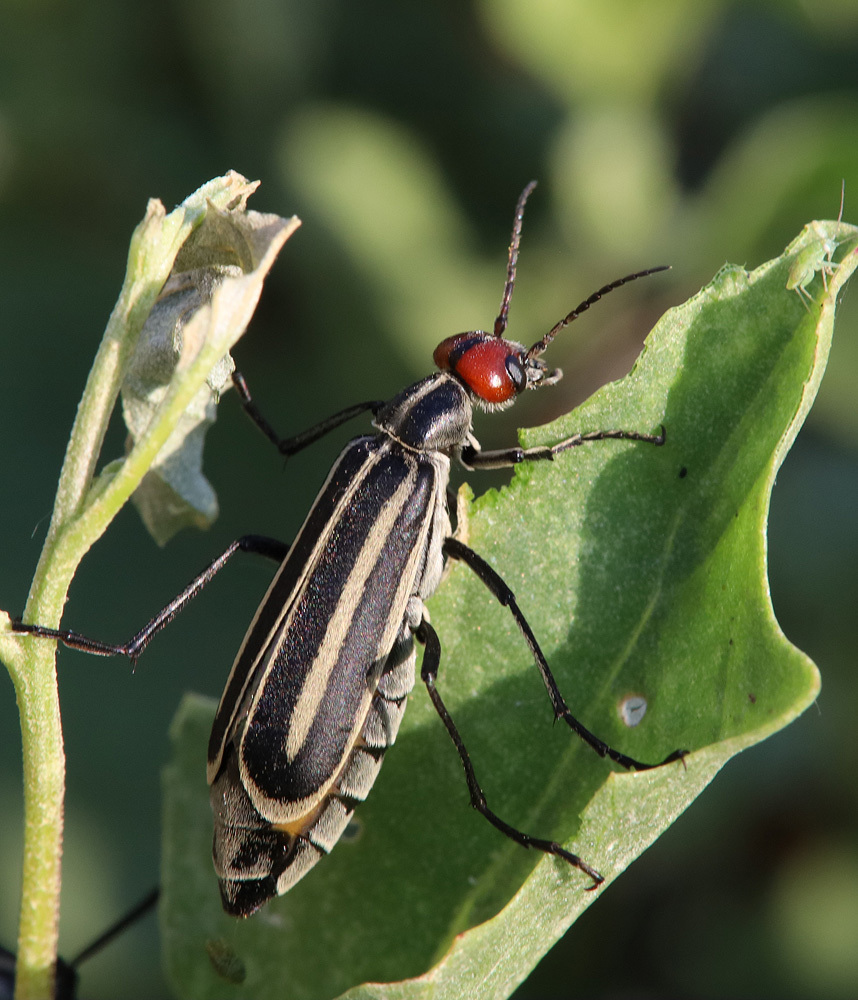
Epicautini
Epicauta is a genus of beetles in the blister beetle family, Meloidae. The genus was first scientifically described in 1834 by Pierre François Marie Auguste Dejean. Epicauta is distributed nearly worldwide, with species native to all continents except Australia and Antarctica. Surveys have found the genus to be particularly diverse in northern Arizona in the United States. Few species occur in the Arctic, with none farther north than the southern edge of the Northwest Territories, Canada.
Adult beetles feed on plants. The larvae are predators on the eggs of grasshoppers. The beetles can significantly damage plants, and many Epicauta are known as agricultural pests around the world, even known to cause crop failures at times. As do other blister beetles, these produce cantharidin, a toxic terpenoid which can kill animals such as horses if they ingest enough of the beetles.
4 branches of this tribe, most-observed first
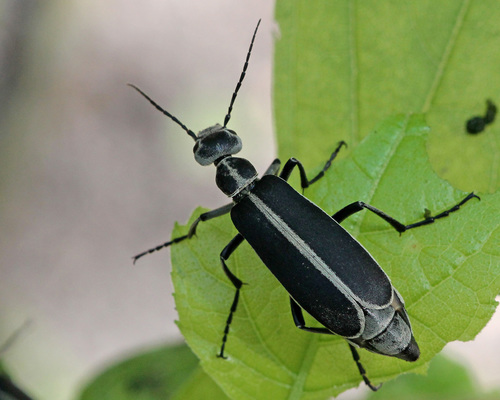
Burning Blister Beetles
genusEpicauta
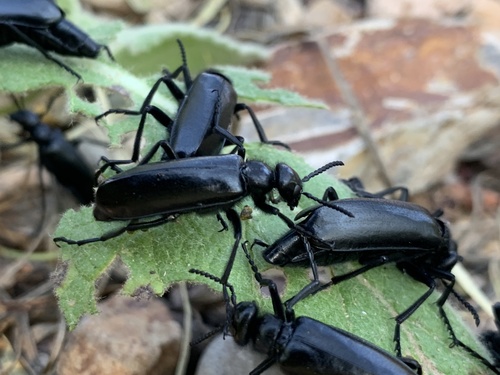
Linsleya
genusLinsleya

Psalydolytta
genusPsalydolytta
Denierella
genusDenierella
Where it lives
Recorded sightings
—
geo-referenced records in GBIF, from museums, herbaria and field observers.
Drag the globe to turn it. Dots are where records exist, not a range map; darker means more records.
In the stacks
Searching the stacks…
Every page naming Epicautini in the Biodiversity Heritage Library →
This page is assembled live from iNaturalist, GBIF, Wikipedia, the Source Library and the Internet Archive. It is not yet part of the hand-edited codex. iNaturalist taxon 522573.