- Plants
- ›Vascular Plants
- ›flowering plants
- ›Dicots
- ›Mints, Plantains, Olives, and Allies
- ›broomrape family
- ›Pedicularideae
- ›Pedicularis
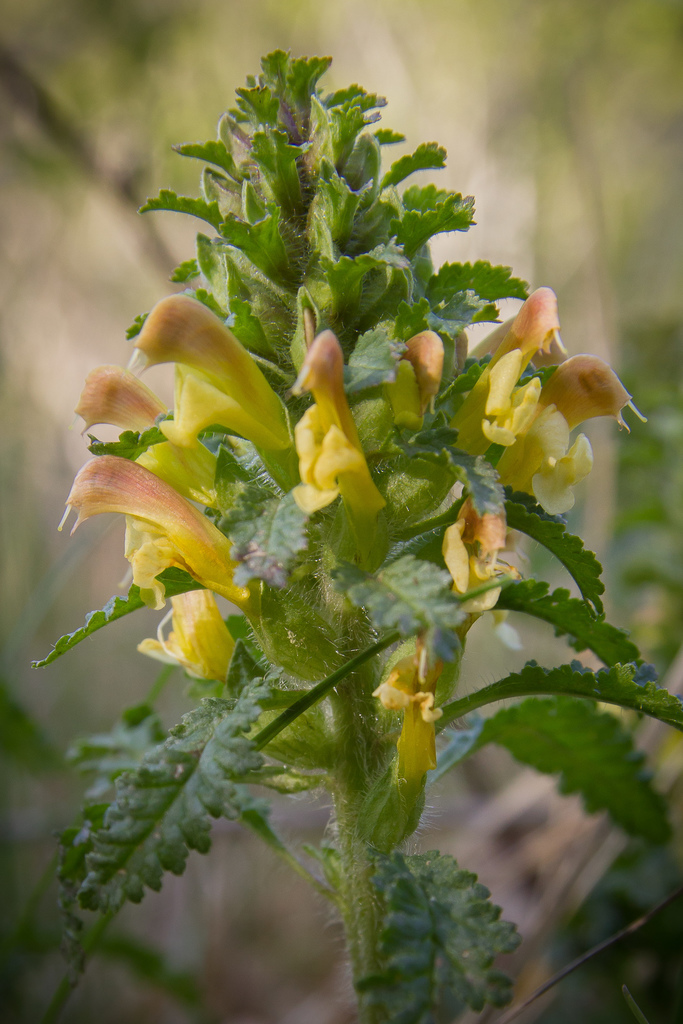
Canadian lousewort
Pedicularis canadensis
Pedicularis canadensis is a flowering plant in the Orobanchaceae family and is also known as wood betony, beefsteak plant, Canadian lousewort, high heal-all, snaffles and Canada lousewort. It is found in thickets and dry, open wooded areas throughout Canada and the United States. It is a low, hairy plant with a broad whorl of tubular, hooded flowers on top of a segmented stalk. It has long, soft, hairy leaves (many are basal, growing tufted from roots),...
From the article Pedicularis canadensis on Wikipedia (CC BY-SA), quoted section by section
Description
Pedicularis canadensis is a perennial, clonal, herbaceous plant, growing to 30 cm (12 in) tall. It has long, soft, hairy leaves (many are basal, growing tufted from roots), some 12 to 36 cm (4.7 to 14.2 in) long, deeply incised and toothed, often reddish-purple under sunlight. It blooms in the spring to summer, between April and June. It produces a broad whorl of tubular, hooded flowers on top of a segmented stalk. The flowers range in color from a greenish-yellow to purplish-red, clustered on short, dense spikes. They are pollinated by bumblebees. The fruit is a long brown seed capsule, which disperses through explosive dehiscence.
Range & habitat
Wood betony is broadly distributed across eastern North America, from Quebec west to Manitoba, south to Mexico, and east to Florida. It occurs in a variety of habitats, including mesic to dry prairies, savannas, barrens, and woodlands. In the Chicago area it is considered a conservative species, with a coefficient of conservatism of 9.
Wikipedia: “Distribution and habitat”
What it does
Pedicularis canadensis is a hemiparasite, attaching to the roots of diverse species, but also producing chlorophyll on its own. Its roots also have a symbiotic relationship with a fungus that helps it gather nutrients. It has been shown to be correlated with increase in floristic quality in prairies. A leaf beetle, Capraita circumdata has been collected from inside of the flowers. Several ants have been recorded visiting the flowers, including: Crematogaster cerasi, Formica incerta, Formica subsericea, and Lasius alienus. Bees documented visiting the flowers of wood betony include Augochlorella aurata, Bombus auricomus, Bombus bimaculatus, Bombus fervidus, Bombus griseocollis, Bombus impatiens, Bombus vagans, Halictus confusus, and Lasioglossum anomalum.
Wikipedia: “Ecology”
At the table
This plant was eaten by the Iroquois as a vegetable, often as a soup. It was added to oats and used as horse feed by Native Americans. American Indians used a root infusion as a remedy for stomachaches, diarrhea, anemia and heart trouble and made a poultice for swellings, tumors and sore muscles.
Wikipedia: “Uses”
In human culture
The Menomini called the root "enticer root" and carried it as a charm when determined on seducing the opposite sex. The root was also used to heal broken marriages by placing it in food the couple would both eat, hoping its magic would rekindle romance.
== References ==
Wikipedia: “Folklore”
Where it lives
Recorded sightings
—
geo-referenced records in GBIF, from museums, herbaria and field observers.
Drag the globe to turn it. Dots are where records exist, not a range map; darker means more records.
In the stacks
Searching the stacks…
Every page naming Pedicularis canadensis in the Biodiversity Heritage Library →
This page is assembled live from iNaturalist, GBIF, Wikipedia, the Source Library and the Internet Archive. It is not yet part of the hand-edited codex. iNaturalist taxon 51227.