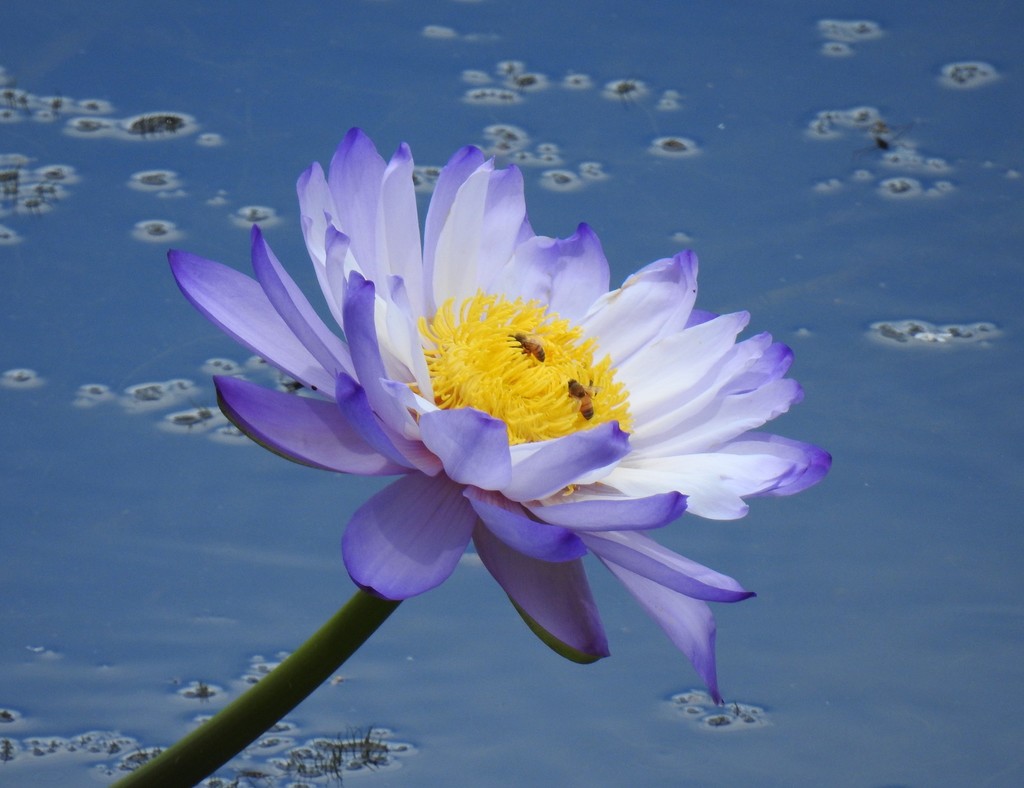
Waterlily Family
Nymphaeaceae
Nymphaeaceae () is a family of flowering plants, commonly called water lilies. They live as rhizomatous aquatic herbs in temperate and tropical climates around the world. The family contains five genera with about 70 known species. Water lilies are rooted in soil in bodies of water, with leaves and flowers floating on or rising from the surface. Leaves are oval and heart-shaped in Barclaya. Leaves are round, with a radial notch in Nymphaea and Nuphar, but fully circular in Victoria and Euryale.
Water lilies are a well-studied family of plants because their large flowers with multiple unspecialized parts were initially considered to represent the floral pattern of the earliest flowering plants. Later genetic studies confirmed their evolutionary position as basal angiosperms. Analyses of floral morphology and molecular characteristics and comparisons with a sister taxon, the family Cabombaceae, indicate, however, that the flowers of extant water lilies with the most floral parts are more derived than the genera with fewer floral parts. Genera with more floral parts, Nuphar, Nymphaea, Victoria, have a beetle pollination syndrome, while genera with fewer parts are pollinated by flies or bees, or are self- or wind-pollinated. Thus, the large number of relatively unspecialized floral organs in the Nymphaeaceae is not an ancestral condition for the clade.
5 branches of this family, most-observed first

Waterlilies
genusNymphaea

yellow pond-lilies
genusNuphar

Giant Waterlilies
genusVictoria
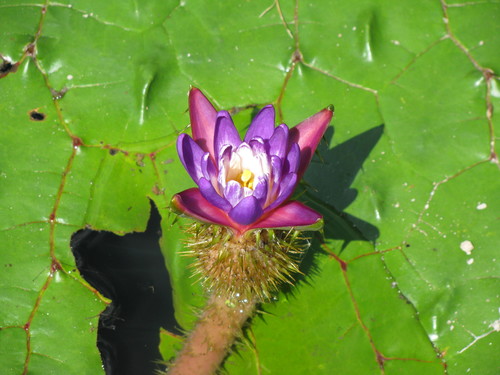
Euryale
genusEuryale

Barclaya
genusBarclaya
Where it lives
Recorded sightings
—
geo-referenced records in GBIF, from museums, herbaria and field observers.
Drag the globe to turn it. Dots are where records exist, not a range map; darker means more records.
In the stacks
Searching the stacks…
Every page naming Nymphaeaceae in the Biodiversity Heritage Library →
This page is assembled live from iNaturalist, GBIF, Wikipedia, the Source Library and the Internet Archive. It is not yet part of the hand-edited codex. iNaturalist taxon 51121.