- Plants
- ›Vascular Plants
- ›flowering plants
- ›Dicots
- ›Mallows, Rock Roses, and Allies
- ›Mallow and Hibiscus Family
- ›Linden subfamily
- ›Tilia
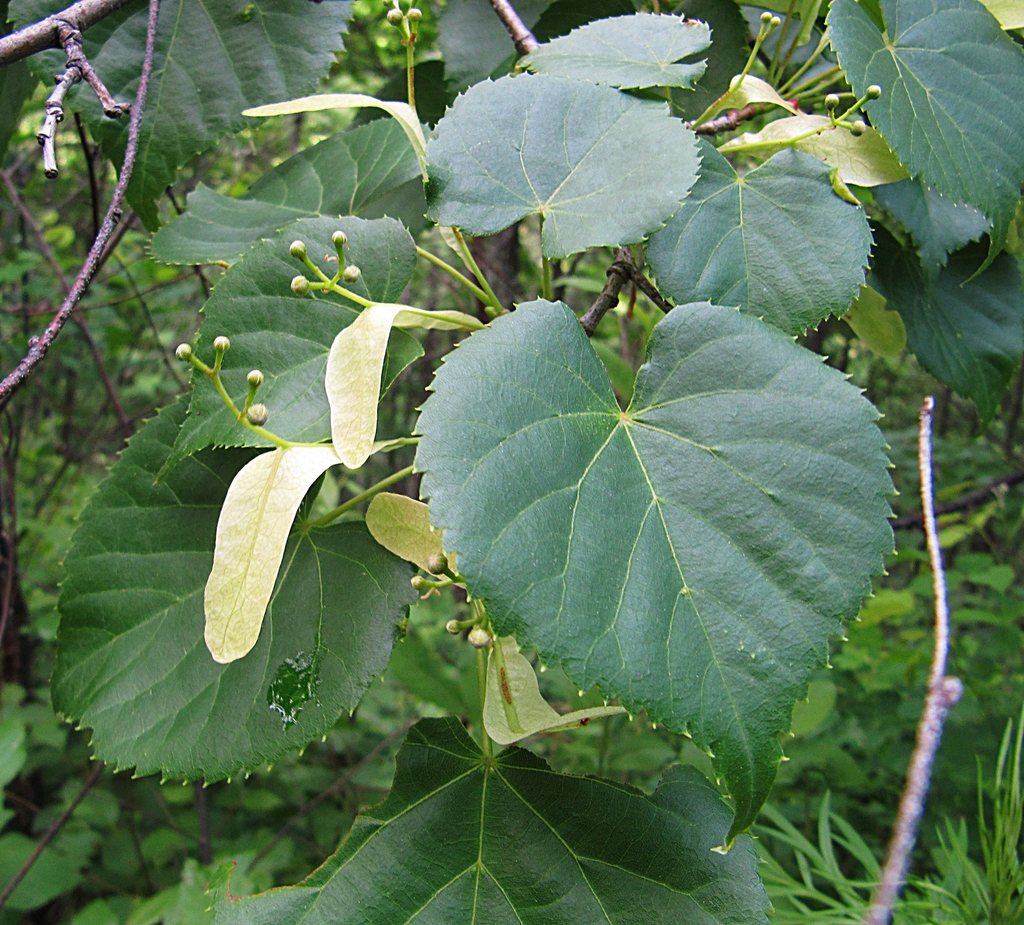
Amur Lime
Tilia amurensis
Tilia amurensis, commonly known as the Amur lime or Amur linden, is a species of Tilia native to eastern Asia. It differs from the better-known Tilia cordata in having somewhat smaller leaves, bracts, and cymes. It is an important timber tree in Russia, China, and Korea, and is occasionally planted as a street tree in cities with colder climates.
From the article Tilia amurensis on Wikipedia (CC BY-SA), quoted section by section
Description
Tilia amurensis is a medium-sized shade tree that can grow up to 30 m (98 ft) tall. Its appearance is quite similar to Tilia japonica besides the difference in size of leaves and bracts and a shorter cyme. T. amurensis is a hermaphrodite, which means the flower contains both female and male organs, and is mainly pollinated by insects.
Range & habitat
Tilia amurensis prefers a medium moisture level and fertile, well drained, loamy soil. It has the ability to adapt to several different ranges of soil conditions, as well as a good tolerance for urban conditions. It is often found in mixed forests across China, North Korea, South Korea, Russia, and north-east Siberia.
Wikipedia: “Habitat”
What it does
The leaves of the tree tend to begin to emerge around late spring to early June. In areas with clement winters, the tree is known for badly frosting after emerging early. Its lifespan is generally around 50 years, with many going on to live much longer in situations where they are maintained well and kept free of disease.
Wikipedia: “Life cycle”
At the table
Tilia amurensis is not commonly used as a supplement for food. The leaves are edible, but it is known as a famine food, only to be consumed if no better options exist. A substitute for chocolate can be made from a paste of its ground fruits and flowers. This has not become a popular product due to the paste decomposing very easily and rapidly.
Wikipedia: “Food”
In medicine
Tea can be made from the leaves, which has an antispasmodic, diaphoretic, and sedative effect.
Wikipedia: “Medicine”
Where it lives
Recorded sightings
—
geo-referenced records in GBIF, from museums, herbaria and field observers.
Drag the globe to turn it. Dots are where records exist, not a range map; darker means more records.
In the stacks
Searching the stacks…
Every page naming Tilia amurensis in the Biodiversity Heritage Library →
This page is assembled live from iNaturalist, GBIF, Wikipedia, the Source Library and the Internet Archive. It is not yet part of the hand-edited codex. iNaturalist taxon 501604.