- Animals
- ›Arthropods
- ›Hexapods
- ›Insects
- ›Winged and Once-winged Insects
- ›Butterflies and Moths
- ›Hawk, Sphinx, Silk, Emperor, and Allied Moths
- ›Sphinx Moths
- ›Smerinthinae
- ›Smerinthini
- ›Paonias
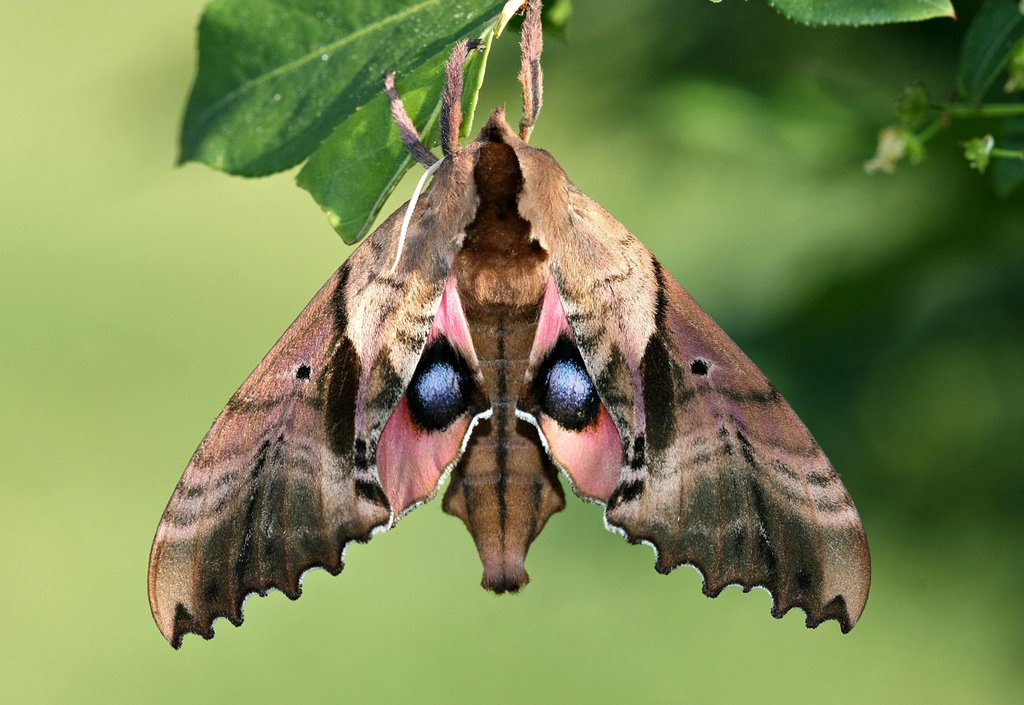
Blinded Sphinx
Paonias excaecata
Paonias excaecatus (blinded sphinx) is a moth of the family Sphingidae. It is found in Nova Scotia, New Brunswick and Prince Edward Island, and across the rest of Canada all the way to British Columbia. In the United States it ranges south to Florida in the east, and westward to eastern California and as far south as central Texas.
From the article Paonias excaecatus on Wikipedia (CC BY-SA), quoted section by section
Description
The wingspan is 60–85 mm. Adult moths are nocturnal; after a brief bout of activity after dusk, they seem to prefer the later hours of the night. The eggs are greenish yellow and small. Hornworms hatch after about 8 days. Primary food sources for the larvae are deciduous trees such as willows, birch and cherries, as well as shrubberies, like ninebark and roses. Like the rest of the family Sphingidae, they burrow shallowly into soil to pupate. Once they leave their pupa, the adults almost immediately mate. Adults do not feed.
Range & habitat
It is found in Nova Scotia, New Brunswick and Prince Edward Island, and across the rest of Canada all the way to British Columbia. In the United States it ranges south to Florida in the east, and westward to eastern California and as far south as central Texas.
Wikipedia: “Distribution”
Listen
Looking for field recordings…
Where it lives
Recorded sightings
—
geo-referenced records in GBIF, from museums, herbaria and field observers.
Drag the globe to turn it. Dots are where records exist, not a range map; darker means more records.
In the stacks
Searching the stacks…
Every page naming Paonias excaecata in the Biodiversity Heritage Library →
This page is assembled live from iNaturalist, GBIF, Wikipedia, the Source Library and the Internet Archive. It is not yet part of the hand-edited codex. iNaturalist taxon 49716.