
Scorpionflies, Hangingflies, and Allies
Mecoptera
Mecoptera (from Ancient Greek μῆκος (mêkos), meaning 'length', and πτερόν (pterón), meaning 'wing') is an order of insects in the superorder Holometabola with about six hundred species in nine families worldwide. Mecopterans are sometimes called scorpionflies after their largest family, Panorpidae, in which the males have enlarged genitals raised over the body that look similar to the stingers of scorpions, and long beaklike rostra. The Bittacidae, or hangingflies, are another prominent family and are known for their elaborate mating rituals, in which females choose mates based on the quality of gift prey offered to them by the males. A smaller group is the snow scorpionflies, family Boreidae, adults of which are sometimes seen walking on snowfields. In contrast, the majority of species in the order inhabit moist environments in tropical locations.
The Mecoptera are closely related to the Siphonaptera (fleas), with some studies suggesting that the fleas are a derived group of parasitic mecopterans, and a little more distantly related to the Diptera (true flies). They are somewhat fly-like in appearance, being small to medium-sized insects with long slender bodies and narrow membranous wings. Most breed in moist environments such as leaf litter or moss, and the eggs may not hatch until the wet season arrives. The larvae are caterpillar-like and mostly feed on vegetable matter, and the non-feeding pupae may pass through a diapause until weather conditions are favorable.
10 branches of this order, most-observed first

Scorpionflies
familyPanorpidae

Hangingflies
familyBittacidae

Snow Scorpionflies
familyBoreidae

Earwigflies
familyMeropeidae
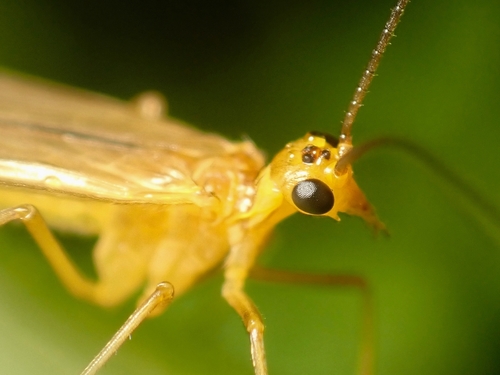
Short-faced Scorpionflies
familyPanorpodidae

Choristidae
familyChoristidae
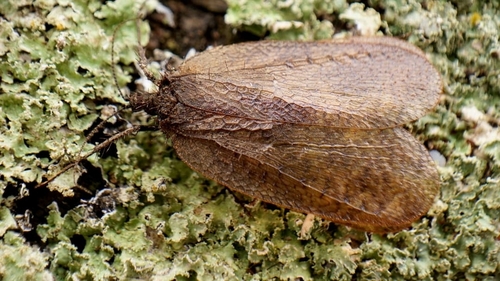
Eomeropidae
familyEomeropidae

Nannomecoptera
suborderNannomecoptera

Tasmanian Snow Scorpionflies
familyApteropanorpidae
Panorpoidea
superfamilyPanorpoidea
Where it lives
Recorded sightings
—
geo-referenced records in GBIF, from museums, herbaria and field observers.
Drag the globe to turn it. Dots are where records exist, not a range map; darker means more records.
In the stacks
Searching the stacks…
Every page naming Mecoptera in the Biodiversity Heritage Library →
This page is assembled live from iNaturalist, GBIF, Wikipedia, the Source Library and the Internet Archive. It is not yet part of the hand-edited codex. iNaturalist taxon 49369.