- Plants
- ›Vascular Plants
- ›flowering plants
- ›Dicots
- ›nightshades, bindweeds, gooseweeds, and allies
- ›nightshade family
- ›nightshades and allies
- ›devil's and angel's trumpets

Devil's Trumpets
Datura
Datura is a genus of nine species of highly poisonous, vespertine-flowering plants belonging to the nightshade family (Solanaceae). They are commonly known as thornapples or jimsonweeds, but are also known as devil's trumpets or mad apple (not to be confused with angel's trumpets, which are placed in the closely related genus Brugmansia). Other English common names include moonflower, devil's weed and hell's bells. All species of Datura are extremely poisonous and psychoactive, especially their seeds and flowers, which can cause respiratory depression, arrhythmias, fever, delirium, hallucinations, anticholinergic toxidrome, psychosis, and death if taken internally.
The name Datura originates from the Sanskrit word for "thorn-apple," with historical and cultural significance in Ayurveda and Hinduism, while the American term "jimsonweed" derives from its prevalence in Jamestown, Virginia, where it was called "Jamestown-Weed." Datura species are herbaceous annual or short-lived perennial plants up to two meters tall with trumpet-shaped flowers and spiny fruit capsules, historically used in traditional medicine, especially in India, where they hold cultural and ritual significance. Datura species classification is complex due to high variability and overlapping traits among species, with many "new species" later reclassified as local varieties or subspecies; most species are native to Mexico, though some have disputed native ranges outside the Americas. Datura is closely related to Brugmansia and the recently established Trompettia.
14 branches of this genus, most-observed first
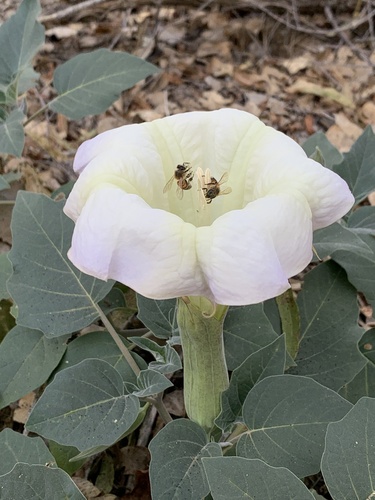
Sacred Datura
speciesDatura wrightii
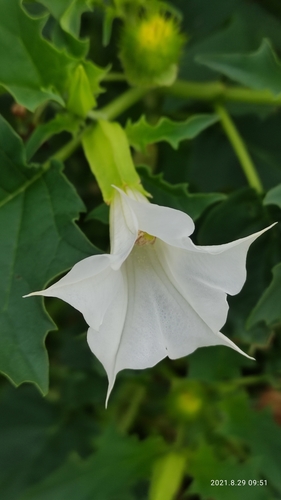
jimsonweed
speciesDatura stramonium
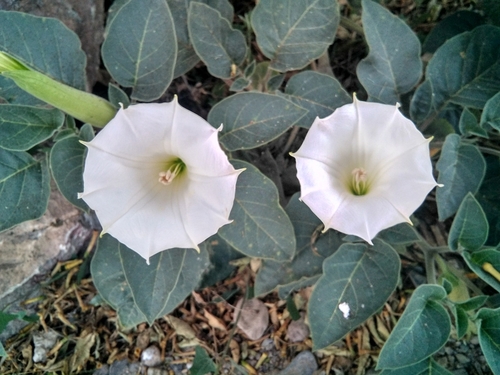
downy thorn-apple
speciesDatura innoxia
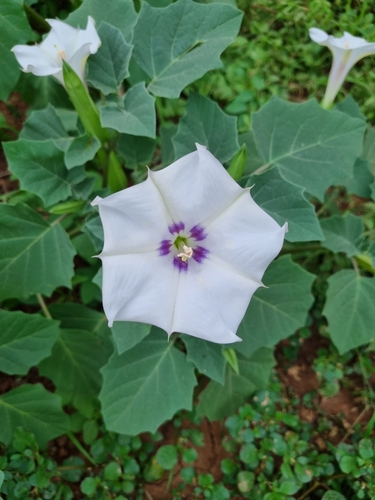
desert thorn-apple
speciesDatura discolor
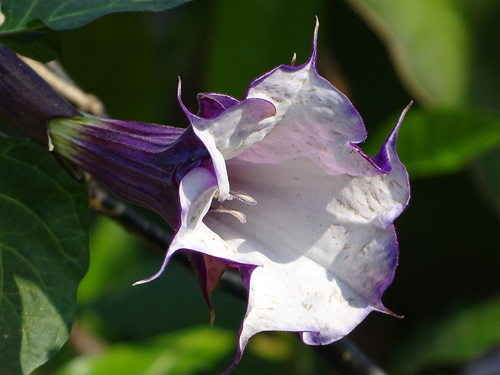
metel devil's trumpet
speciesDatura metel
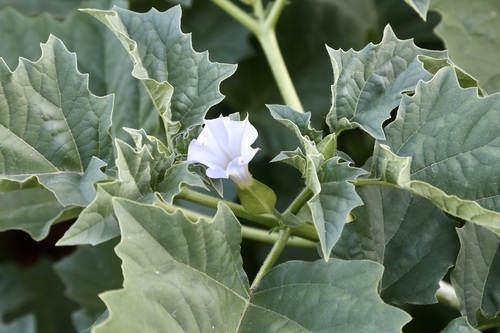
long-spined thorn-apple
speciesDatura ferox
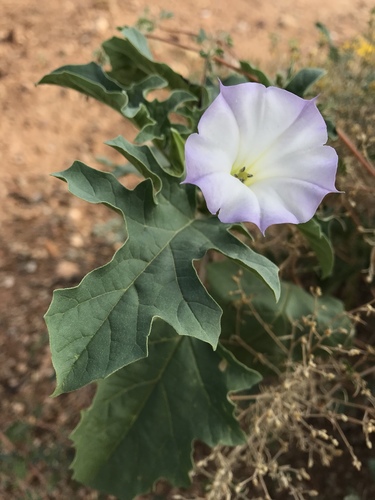
Oak-leaved Thorn-apple
speciesDatura quercifolia
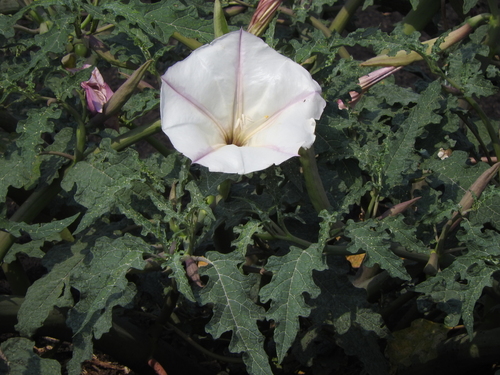
Latin thorn-apple
speciesDatura ceratocaula

Leichhardt's Datura
speciesDatura leichhardtii

sand thorn-apple
speciesDatura arenicola

Datura lanosa
speciesDatura lanosa

Pruinose Thorn-apple
speciesDatura pruinosa
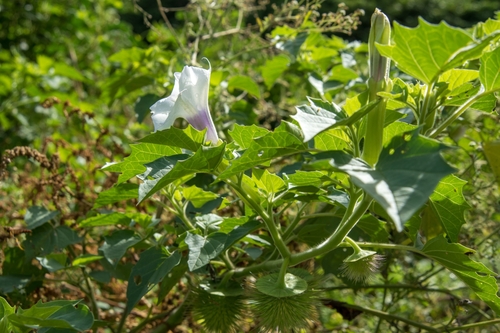
Datura kymatocarpa
speciesDatura kymatocarpa
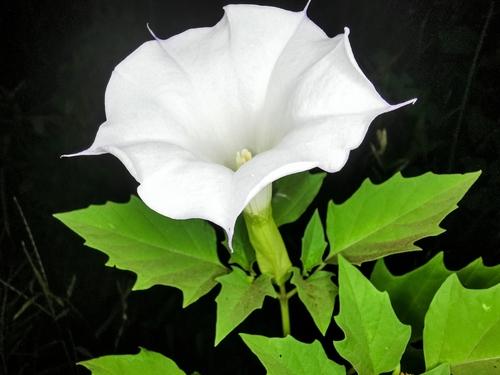
Datura reburra
speciesDatura reburra
Where it lives
Recorded sightings
—
geo-referenced records in GBIF, from museums, herbaria and field observers.
Drag the globe to turn it. Dots are where records exist, not a range map; darker means more records.
In the old herbals & bestiaries

Book of Herbs
Hieronymus Bock (Tragus) · 1546 · p.709

Tractado de las Drogas y Medicinas de las Indias Orientales
Cristóvão da Costa · 1578 · p.116

Notable Commentaries on the History of Plants
Leonhart Fuchs · 1549 · p.722

On the Names of Plants
Hieronymus Bock (Tragus) · 1552 · p.968

Six Groups of the History of Plants
Rembert Dodoens · 1583 · p.478

Compendium of Materia Medica
李時珍 · 1596 · p.106

Ten Books of Exotic Things
Carolus Clusius · 1605 · p.309

Hortus Eystettensis
Basilius Besler · 1640 · p.365

Treasury of Medical Matters of New Spain
Francisco Hernández · 1651 · p.157

The Dutch Herbarium or Herbal
Petrus Nylandt · 1670 · p.186

Garden of Malabar, Vol. 1
Hendrik van Rheede · 1683 · p.261

Jan Moninckx; Maria Moninckx — Moninckx Atlas, vol. 1 (1686)
Jan Moninckx; Maria Moninckx · 1687 · p.15
In the stacks
Searching the stacks…
Every page naming Datura in the Biodiversity Heritage Library →
This page is assembled live from iNaturalist, GBIF, Wikipedia, the Source Library and the Internet Archive. It is not yet part of the hand-edited codex. iNaturalist taxon 48943.