- Plants
- ›Vascular Plants
- ›flowering plants
- ›monocots
- ›Agaves, Orchids, Irises, and Allies
- ›agave and allies
- ›Century plant subfamily
soap plants
Chlorogalum
The common names soap plant, soaproot and amole refer to the genus Chlorogalum. They are native to western North America, with some species in Oregon but mostly found in California. Common names of the genus and several species derive from their use as soap.
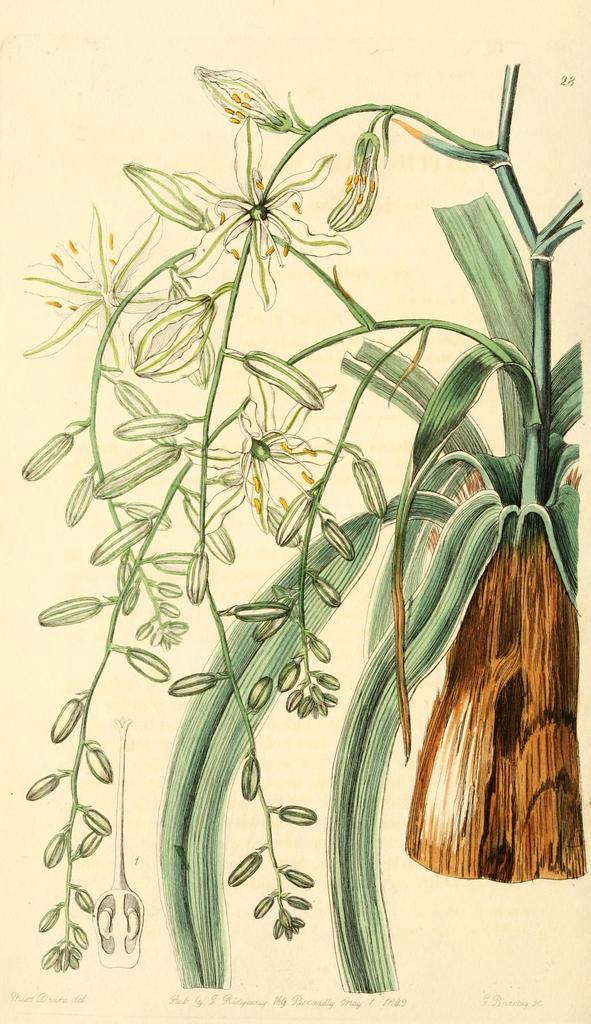
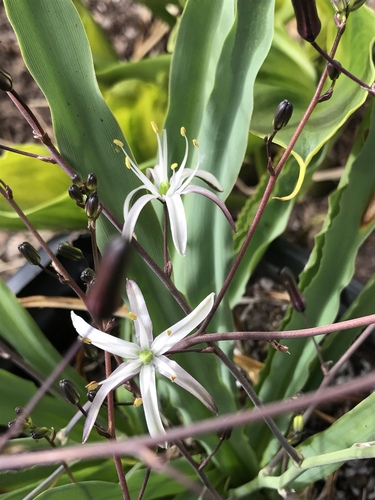
Soap plants are perennial plants, with more or less elongated bulbs, depending on the species. The bulbs can be white or brown, and in most species have a fibrous coat. The flowers are borne on a long central stem, and appear to have six separate petals (not all are petals in the technical sense). There are six stamens, which are prominent in most species.


Where it lives
Recorded sightings
—
geo-referenced records in GBIF, from museums, herbaria and field observers.
Drag the globe to turn it. Dots are where records exist, not a range map; darker means more records.
In the stacks
Searching the stacks…
Every page naming Chlorogalum in the Biodiversity Heritage Library →
This page is assembled live from iNaturalist, GBIF, Wikipedia, the Source Library and the Internet Archive. It is not yet part of the hand-edited codex. iNaturalist taxon 47598.