- Plants
- ›Vascular Plants
- ›flowering plants
- ›Dicots
- ›Soapberries, Cashews, Mahoganies, and Allies
- ›soapberry family
- ›Sapindus
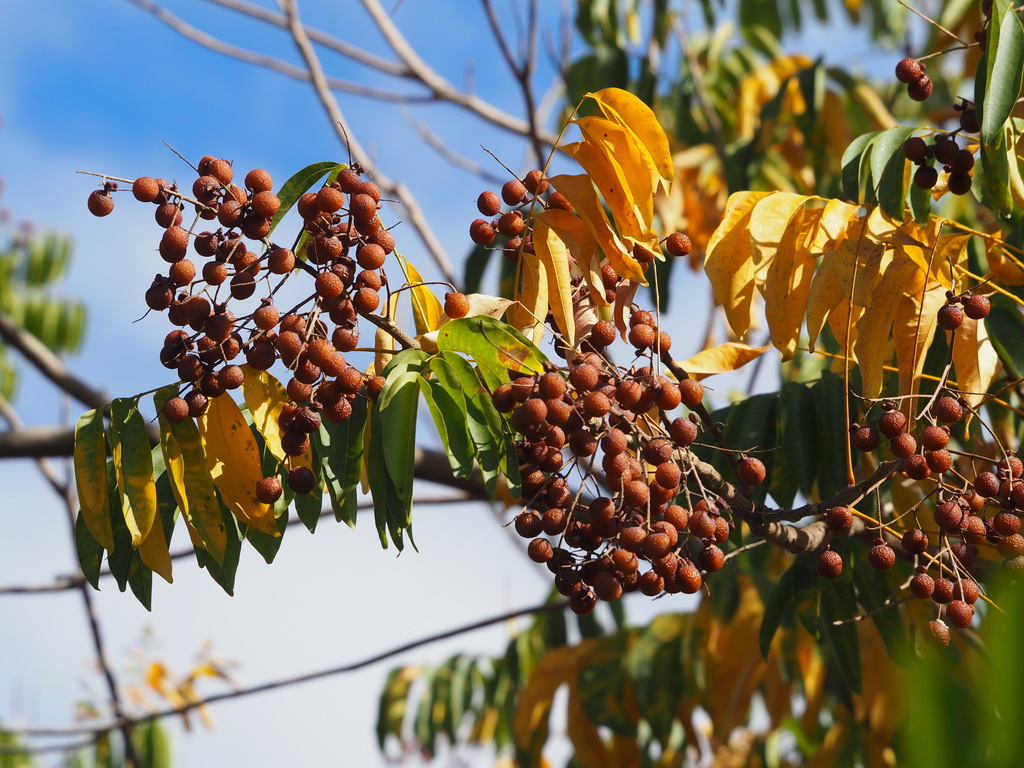
Reetha
Sapindus mukorossi
Sapindus mukorossi, commonly known as Indian soapberry, washnut, ritha or Chinese soapberry, is a species of tree in the family Sapindaceae. It is a deciduous tree that grows in the lower foothills and midhills of the Himalayas at altitudes of up to 1,200 metres (4,000 ft). It is also native to western coastal Karnataka, Maharashtra, and Goa in India; as well as Nepal Indochina, southern China, Japan and Taiwan as known by its many indigenous peoples. It is tolerant to reasonably poor soil, can be planted around farmers' homes, and one tree can produce 30 to 35 kilograms (66 to 77 lb) of fruit per year.
It is known by several regional names across India, including ritha, ringin, and pitha in Marathi; ritha in Hindi; aritha in Gujarati; antavala and kugatemar in Kannada; and arishta and phenila in Sanskrit.
From the article Sapindus mukorossi on Wikipedia (CC BY-SA), quoted section by section
Range & habitat
Native to South India, the tree naturally grows in sparse forest regions along coastlines and lower mountain slopes. It is cultivated in rural areas of West Bengal, Bihar, Madhya Pradesh, and Uttar Pradesh. Propagation is carried out using seeds or saplings. The tree is also planted in home gardens for ornamental purposes.
Wikipedia: “Distribution and cultivation”
Where it lives
Recorded sightings
—
geo-referenced records in GBIF, from museums, herbaria and field observers.
Drag the globe to turn it. Dots are where records exist, not a range map; darker means more records.
In the old herbals & bestiaries

In the stacks
Searching the stacks…
Every page naming Sapindus mukorossi in the Biodiversity Heritage Library →
This page is assembled live from iNaturalist, GBIF, Wikipedia, the Source Library and the Internet Archive. It is not yet part of the hand-edited codex. iNaturalist taxon 475356.