- Animals
- ›Chordates
- ›Vertebrates
- ›Mammals
- ›Therians
- ›Placental Mammals
- ›Armadillos, Sloths, and Anteaters
- ›Armadillos
- ›Short-nosed Armadillos
- ›Tolypeutidae
- ›Three-banded, Giant, and Naked-tailed Armadillos

Giant armadillos
Priodontes
The giant armadillo (Priodontes maximus), colloquially tatu-canastra, tatou, ocarro or tatú carreta, is the largest living species of armadillo (although their extinct relatives the glyptodonts were much larger). It lives in South America, ranging throughout as far south as northern Argentina. It is considered to be a vulnerable species.
The giant armadillo prefers termites and some ants as prey, and often consumes the entire population of a termite mound. It also has been known to prey upon worms, larvae and larger creatures, such as spiders and snakes, and plants. Some giant armadillos have been reported to have eaten bees by digging into beehives.
1 branches of this genus, most-observed first · about 1 known species
See this branch on the Wheel of Life →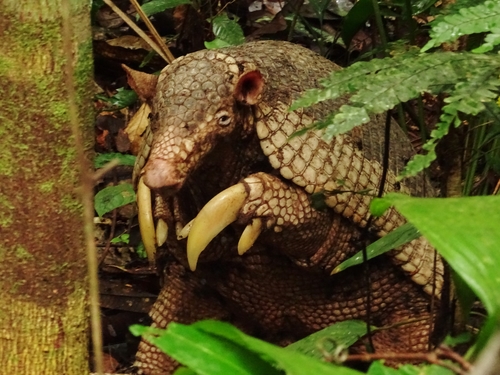
Where it lives
Recorded sightings
—
geo-referenced records in GBIF, from museums, herbaria and field observers.
Drag the globe to turn it. Dots are where records exist, not a range map; darker means more records.
In the stacks
Searching the stacks…
Every page naming Priodontes in the Biodiversity Heritage Library →
This page is assembled live from iNaturalist, GBIF, Wikipedia, the Source Library and the Internet Archive. It is not yet part of the hand-edited codex. iNaturalist taxon 47084.