- Animals
- ›Arthropods
- ›Hexapods
- ›Insects
- ›Winged and Once-winged Insects
- ›True Bugs, Hoppers, Aphids, and allies
- ›True Bugs
- ›Cimicomorph Bugs
- ›Miroidea
- ›Plant Bugs
- ›Mirinae
- ›Stenodemini
- ›Stenodema
- ›Stenodema
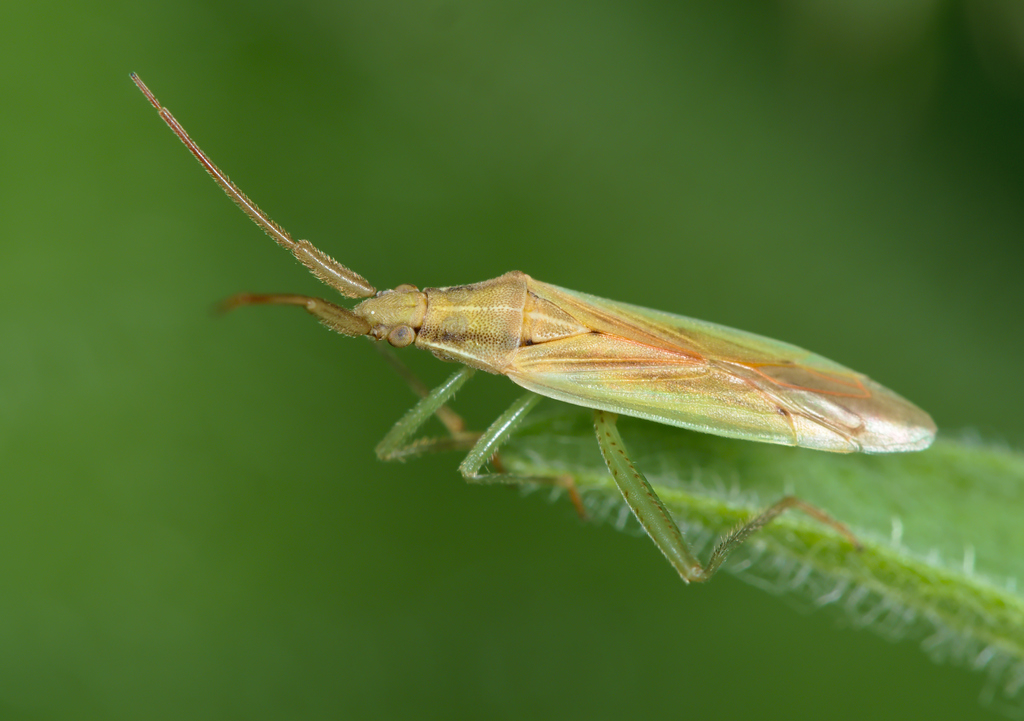
Grass bug
Stenodema laevigata
Stenodema laevigatum, or sometimes Stenodema laevigata (also called grass bug), is a species of bug from Miridae family. The species have a gray to brown elongated body, with the eyes located backwards in the head. They sometimes come in green colour, and are 8–10 millimetres (0.31–0.39 in) in length, which makes it a rather big species of its kind. They are common in the United Kingdom, and throughout the rest of Europe. then east across the Palearctic through Asia Minor and the Caucasus to northern China.
From the article Stenodema laevigatum on Wikipedia (CC BY-SA), quoted section by section
Description
Adults are 7–10 millimetres (0.28–0.39 in) long. The species are of light-green colour, but can come in yellow or brown. The species lacks femoral spurs, and have densely pitted prothorax.
What it does
The larvae are light yellowish and is born in summer, with adults taking over by August. Adults and larvae are both feeding on unripe grains, which includes: Alopecurus, Dactylis, Festuca and wheat. Sometimes, larvae might suck juices from leaves and stems. They start to eat grass seeds and flowers by later development. The larvae hibernate in winter, by living in a soil, and leaf litter. Both males and females mate in spring, with the males being greener than females. The larvae are active from May–July, after which the new generation appears, which will last till next spring.
Wikipedia: “Ecology”
Listen
Looking for field recordings…
Where it lives
Recorded sightings
—
geo-referenced records in GBIF, from museums, herbaria and field observers.
Drag the globe to turn it. Dots are where records exist, not a range map; darker means more records.
In the stacks
Searching the stacks…
Every page naming Stenodema laevigata in the Biodiversity Heritage Library →
This page is assembled live from iNaturalist, GBIF, Wikipedia, the Source Library and the Internet Archive. It is not yet part of the hand-edited codex. iNaturalist taxon 469906.