- Animals
- ›Arthropods
- ›Hexapods
- ›Insects
- ›Winged and Once-winged Insects
- ›Flies
- ›Brachyceran Flies
- ›Orthorrhaphan Flies
- ›Asiloidea
- ›Bee Flies
- ›Anthracinae
- ›banded bee flies
- ›Poecilanthrax
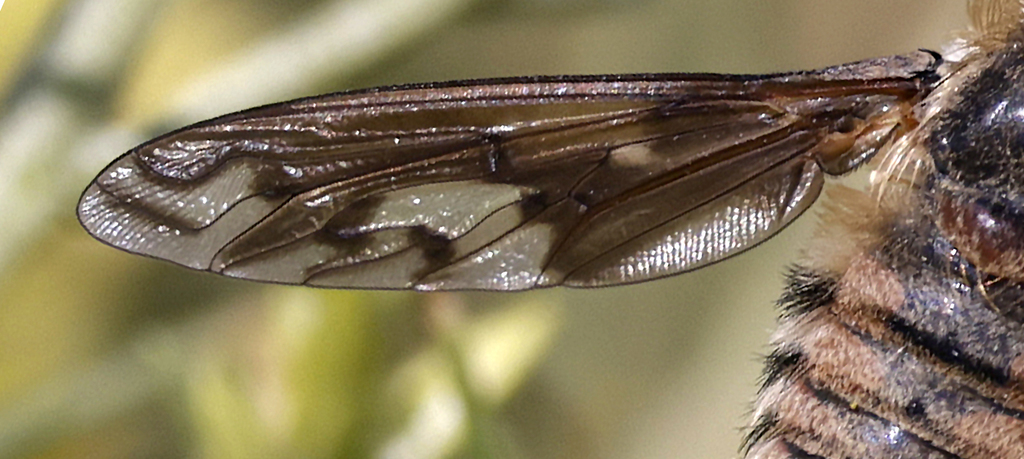
Williston's bee fly
Poecilanthrax willistonii
Poecilanthrax willistonii, Williston's bee fly or sand dune bee fly, is a member of the Bombyliidae insect family. This family includes the bee flies, true flies that have developed Batesian mimicry characteristics to avoid predators. That is, they look like bees because that helps them avoid bee-wary predators, but they lack stingers.
P. willistonii also has larvae that act as parasitoids on other insect species. They drop their eggs strategically so that when the larvae emerge they can easily locate and consume grubs and caterpillars. The bee fly sometimes propels its eggs into holes where beetles live, and when the bee fly's eggs hatch, the larvae attack and eat the beetles' offspring. This species of bee fly lives on sand dunes, and so parasitizes sand dune insect species.
From the article Poecilanthrax willistonii on Wikipedia (CC BY-SA), quoted section by section
Range & habitat
In Canada, it is found from British Columbia east to Manitoba, and its range extends south into much of the central and western United States, as well as Baja California, Mexico.
== References ==
Wikipedia: “Distribution”
Listen
Looking for field recordings…
Where it lives
Recorded sightings
—
geo-referenced records in GBIF, from museums, herbaria and field observers.
Drag the globe to turn it. Dots are where records exist, not a range map; darker means more records.
In the stacks
Searching the stacks…
Every page naming Poecilanthrax willistonii in the Biodiversity Heritage Library →
This page is assembled live from iNaturalist, GBIF, Wikipedia, the Source Library and the Internet Archive. It is not yet part of the hand-edited codex. iNaturalist taxon 453493.