- Plants
- ›Vascular Plants
- ›flowering plants
- ›Dicots
- ›Sunflowers, Bellflowers, Fanflowers, and Allies
- ›bellflower family
- ›bellflower subfamily
- ›Phyteuma
- ›Spicata
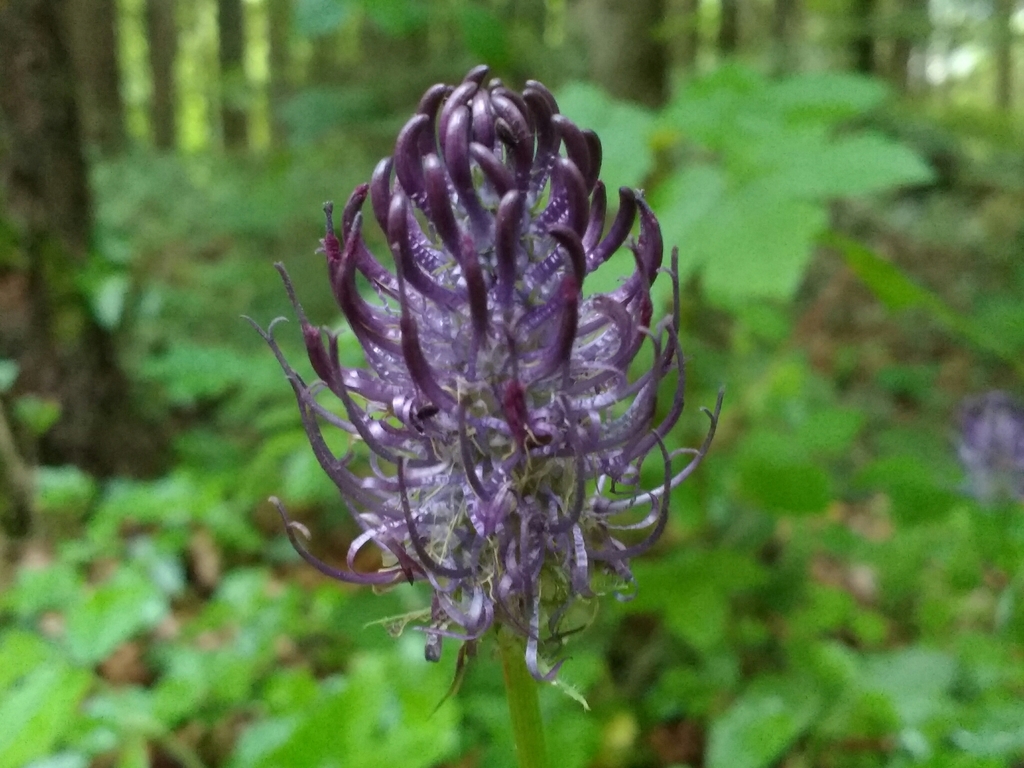
Black Rampion
Phyteuma nigrum
Phyteuma nigrum, the black rampion, is a relatively rare species of plant in the family Campanulaceae. P. nigrum is located in central to northern Europe, primarily concentrated in Scandinavia. Much progress is yet to be made in forming concrete evolutionary relationships within this family and between the genera, but the molecular data from P. nigrum has contributed to the progress made in completing the evolutionary tree. The decrease in P. nigrum numbers over the past few decades has prompted the investigation into the reasons behind such a decline, leading to the conclusion that the factors that lead to a healthy P. nigrum population also run the risk of harming the population if not in just the right amount. The delicate nature of this organism makes its survival and reproductive success that much more uncertain.
From the article Phyteuma nigrum on Wikipedia (CC BY-SA), quoted section by section
What it does
The method for pollination within Phyteuma nigrum is primarily animal-based, one animal in particular being the bumblebee. However, pollen limitation is a contributing factor for a lack of fertility within P. nigrum as well as other plants with relatively small populations such as Phyteyma spicatum. With P. nigrum being a relatively rare species, its small population contributes to the increasing struggle to successfully fertilize and disperse the next generation of sporophytes, that is, P. nigrum embryos. With a smaller population comes less frequent visitations from pollinators. With less pollination, and therefore fertilization, comes less competition between offspring, which negatively impacts the fitness of future generations of P. nigrum.
Wikipedia: “Pollination and reproduction”
Where it lives
Recorded sightings
—
geo-referenced records in GBIF, from museums, herbaria and field observers.
Drag the globe to turn it. Dots are where records exist, not a range map; darker means more records.
In the stacks
Searching the stacks…
Every page naming Phyteuma nigrum in the Biodiversity Heritage Library →
This page is assembled live from iNaturalist, GBIF, Wikipedia, the Source Library and the Internet Archive. It is not yet part of the hand-edited codex. iNaturalist taxon 450669.