- Plants
- ›Vascular Plants
- ›flowering plants
- ›Dicots
- ›pinks, cactuses, and allies
- ›cacti
- ›Opuntioideae
- ›Opuntieae
- ›Opuntia
Opuntia quimilo
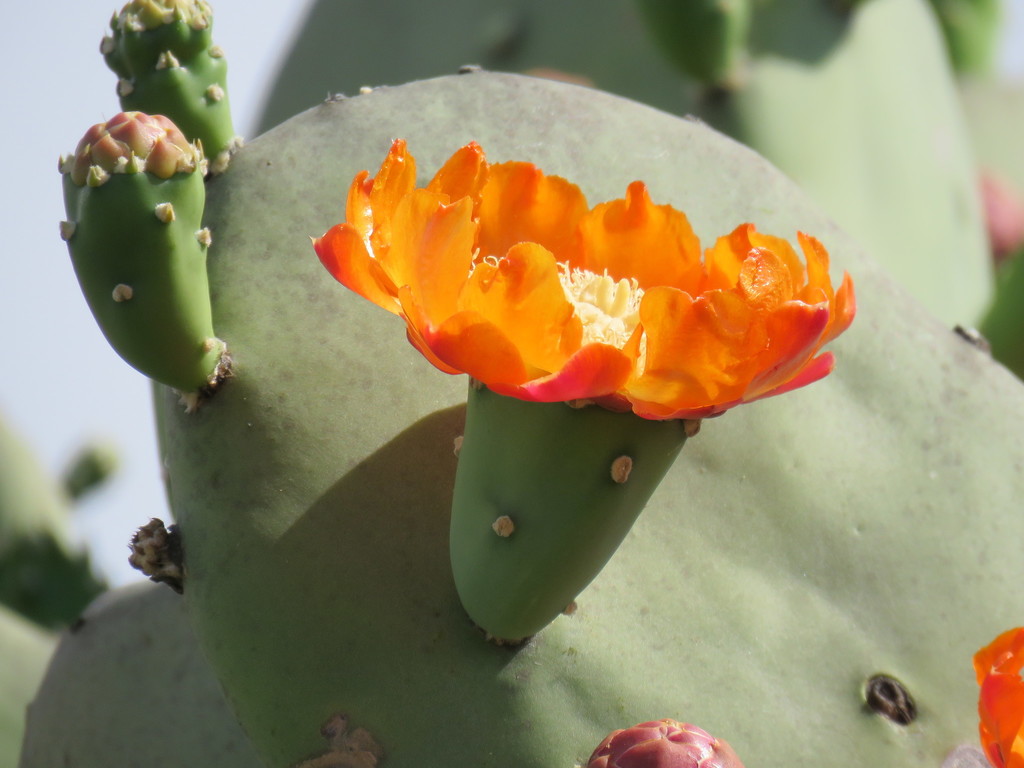
Opuntia quimilo is a tree cactus and flowering plant species belonging to the Cactaceae family. It is found in north-central Argentina and is widespread in Bolivia.
From the article Opuntia quimilo on Wikipedia (CC BY-SA), quoted section by section
Description
Opuntia quimilo grows as a multi-branched tree with a clearly identifiable stem, reaching a height of up to ten meters. The large, elliptical to oblong sections are glossy, greenish-grey, and measure up to 50 centimeters long, 25 centimeters wide, and 2 to 3 cm thick. The flowers, which are red or orange, are up to 7 centimeters in diameter. The fruits are pear-shaped to spherical, greenish-yellow, and 5–7 cm long.
What it does
It is pollinated by bees of the genera: Arhysosage, Augochloropsis, Megachile, Lithurgus, Xylocopa, Tetrapedia, Melipona and the species Ptilothrix tricolor, Diadasia patagonica, Bombus morio, Apis mellifera and Polybia ignobilis. It is also pollinated by hummingbird species Heliomaster furcifer and Chlorostilbon lucidus. It is assessed as "Least Concern" by the International Union for Conservation of Nature Red List.
Wikipedia: “Ecology”
In human culture
Opuntia: generic name coming from the Greek used by Pliny the Elder for a plant that grew around the city of Opus in Greece. quimilo: epithet derived from the common name "quimilo" used by locals to describe the species.
== References ==
Wikipedia: “Etymology”
Where it lives
Recorded sightings
—
geo-referenced records in GBIF, from museums, herbaria and field observers.
Drag the globe to turn it. Dots are where records exist, not a range map; darker means more records.
In the stacks
Searching the stacks…
Every page naming Opuntia quimilo in the Biodiversity Heritage Library →
This page is assembled live from iNaturalist, GBIF, Wikipedia, the Source Library and the Internet Archive. It is not yet part of the hand-edited codex. iNaturalist taxon 441425.