- Plants
- ›Vascular Plants
- ›flowering plants
- ›monocots
- ›Aroids, Water Plantains, Seagrass, and allies
- ›aponogeton family
- ›Aponogeton
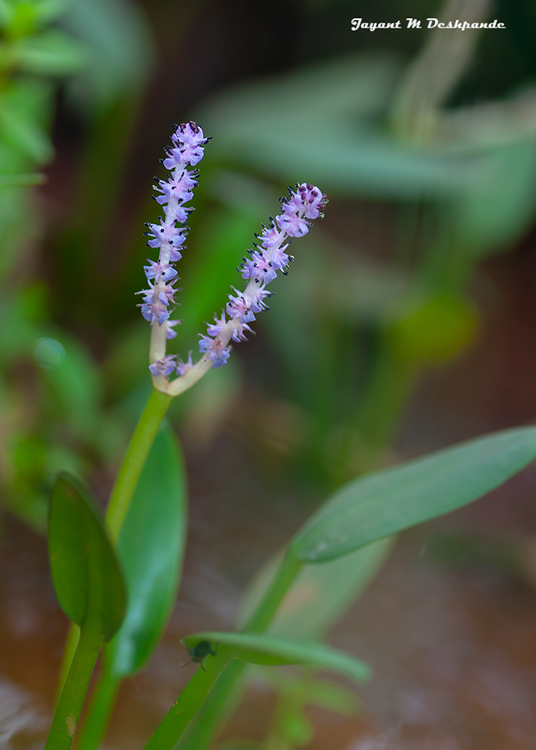
Aponogeton satarensis
Aponogeton satarensis is a species of aquatic herb in the family Aponogetonaceae endemic to the northern Western Ghats (Maharashtra) of India. It is sometimes commonly known as the Satara lace plant. In Marathi it is known as "y-tura" (वायतुरा). Another common name is Satara aponogeton.
From the article Aponogeton satarensis on Wikipedia (CC BY-SA), quoted section by section
Description
Aponogeton satarensis is a scapigerous, tuberous herb. It is an annual aquatic plant, typically reaching heights of 10–25 cm. It is dioecious, with root tubers that are globose or ellipsoid, measuring 14–16 mm across. The plant features dioecious spikes, forked and purple in color. Male inflorescences are 5–7 cm long with purple tepals that fade to rose or pale white. Stamens are typically 5-6 and measure 2 mm in length. Female inflorescences are shorter, ranging from 2.5 to 3.5 cm, with purple carpels containing 2 ovules per carpel. Fruiting peduncles can grow up to 12 cm long, bearing 1-2 seeds.
Range & habitat
Aponogeton satarensis is endemic and native to India. It has been observed in various locations including Mhavashi (the type locality), Kas, Patan ferricretes in Satara district, and Gothane ferricrete in the Western Ghats, which is part of Ratnagiri district. Additionally, it's also been recorded at the Chalkewadi plateau in Satara district, Maharashtra, and is known to inhabit the Amboli area in Maharashtra as well.
Wikipedia: “Range”
What it does
Aponogeton satarensis is typically found in temporary ponds and puddles alongside other hydrophytes such as Eriocaulon, Rotala, Myriophyllum, and Pogostemon. It flowers and fruits between June and August with its inflorescence emerging above the water. It closely resembles A. decaryi Jumelle but differs in several aspects, including similar sexes, longer and narrower lamina, purple tepals, longer fruiting inflorescence, and larger fruits.
Wikipedia: “Habitat and ecology”
In human culture
It is named after Satara district, Maharashtra, where the species is found abundantly.
== References ==
Wikipedia: “Etymology”
Where it lives
Recorded sightings
—
geo-referenced records in GBIF, from museums, herbaria and field observers.
Drag the globe to turn it. Dots are where records exist, not a range map; darker means more records.
In the stacks
Searching the stacks…
Every page naming Aponogeton satarensis in the Biodiversity Heritage Library →
This page is assembled live from iNaturalist, GBIF, Wikipedia, the Source Library and the Internet Archive. It is not yet part of the hand-edited codex. iNaturalist taxon 435811.