- Animals
- ›Arthropods
- ›Hexapods
- ›Insects
- ›Winged and Once-winged Insects
- ›Dragonflies and Damselflies
- ›Damselflies
- ›Lestoidea
- ›Spreadwings and allies
- ›Chalcolestes
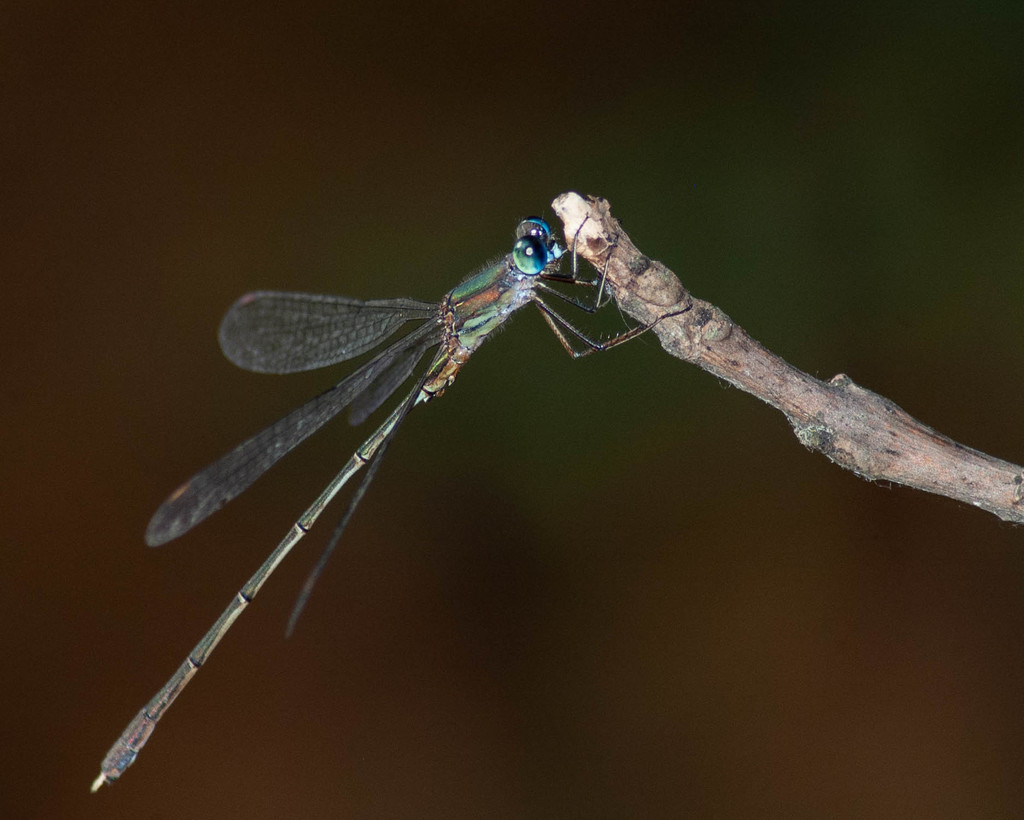
Eastern Willow Spreadwing
Chalcolestes parvidens
Chalcolestes parvidens, formerly Lestes parvidens, is a damselfly of the family Lestidae. It has a metallic green body and at rest it holds its wings away from its body. Its common name in English is the eastern willow spreadwing.
From the article Chalcolestes parvidens on Wikipedia (CC BY-SA), quoted section by section
Range & habitat
Chalcolestes parvidens is found in eastern and central Europe, in Croatia, Bulgaria, Greece, Italy, Syria, Jordan, Israel and Turkey. It is found on islands in the eastern Mediterranean; on Cyprus, Corsica, Crete and Sicily. In Italy and the Balkans both C. parvidens and C. viridis occur together. It is only in the last 20 years that odonaterists have been separating C. parvidens from C. viridis so some of the older records for C. viridis will probably be for C. parvidens.
Wikipedia: “Distribution and habitat”
What it does
Flight period is generally from May to November. In Cyprus, the flight season is from early April to January. Behaviour is similar to that described in C. viridis. It hangs with wings spread wide, often in the shade of trees near breeding water. Mature males defend vertical territories in marginal shrubs and small trees where they find and mate with females in the normal damselfly manner forming the wheel position. Egg laying occurs with the pair in tandem, the eggs being laid into incisions in the bark of overhanging branches, not into submerged vegetation as is the case in many damselflies. Egg laying can result in distinct oval galls forming in the shrub's bark. The eggs develop rapidly for a few weeks and then enter a diapause state. In this state the eggs development is very slow and it is in this state that the eggs overwinter. The following spring the eggs hatch, the larvae drop into the water and start to develop. Growth is rapid and adults can emerge in a couple of months. After emerging the adults move away from water to mature. In this stage of their life-cycle which in C. parvidens is quite long, the immature adults cannot breed. The adults need a period of time for their reproductive organs to develop and this non-breeding period also stops the adults breeding too early in the season. …
Wikipedia: “Behaviour”
Listen
Looking for field recordings…
Where it lives
Recorded sightings
—
geo-referenced records in GBIF, from museums, herbaria and field observers.
Drag the globe to turn it. Dots are where records exist, not a range map; darker means more records.
In the stacks
Searching the stacks…
Every page naming Chalcolestes parvidens in the Biodiversity Heritage Library →
This page is assembled live from iNaturalist, GBIF, Wikipedia, the Source Library and the Internet Archive. It is not yet part of the hand-edited codex. iNaturalist taxon 433429.