- Plants
- ›Vascular Plants
- ›flowering plants
- ›Dicots
- ›Mints, Plantains, Olives, and Allies
- ›figwort family
- ›Buddlejeae
- ›Buddleja
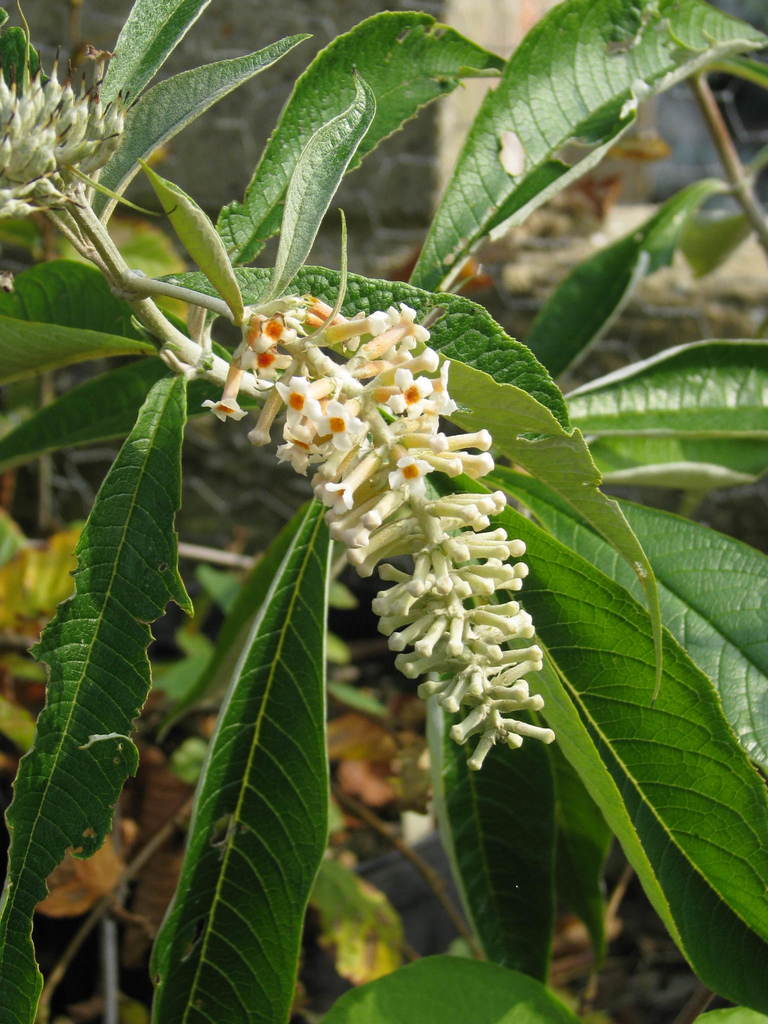
Buddleja paniculata
Buddleja paniculata is a species of flowering plant in the figwort family Scrophulariaceae,
endemic to a wide upland area from northern India to Bhutan, growing along forest margins, in thickets, and on rocky slopes at elevations of 500–3,000 m (1,600–9,800 ft). The species was named by Wallich and introduced to the UK in 1823 as seed sent by Major Madden from the Himalayas to the Glasnevin Botanic Garden.
From the article Buddleja paniculata on Wikipedia (CC BY-SA), quoted section by section
Description
Buddleja paniculata is a variable deciduous shrub or tree of bushy habit, occasionally reaching 6 m (20 ft) high. The sparse terminal panicles comprise white or pale lilac flowers, some forms pleasantly scented, others not, from December to mid-spring. The bright green lanceolate leaves are opposite, up to 25 cm (9.8 in) in length, and covered in fine hairs. 2n = 38.
How it is grown
Owing to its limited horticultural merit, B. paniculata is rarely cultivated. Moreover, it demands dry soils and frost protection over winter. In the UK, it is grown under glass as part of the NCCPG national collection at Longstock Park Nursery, near Stockbridge. Hardiness: USDA zone 8.
Wikipedia: “Cultivation”
Where it lives
Recorded sightings
—
geo-referenced records in GBIF, from museums, herbaria and field observers.
Drag the globe to turn it. Dots are where records exist, not a range map; darker means more records.
In the stacks
Searching the stacks…
Every page naming Buddleja paniculata in the Biodiversity Heritage Library →
This page is assembled live from iNaturalist, GBIF, Wikipedia, the Source Library and the Internet Archive. It is not yet part of the hand-edited codex. iNaturalist taxon 430755.