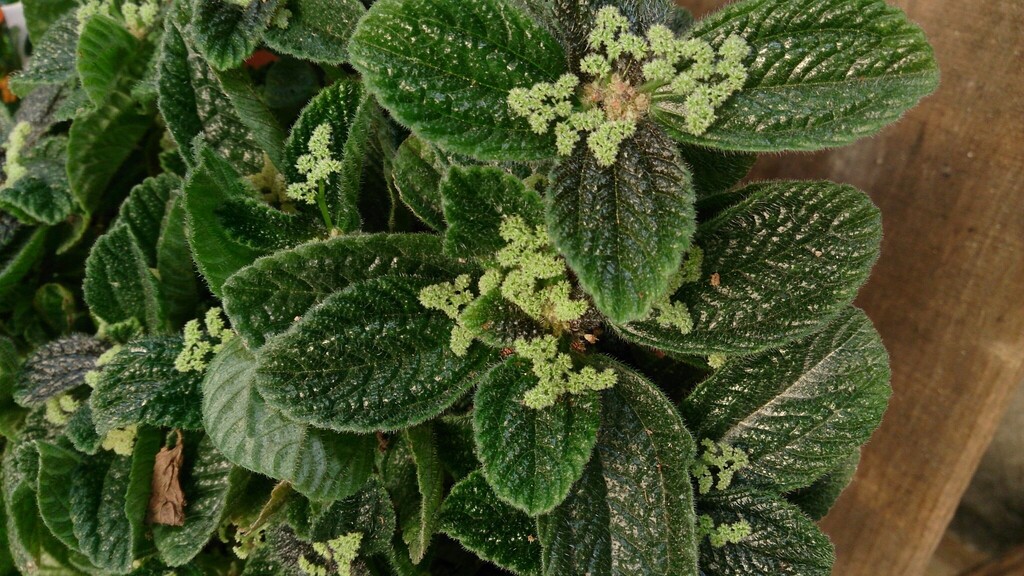
Pilea involucrata
Pilea involucrata (Sims) Urb., commonly known as the friendship plant, is a species of flowering plant in the nettle family Urticaceae, native to Central and South America. It is a popular houseplant due to its unique foliage and relatively easy care. This species is best known for its popular cultivar, Pilea involucrata 'Moon Valley'.
From the article Pilea involucrata on Wikipedia (CC BY-SA), quoted section by section
Description
Pilea involucrata is a bushy, trailing plant typically growing to a height and spread of 10–12 inches (25–30 centimetres). The species typically features bright green leaves with a quilted or corrugated texture, often with bronze or reddish undersides. It occasionally produces small, pink-white flowers, but these are infrequent when grown indoors.
At the table
Pilea involucrata, including its 'Moon Valley' cultivar, is primarily grown as a houseplant. It is well-suited for terrariums, hanging baskets, and tabletop displays due to its compact size and visually appealing foliage.
Wikipedia: “Uses”
How it is grown
The friendship plant prefers bright, indirect light and well-draining soil that is kept evenly moist. It thrives in temperatures between 65–80 °F (18–27 °C) and moderate to high humidity levels. Pilea involucrata is easily propagated through division or stem cuttings.
Wikipedia: “Cultivation”
Where it lives
Recorded sightings
—
geo-referenced records in GBIF, from museums, herbaria and field observers.
Drag the globe to turn it. Dots are where records exist, not a range map; darker means more records.
In the stacks
Searching the stacks…
Every page naming Pilea involucrata in the Biodiversity Heritage Library →
This page is assembled live from iNaturalist, GBIF, Wikipedia, the Source Library and the Internet Archive. It is not yet part of the hand-edited codex. iNaturalist taxon 426421.