- Animals
- ›Chordates
- ›Vertebrates
- ›Mammals
- ›Therians
- ›Placental Mammals
- ›Ungulates, Carnivorans, and Allies
- ›Carnivorans
- ›Mongooses
- ›Solitary Mongooses
- ›Paracynictis
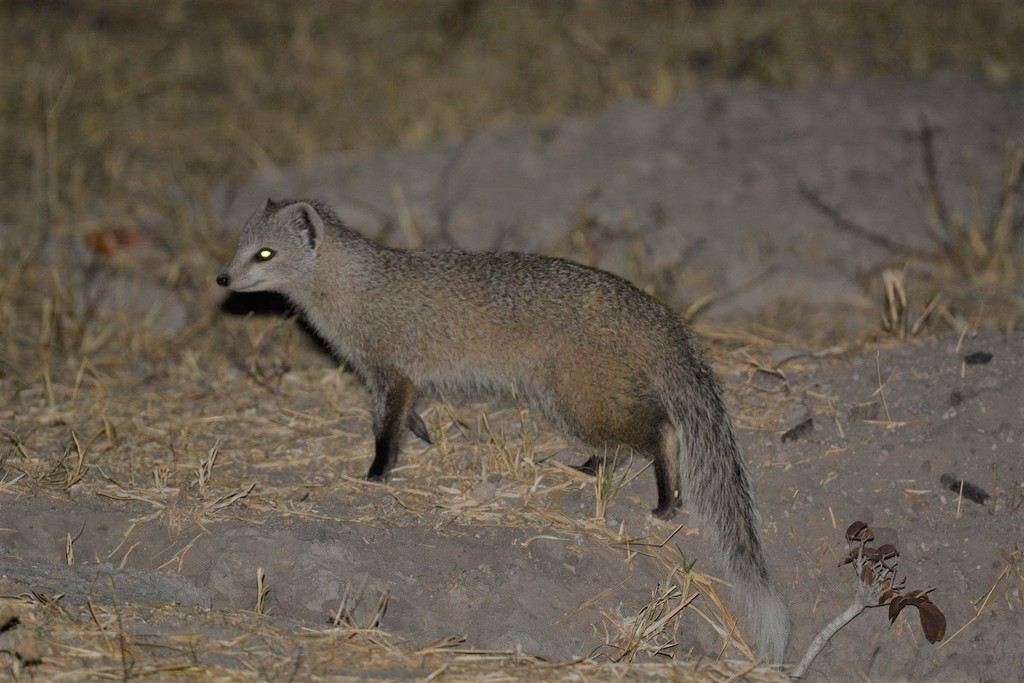
Selous' Mongoose
Paracynictis selousi
Selous' mongoose /səˈluːz/ (Paracynictis selousi) is a carnivore of southern Africa. It is the only member of the genus Paracynictis in the mongoose family.
From the article Selous's mongoose on Wikipedia (CC BY-SA), quoted section by section
Range & habitat
Selous's mongoose is endemic to Southern Africa. Its range includes Angola, Zambia, Malawi, Namibia, Botswana, Zimbabwe, Mozambique, and South Africa.
Wikipedia: “Distribution and habitat”
What it does
The Selous's mongoose is a nocturnal species, but has been observed above ground during the day. Although usually solitary, mongooses will sometimes form pairs, and it is not uncommon to see females with young. The Selous's mongoose digs its own burrows, but may opportunistically use those of other animals. The Selous's mongoose can defend itself by expelling strong-smelling secretion from its anal gland. Its white-tipped tail may be an indication of this ability. The Selous's mongoose's primary source of food is invertebrates. It also feeds on small rodents, amphibians, reptiles, and birds. The front claws of the mongoose are ideally adapted to search for subterranean beetle larvae. The species will dig through tufts of grass or leaf litter to find food. Litters are usually made up of two to four young, which are born from August to March.
Wikipedia: “Behavior”
In human culture
The mongoose is named after Frederick Selous. Both Selous's mongoose and Selous' mongoose are accepted spellings of the name. The Selous's mongoose has other names in native African language, as follows: Afrikaans: Kleinwitstertmuishond Zulu: Nsengane Tswana: Kgano Shona: Jerenyenje.
== References ==
Wikipedia: “Etymology of the name”
Listen
Looking for field recordings…
Where it lives
Recorded sightings
—
geo-referenced records in GBIF, from museums, herbaria and field observers.
Drag the globe to turn it. Dots are where records exist, not a range map; darker means more records.
In the stacks
Searching the stacks…
Every page naming Paracynictis selousi in the Biodiversity Heritage Library →
This page is assembled live from iNaturalist, GBIF, Wikipedia, the Source Library and the Internet Archive. It is not yet part of the hand-edited codex. iNaturalist taxon 41937.