- Animals
- ›Arthropods
- ›Hexapods
- ›Insects
- ›Winged and Once-winged Insects
- ›Butterflies and Moths
- ›Owlet Moths and Allies
- ›Prominent Moths
- ›Processionary Moths
- ›Thaumetopoea
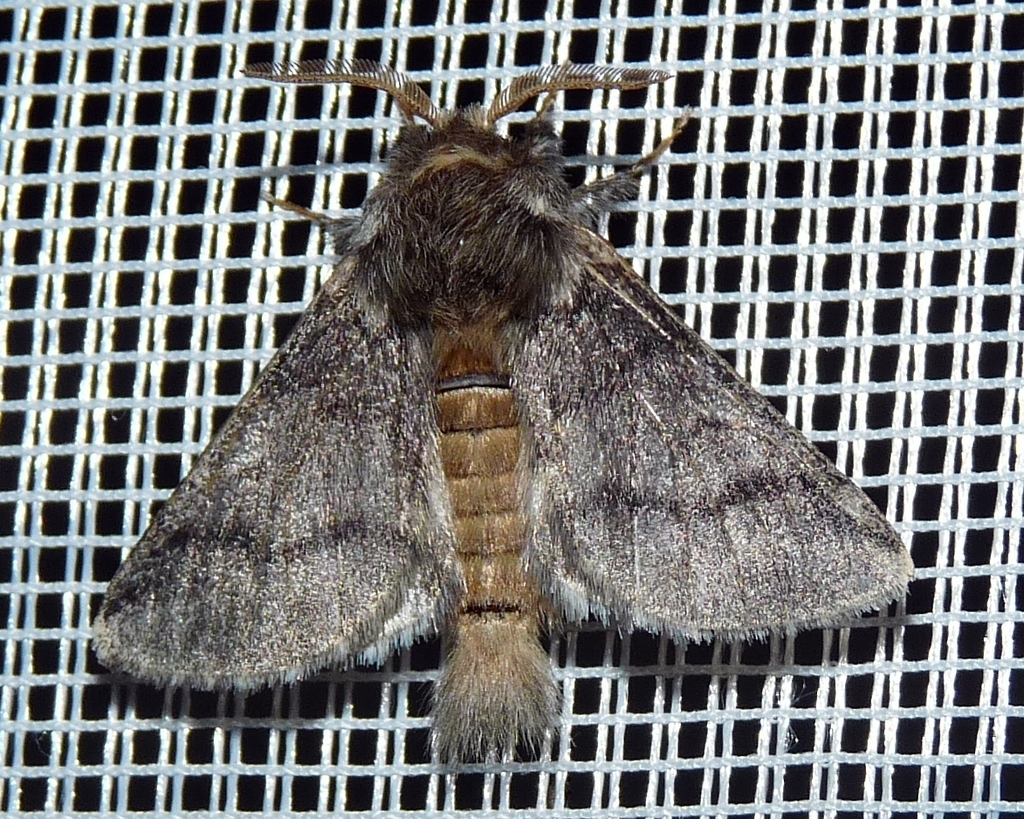
Oak Processionary
Thaumetopoea processionea
The oak processionary (OPM) (Thaumetopoea processionea) is a moth whose caterpillars can be found in oak forests, where they feed on oak leaves, causing significant damage. They travel in nose-to-tail processions (hence their name), often arrow-headed, with a leader followed by rows of several caterpillars abreast. They are a human irritant because of their venomous setae (specifically urticating hairs), which can cause skin irritation and asthma. The species was first described by Carl Linnaeus in his 1758 10th edition of Systema Naturae.
From the article Oak processionary on Wikipedia (CC BY-SA), quoted section by section
Description
The wingspan of adult stage moth is between 25 and 35 millimetres (0.98 and 1.38 in). Their pattern of tan, brown and white makes the adults difficult to see against oak bark. Adults fly during July and August. The larvae construct communal nests of white silk from which they crawl at night in single file, head to tail in large processions to feed on foliage in the crowns of trees, returning in the same manner. Oak is its preferred food source, but the moth also eats the leaves of hazel, hornbeam, sweet chestnut, birch and beech.
Range & habitat
The moths are widely distributed in central and southern Europe, and are occasionally found as far north as Sweden. In the southern countries of Europe the populations are controlled by natural predators, but these predators are not present in northern Europe. Their range is expanding northward, possibly or partly as a result of global warming. The moth now has an established population in the UK. The eggs arrived on oak imported to the Richmond and Ealing areas of London in 2006 and the range of the species in the UK has been steadily expanding despite efforts to eradicate it. In Ireland, an outbreak of oak processionary moth was detected in June 2023 but was successfully eradicated. Ireland subsequently retained its Protected Zone status, with the pest officially recorded as "Absent, pest eradicated" following official surveys.
Wikipedia: “Distribution”
Listen
Looking for field recordings…
Where it lives
Recorded sightings
—
geo-referenced records in GBIF, from museums, herbaria and field observers.
Drag the globe to turn it. Dots are where records exist, not a range map; darker means more records.
In the stacks
Searching the stacks…
Every page naming Thaumetopoea processionea in the Biodiversity Heritage Library →
This page is assembled live from iNaturalist, GBIF, Wikipedia, the Source Library and the Internet Archive. It is not yet part of the hand-edited codex. iNaturalist taxon 417955.