- Plants
- ›Vascular Plants
- ›flowering plants
- ›monocots
- ›grasses, sedges, cattails, and allies
- ›grasses
- ›Oatgrasses, Pampasgrasses, and allies
- ›Oatgrasses, Pampasgrasses, and allies
- ›Rytidosperma
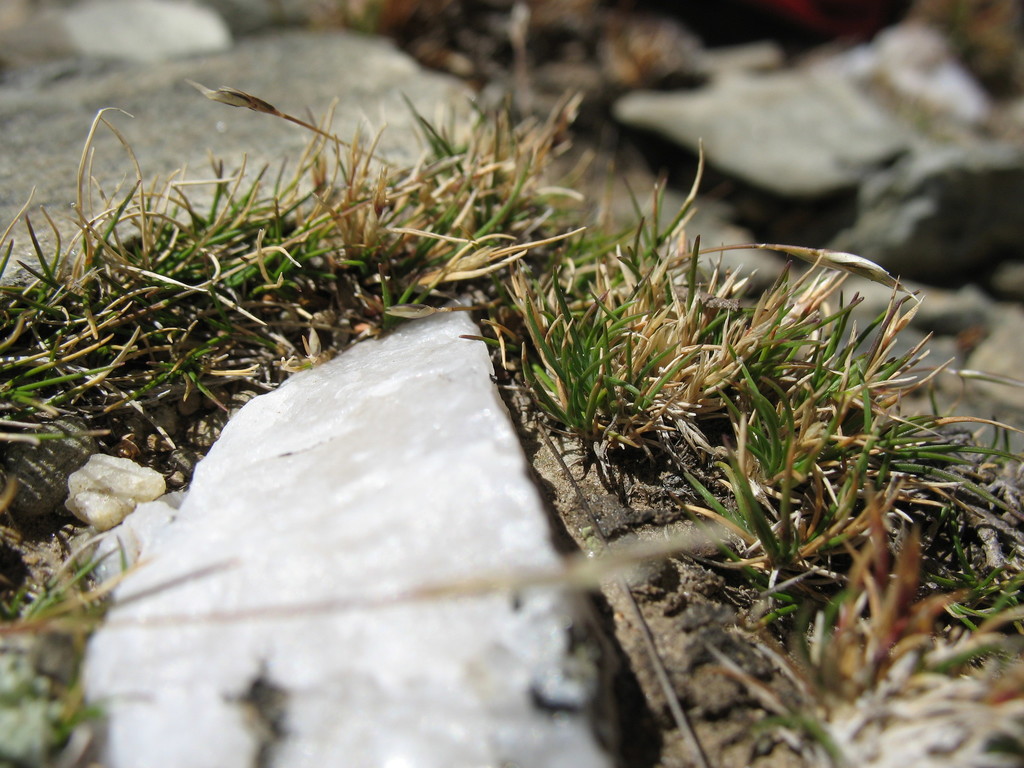
feldmark grass
Rytidosperma pumilum
Rytidosperma pumilum, also known as feldmark grass, is a species of grass in the family Poaceae. It indigenous to Australia and New Zealand and was described as Atropis pumila in 1881 by English-New Zealand botanist Thomas Kirk.
From the article Rytidosperma pumilum on Wikipedia (CC BY-SA), quoted section by section
Description
Feldmark grass is a small and inconspicuous tufted bunchgrass, with its leaves growing to about 3 cm in height, and its flowering stems to about 7 cm. The leaves have broad, papery sheaths which are often curved or twisted spirally. The two to four spikelets are held against the flowering stem, with each containing two to four flowers.
Range & habitat
In Australia feldmark grass has a very restricted occurrence, being limited to about 3 ha of the Main Range of Kosciuszko National Park between Mount Lee and Mount Northcote. It also occurs in alpine parts of New Zealand. It is found only in feldmark communities, which are subject to freezing conditions and severe winds.
Wikipedia: “Distribution and habitat”
In human culture
Rytidosperma: 'wrinkled seed' from the Greek 'rhytidos' = wrinkled and 'sperma' = seed
Wikipedia: “Etymology”
Where it lives
Recorded sightings
—
geo-referenced records in GBIF, from museums, herbaria and field observers.
Drag the globe to turn it. Dots are where records exist, not a range map; darker means more records.
In the stacks
Searching the stacks…
Every page naming Rytidosperma pumilum in the Biodiversity Heritage Library →
This page is assembled live from iNaturalist, GBIF, Wikipedia, the Source Library and the Internet Archive. It is not yet part of the hand-edited codex. iNaturalist taxon 405801.