- Plants
- ›Vascular Plants
- ›flowering plants
- ›monocots
- ›Agaves, Orchids, Irises, and Allies
- ›iris family
- ›Iridoideae
- ›Sisyrinchieae
- ›Libertia
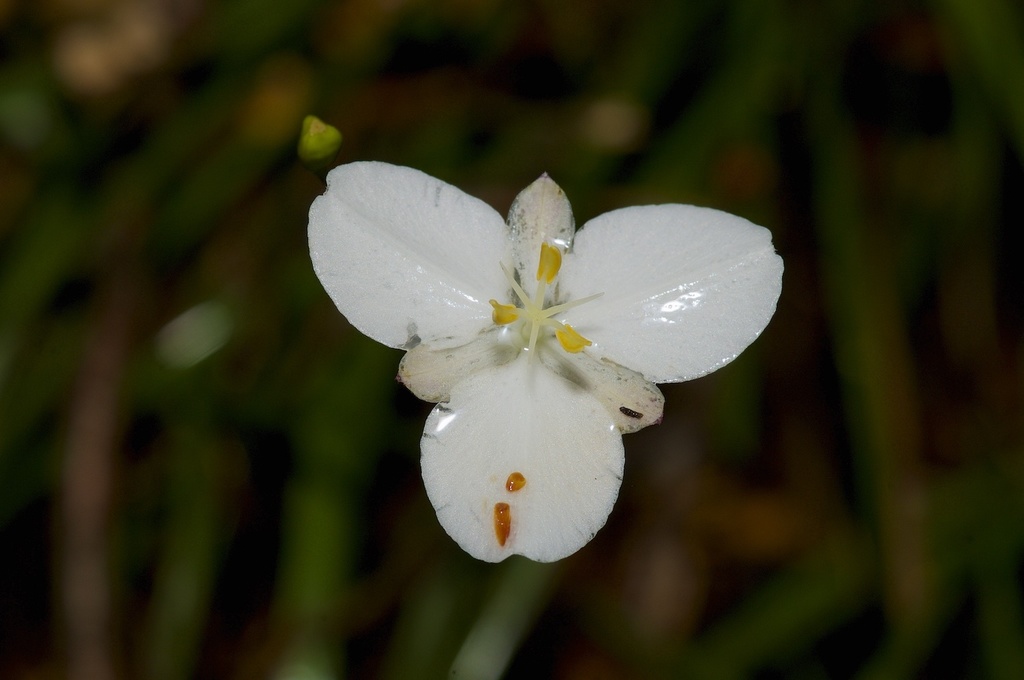
Libertia mooreae
Libertia mooreae is a species of flowering plant in the family Iridaceae. The plant was first described by Dan Blanchon, Brian Grant Murray and John E. Braggins in 2002, and is native to New Zealand.
From the article Libertia mooreae on Wikipedia (CC BY-SA), quoted section by section
Description
Libertia mooreae consists of leafy fans with white flowers. Plants differ morphologically between areas, with specimens found in the Marlborough District being smaller and more grass-like, while plants in the Aorere River area are much larger.
Range & habitat
Libertia mooreae is endemic to New Zealand, known to occur in the northern South Island in the Tasman District and Marlborough District, and the southern North Island, as far north as the Manawatū Gorge. Plants have commonly been found in Nothofagus and Podocarpus forest edges, among mānuka scrub, and has also been found in ridges, cliffs, rocky river banks.
Wikipedia: “Distribution and habitat”
Where it lives
Recorded sightings
—
geo-referenced records in GBIF, from museums, herbaria and field observers.
Drag the globe to turn it. Dots are where records exist, not a range map; darker means more records.
In the stacks
Searching the stacks…
Every page naming Libertia mooreae in the Biodiversity Heritage Library →
This page is assembled live from iNaturalist, GBIF, Wikipedia, the Source Library and the Internet Archive. It is not yet part of the hand-edited codex. iNaturalist taxon 403450.