- Animals
- ›Arthropods
- ›Hexapods
- ›Insects
- ›Winged and Once-winged Insects
- ›Beetles
- ›Ground and Water Beetles
- ›Ground beetles and allies
- ›Ground Beetles
- ›Broscinae
- ›Broscini
- ›Nothobroscina
- ›Mecodema
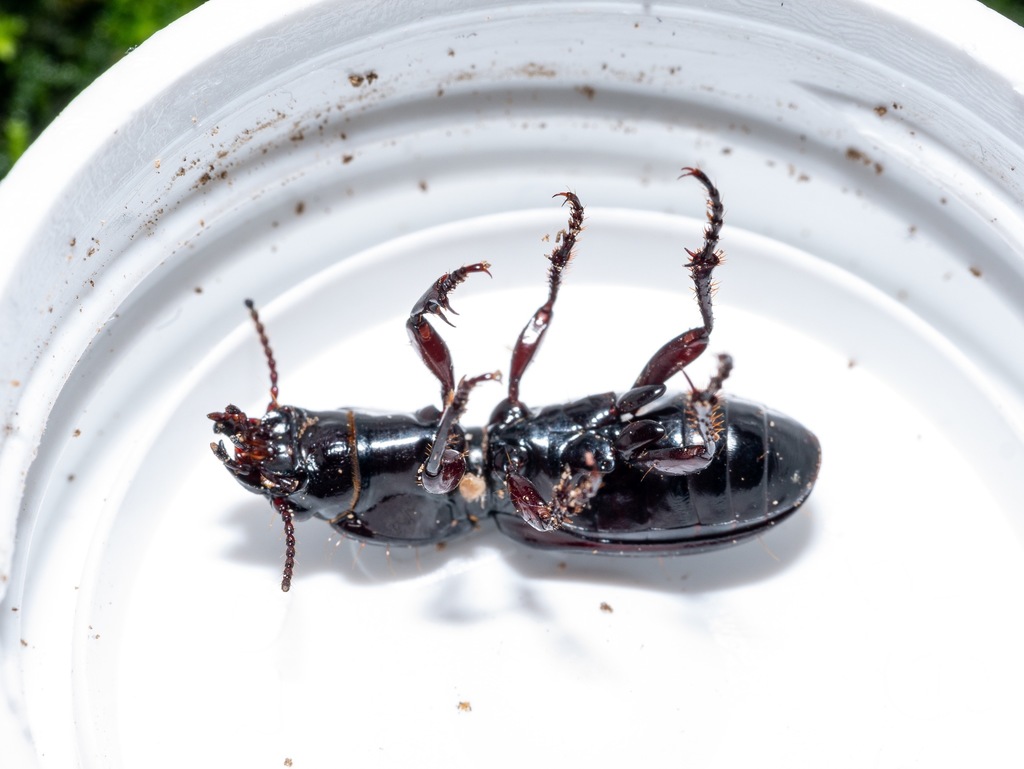
Mecodema oregoides
Mecodema oregoides is a small-bodied ground beetle endemic to New Zealand, and is the southernmost species of the curvidens group. They are moderately sized black beetles that reach up to 16mm (0.63 in) in length. The beetles only occur on Banks Peninsula in Canterbury, where they occupy a range of habitats. Like many other ground beetles, they are nocturnal predators. The adults occur all year round, but are most common from November to March.
From the article Mecodema oregoides on Wikipedia (CC BY-SA), quoted section by section
Description
As adults, the beetles are 12-16mm (0.47-0.63 in) in length. The body is a uniform black colour and is convex in shape. The fovea of the prothorax is not well defined. The ridge of the prothorax is narrow and reaches the anterior angle. The striations of the elytra are evenly spread out and have small punctures. Setiferous punctures (depressions in the body with a hair sticking out of them) are present on the clypeus (both sides of it) and on the third, fourth and fifth ventrites (segments on the underside of the abdomen).
Range & habitat
This species is endemic to New Zealand. It is only found on Banks Peninsula in the Canterbury region of the South Island. They are known to occur in native habitat such as forests, scrublands, and tussock grasslands, but also occur in human modified habitat such as gardens and farmland.
Wikipedia: “Distribution and habitat”
What it does
Based on the morphology of their mouthparts, they are presumed to be predators. They are fairly slow runners that hide under logs and stones during the day, only coming out at night.
Wikipedia: “Behaviour”
In human culture
The adults occur throughout the year. However, they are reported to be more common from November to March. They reportedly lay their eggs during autumn. In one study, the female to male sex ratio was reported to be about 1 to 0.8.
== References ==
Wikipedia: “Life history”
Listen
Looking for field recordings…
Where it lives
Recorded sightings
—
geo-referenced records in GBIF, from museums, herbaria and field observers.
Drag the globe to turn it. Dots are where records exist, not a range map; darker means more records.
In the stacks
Searching the stacks…
Every page naming Mecodema oregoides in the Biodiversity Heritage Library →
This page is assembled live from iNaturalist, GBIF, Wikipedia, the Source Library and the Internet Archive. It is not yet part of the hand-edited codex. iNaturalist taxon 392261.