- Animals
- ›Arthropods
- ›Hexapods
- ›Insects
- ›Winged and Once-winged Insects
- ›Butterflies and Moths
- ›Geometrid and Swallowtail Moths
- ›Geometer Moths
- ›Ennominae
- ›Boarmiini
- ›Cleora
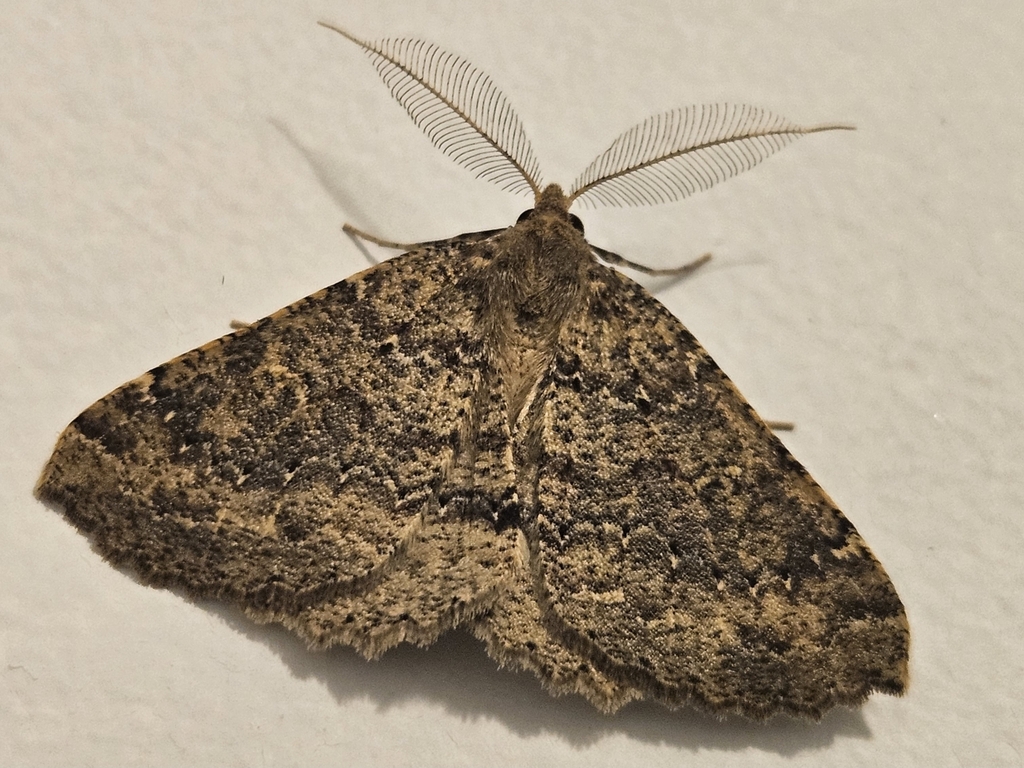
Kawakawa looper
Cleora scriptaria
Cleora scriptaria, the kawakawa looper moth, is a moth in the family Geometridae. It is endemic to New Zealand.
From the article Cleora scriptaria on Wikipedia (CC BY-SA), quoted section by section
Description
The Kawakawa looper moth varies considerably in both colour and size during its adult stage of life. The coloration of the Kawakawa looper moth has many variations with the most common having yellow/ brown mottled forewings. Other variations include big yellow patches on darker coloured wings. Both male and female moths have unique spots located on the middle of their wings that range from black to white and cream. The sexes can be distinguished by the antennae like in most moths, with the males having feathered antennae and the females having filiform antennae. Distinguishing the gender of the moth can be determined by the feathered like antennae that occurs only in the males, whereas the female's antennae remain shorter and featherless. While the moth is feeding, the antenna can be seen in an uncoiled state which is helpful in distinguishing the moth from other related species. The body of adults ranges between 10 – 15 mm long and the wingspan can be between 30 and 55 mm wide. Caterpillars are light green at first, eventually transitioning to a light brown as they age.
Range & habitat
Cleora scriptaria is endemic to New Zealand. It is fairly common across the country.
Wikipedia: “Range”
Listen
Looking for field recordings…
Where it lives
Recorded sightings
—
geo-referenced records in GBIF, from museums, herbaria and field observers.
Drag the globe to turn it. Dots are where records exist, not a range map; darker means more records.
In the stacks
Searching the stacks…
Every page naming Cleora scriptaria in the Biodiversity Heritage Library →
This page is assembled live from iNaturalist, GBIF, Wikipedia, the Source Library and the Internet Archive. It is not yet part of the hand-edited codex. iNaturalist taxon 387683.