On eBird ↗
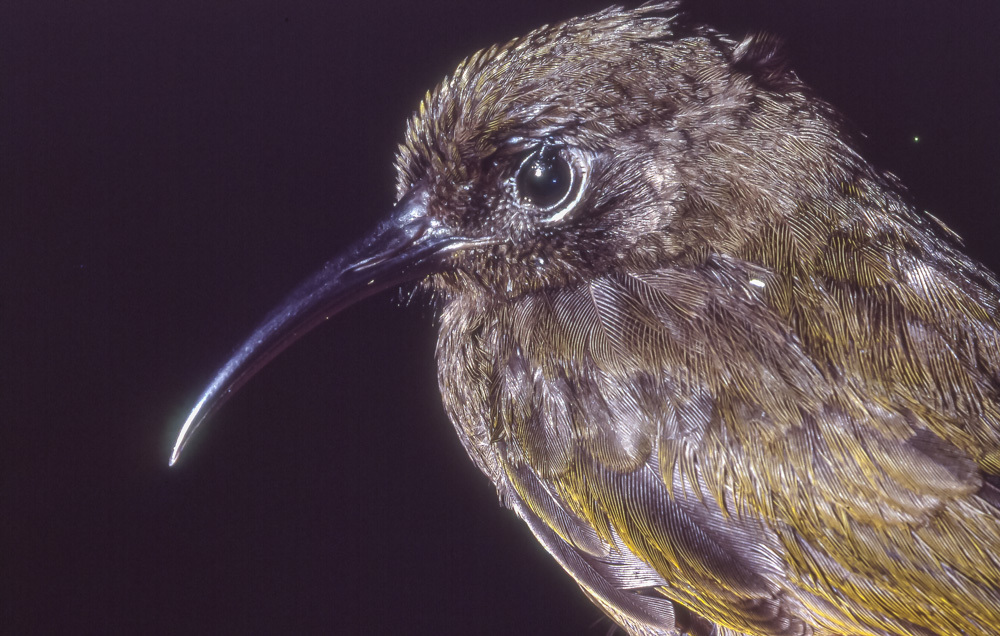
Bismarck Honeyeater
Live sightings near you, the range map, bar charts of when it is seen, and Macaulay Library photos and recordings.
Bismarck Honeyeater
Vosea whitemanensis
Gilliard's honeyeater (Vosea whitemanensis) or the Bismarck honeyeater, is a bird species in the family Meliphagidae. It is the only species placed in the genus Vosea. It is endemic to New Britain. Its natural habitat is subtropical or tropical moist montane forests.
Gilliard's honeyeater was described by the American ornithologist Thomas Gilliard in 1960 from specimens collected in the Whiteman Mountains on the island of New Britain in the Bismarck Archipelago. Gilliard introduced the genus Vosea and coined the binomial name Vosea whitemanensis. The genus name Vosea was chosen to honour the memory of Charles R. Vose (1890–1957), an American businessman, explorer and sponsor. The specific epithet whitemanensis is from the type locality. The species was formerly placed in the genus Melidectes but was transferred to its own genus Vosea based on the results of a molecular phylogenetic study published in 2019. The species is monotypic: no subspecies are recognised.
Listen
Looking for field recordings…
Where it lives
Recorded sightings
—
geo-referenced records in GBIF, from museums, herbaria and field observers.
Drag the globe to turn it. Dots are where records exist, not a range map; darker means more records.
In the stacks
Searching the stacks…
Every page naming Vosea whitemanensis in the Biodiversity Heritage Library →
This page is assembled live from iNaturalist, GBIF, Wikipedia, the Source Library and the Internet Archive. It is not yet part of the hand-edited codex. iNaturalist taxon 367632.