- Plants
- ›Vascular Plants
- ›flowering plants
- ›monocots
- ›Aroids, Water Plantains, Seagrass, and allies
- ›Arum Family
- ›Zamioculcadoideae
- ›Zamioculcas
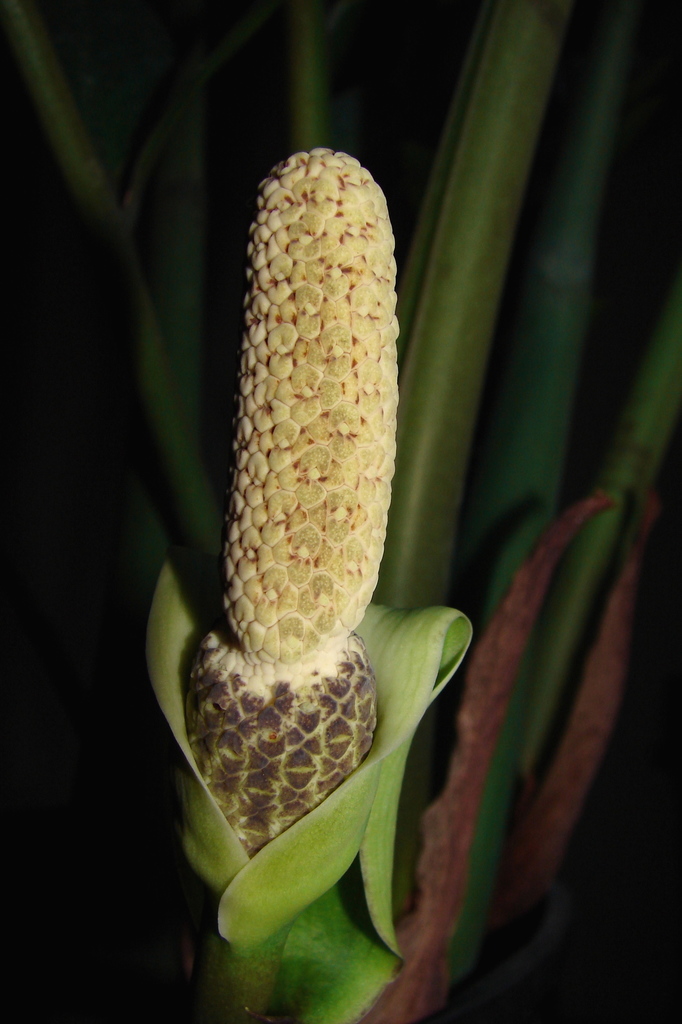
Zanzibar gem
Zamioculcas zamiifolia
Zamioculcas is a genus of flowering plants in the family Araceae, containing the single species Zamioculcas zamiifolia. It is a tropical herbaceous perennial plant, and is native to eastern Africa, including Kenya, KwaZulu-Natal, Malawi, Mozambique, Tanzania, and Zimbabwe. Its common names include Zanzibar gem, Zuzu plant, emerald palm, ZZ plant, aroid palm and eternity plant. It is commonly grown as a houseplant, mainly because it has attractive glossy foliage and is easy to care for. Zamioculcas zamiifolia is winter-hardy in USDA Zones 9 and 10.
From the article Zamioculcas on Wikipedia (CC BY-SA), quoted section by section
Range & habitat
It is native to Kenya, South Africa (KwaZulu-Natal), Malawi, Mozambique, Tanzania, and Zimbabwe.
Wikipedia: “Distribution and habitat”
In medicine
Though little information is available, Z. zamiifolia is apparently used medicinally in the Mulanje District of Malawi and in the East Usambara mountains of Tanzania where juice from the leaves is used to treat earache. In Tanzania, a poultice of bruised plant material from Z. zamiifolia is used as a treatment for the inflammatory condition known as "mshipa". Roots from Z. zamiifolia are used as a local application to treat ulceration by the Sukuma people in north-western Tanzania.
Wikipedia: “Usage in traditional medicine”
Toxicity
Zamioculcas zamiifolia is part of the family Araceae, which is known to contain cyanogenic glycosides, calcium oxalates and perhaps alkaloids. A toxicological experiment using brine shrimp as a lethality assay did not indicate lethality to the shrimp.
How it is grown
It is cultivated as a houseplant. Dutch nurseries began wide-scale commercial propagation of the plant around 1996.
Cultivars. Zamioculcas zamiifolia 'HANSOTI13,' commercially known as 'Zenzi' Zamioculcas zamiifolia 'Dowon,' commercially known as 'Raven', is licensed by Costa Farms. Zamioculcas zamiifolia 'Super Nova' Zamioculcas zamiifolia 'Chameleon'
Temperature. It may survive outdoors as long as the temperature does not fall below around 15 °C (60 °F); though best growth is between 18 and 26 °C (64 and 79 °F) while high temperatures give an increase in leaf production. In temperate regions, it is grown as a houseplant. Overwatering may destroy this plant through tuber rot. Bright, indirect light is best. Some sun will be tolerated.
Propagation. Zamioculcas zamiifolia may be propagated by leaf cuttings: typically, the lower ends of detached leaves are inserted into a moist, gritty growing medium, and the pot is enclosed in a polythene bag. Though the leaves may well decay, succulent bulb-like structures should form in the bag, and these may be potted up to produce new plants. The process may take upwards of one year. The plant can also be propagated by division.
Light. Due to its strong green leaves, it is especially suitable for open, bright rooms. When grown indoors, the plant prefers bright indirect light but will tolerate low light conditions. …
Wikipedia: “Cultivation”
In human culture
The genus Zamioculcas derives its name from the similarity of its foliage to that of the cycad genus Zamia and its kinship to the Araceae genus Colocasia, whose name comes from the word culcas or colcas (from an ancient Middle Eastern name), Arabic qolqas (Egyptian Arabic: قلقاس, IPA: [ʔolˈʔæːs]), i.e. taro. The species name zamiifolia means "leaves like Zamia" and is formed from the botanical name Zamia and the Latin word folium, leaf.
Wikipedia: “Etymology”
Where it lives
Recorded sightings
—
geo-referenced records in GBIF, from museums, herbaria and field observers.
Drag the globe to turn it. Dots are where records exist, not a range map; darker means more records.
In the stacks
Searching the stacks…
Every page naming Zamioculcas zamiifolia in the Biodiversity Heritage Library →
This page is assembled live from iNaturalist, GBIF, Wikipedia, the Source Library and the Internet Archive. It is not yet part of the hand-edited codex. iNaturalist taxon 367277.