- Plants
- ›Vascular Plants
- ›flowering plants
- ›Dicots
- ›Heathers, Balsams, Primroses, and Allies
- ›heath family
- ›blueberries, cranberries, huckleberries, and allies
- ›Gaultherieae
- ›Gaultheria
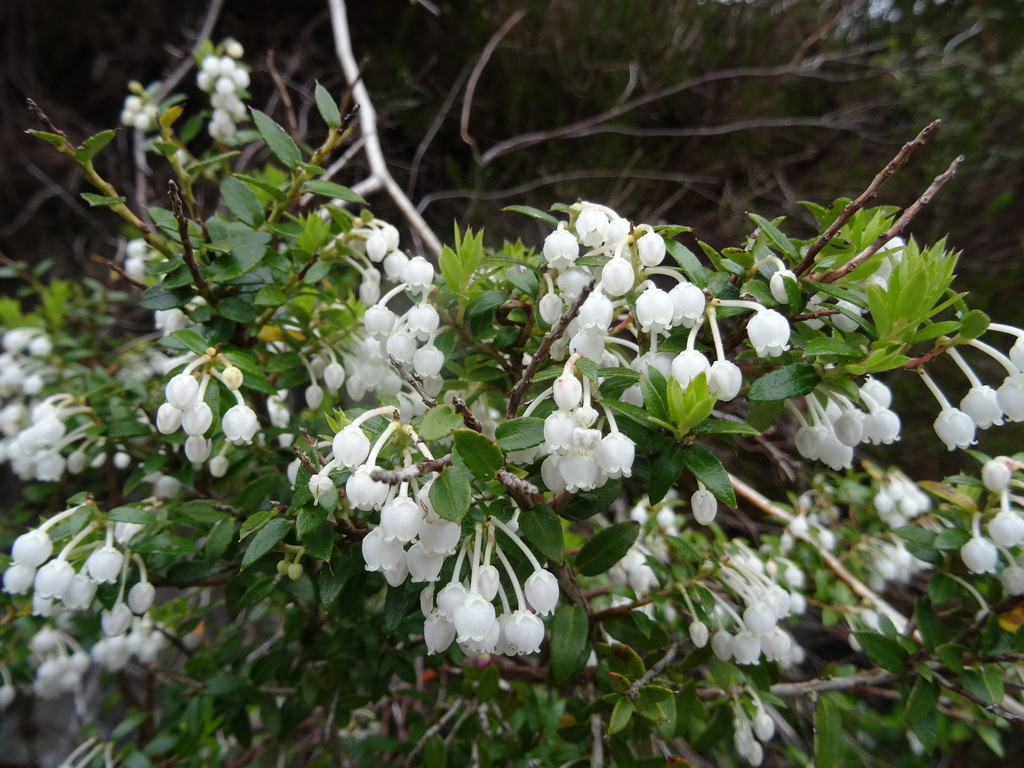
Prickly Heath
Gaultheria mucronata
Gaultheria mucronata (syn. Pernettya mucronata; also known as prickly heath, chaura, or murtillo) is a species of flowering plant in the family Ericaceae, native to southern Argentina and Chile.
In volcanic areas of southern Chile Gaultheria mucronata is one of the dominant plant species above the tree line.
From the article Gaultheria mucronata on Wikipedia (CC BY-SA), quoted section by section
Description
It is a compact, bushy, evergreen shrub with glossy green leaves and solitary white flowers in spring, followed in autumn by showy globose berries up to 1.5 cm (0.59 in) in diameter, in shades from deep plum purple through pink to pure white. It is dioecious, meaning that both male and female plants must be grown together in order to produce fruit. It prefers moist, shaded conditions.
At the table
Its fruit is edible when ripe; they are sweet and juicy but somewhat tasteless, hence useful as survival food.
Wikipedia: “Edibility”
In human culture
Gaultheria is named for Dr. Jean François Gaulthier (1708–56), a French-Canadian botanist from Quebec. The Latin specific epithet mucronata means “prickly”, referring to the foliage.
Wikipedia: “Etymology”
Where it lives
Recorded sightings
—
geo-referenced records in GBIF, from museums, herbaria and field observers.
Drag the globe to turn it. Dots are where records exist, not a range map; darker means more records.
In the stacks
Searching the stacks…
Every page naming Gaultheria mucronata in the Biodiversity Heritage Library →
This page is assembled live from iNaturalist, GBIF, Wikipedia, the Source Library and the Internet Archive. It is not yet part of the hand-edited codex. iNaturalist taxon 366916.