- Fungi Including Lichens
- ›Basidiomycete Fungi
- ›Higher Basidiomycetes
- ›Mushrooms, Bracket Fungi, Puffballs, and Allies
- ›Agaricomycetidae
- ›boletes and allies
- ›boletes
- ›Xerocomoideae
- ›Boletellus
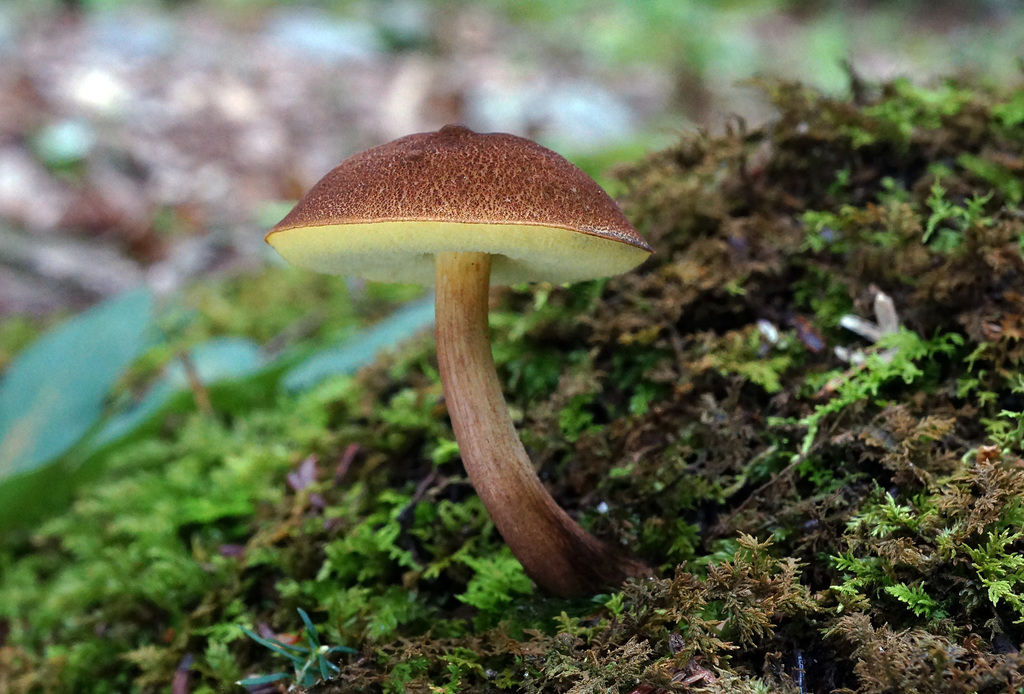
Boletellus chrysenteroides
Boletellus chrysenteroides is a species of fungus in the family Boletaceae. It was first described as Boletus chrysenteroides by mycologist Wally Snell in 1936. Snell later (1941) transferred the species to Boletellus.
From the article Boletellus chrysenteroides on Wikipedia (CC BY-SA), quoted section by section
Description
The brown cap is 2–7 centimetres (3⁄4–2+3⁄4 in) wide. The yellow, sunken pores are 1 millimetre wide and stain blue. The stem is 3.5–10 cm (1+1⁄2–4 in) long and 6–12 mm (1⁄4–1⁄2 in) wide. The flesh is whitish, staining blue. The spore print is olive-brown.
Similar species. It is similar to Xerocomellus species, including X. chrysenteron.
Range & habitat
It can be found in eastern North America from June to September. It prefers rotting wood, near oak or hemlock.
Wikipedia: “Distribution and habitat”
Where it lives
Recorded sightings
—
geo-referenced records in GBIF, from museums, herbaria and field observers.
Drag the globe to turn it. Dots are where records exist, not a range map; darker means more records.
In the stacks
Searching the stacks…
Every page naming Boletellus chrysenteroides in the Biodiversity Heritage Library →
This page is assembled live from iNaturalist, GBIF, Wikipedia, the Source Library and the Internet Archive. It is not yet part of the hand-edited codex. iNaturalist taxon 350195.