- Plants
- ›Vascular Plants
- ›flowering plants
- ›Dicots
- ›Sunflowers, Bellflowers, Fanflowers, and Allies
- ›Sunflowers, Daisies, Asters, and Allies
- ›Asteroideae
- ›groundsels and allies
- ›Senecioninae
- ›Senecio
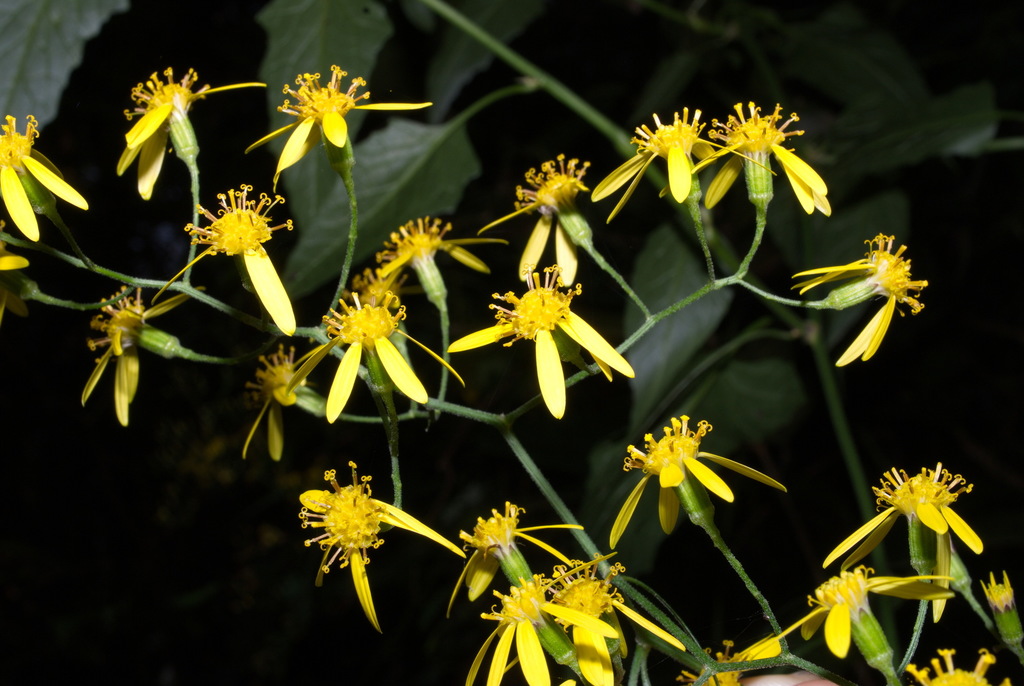
climbing senecio
Senecio scandens
Senecio is a genus of flowering plants in the daisy family (Asteraceae) that includes groundsels and some ragworts. Variously circumscribed taxonomically, the genus Senecio is one of the largest genera of flowering plants. Plants of the World Online currently accepts 1,482 species.
From the article Senecio on Wikipedia (CC BY-SA), quoted section by section
Description
The flower heads are often rayed (though the type species Senecio vulgaris does not have ray florets), with the heads borne in branched clusters, and usually completely yellow, but green, purple, white and blue flowers are known as well. In its current circumscription, the genus contains species that are annual or perennial herbs, shrubs, small trees, aquatics or climbers.
Wikipedia: “Morphology”
Range & habitat
The genus Senecio is distributed almost worldwide. It is one of the few genera occurring in all five regions with a Mediterranean climate. Furthermore, species are found in mountainous regions, including tropical alpine-like areas.
Wikipedia: “Distribution”
In human culture
The genus name Senecio comes from Latin senex 'old man'. The name, as used by Pliny the Elder, refers to the plant’s grey hairiness as soon as fruiting commences.
Wikipedia: “Etymology”
Where it lives
Recorded sightings
—
geo-referenced records in GBIF, from museums, herbaria and field observers.
Drag the globe to turn it. Dots are where records exist, not a range map; darker means more records.
In the old herbals & bestiaries


In the stacks
Searching the stacks…
Every page naming Senecio scandens in the Biodiversity Heritage Library →
This page is assembled live from iNaturalist, GBIF, Wikipedia, the Source Library and the Internet Archive. It is not yet part of the hand-edited codex. iNaturalist taxon 343362.