- Plants
- ›Vascular Plants
- ›flowering plants
- ›Dicots
- ›Mints, Plantains, Olives, and Allies
- ›Mint Family
- ›Nepetoideae
- ›Mentheae
- ›balms, mints, and thymes
- ›Thymus
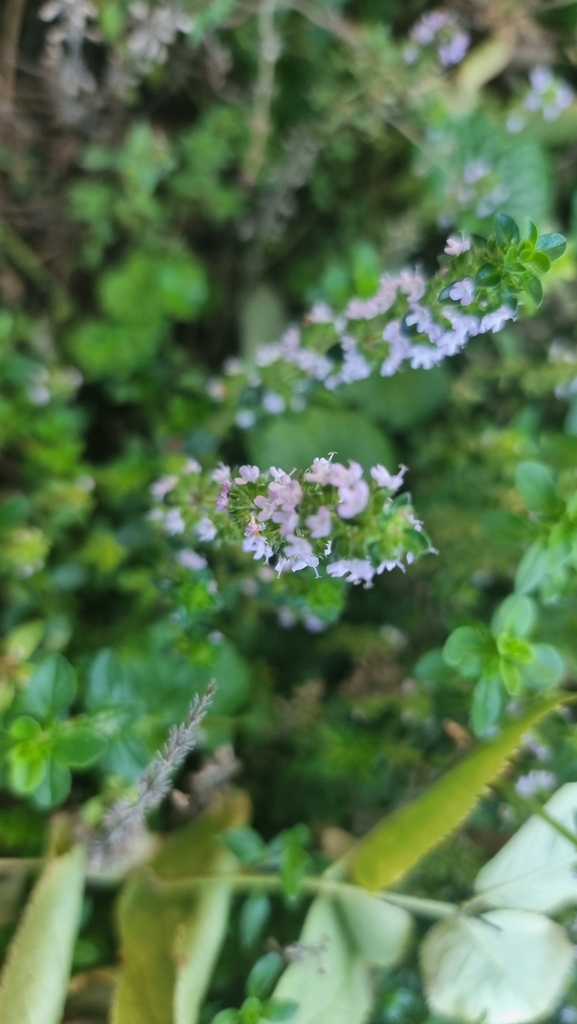
Lemon Thyme
Thymus × citriodorus
Thymus citriodorus, the lemon thyme or citrus thyme, is a lemon-scented evergreen mat-forming perennial plant in the family Lamiaceae. There has been a great amount of confusion over the plant's correct name and origin. Recent DNA analysis suggests that it is not a hybrid or cross, but a distinct species as it was first described in 1811. An analysis in a different study clustered Thymus citriodorus together with Thymus vulgaris, which is considered one of its parent species (see below).
T. citriodorus is an evergreen sub-shrub, growing to 0.1 metres (3.9 in) in height by 0.3 metres (12 in) in spread. It prefers full sun and well draining soil. The bloom period is mid to late summer, with pink to lavender flowers that are a nectar source for bees and butterflies.
From the article Thymus citriodorus on Wikipedia (CC BY-SA), quoted section by section
Range & habitat
There is also no unanimity regarding its origin, as some authors say that Thymus citriodorus has no natural distribution, while others refer to it as native to Southern Europe and that it is widely cultivated in the Mediterranean region.
Wikipedia: “Distribution”
At the table
Thymus citriodorus and its cultivars are grown as ornamentals, culinary herbs, and medicinal plants. In landscaping, the plants are often used as groundcovers or for planting in beds, between stepping stones, and in containers. In xeriscaping it is useful in hot, arid regions. The plant is drought-tolerant once established. As nectar-producing plants, they are cultivated in bee and butterfly gardens. The leaves are eaten raw in salads or used as a fresh or dried flavoring herb in cooking and for herbal teas. Other uses include essential oil, folk remedies, antiseptics, respiratory aids, aromatherapy, deodorants, perfumes, skincare and cosmetics.
Wikipedia: “Uses”
Where it lives
Recorded sightings
—
geo-referenced records in GBIF, from museums, herbaria and field observers.
Drag the globe to turn it. Dots are where records exist, not a range map; darker means more records.
In the old herbals & bestiaries


In the stacks
Searching the stacks…
Every page naming Thymus × citriodorus in the Biodiversity Heritage Library →
This page is assembled live from iNaturalist, GBIF, Wikipedia, the Source Library and the Internet Archive. It is not yet part of the hand-edited codex. iNaturalist taxon 326761.