- Animals
- ›Arthropods
- ›Hexapods
- ›Insects
- ›Winged and Once-winged Insects
- ›Butterflies and Moths
- ›Hooktip Moths and Allies
- ›Hooktip and False Owlet Moths
- ›False Owlet Moths
- ›Habrosynini
- ›Habrosyne
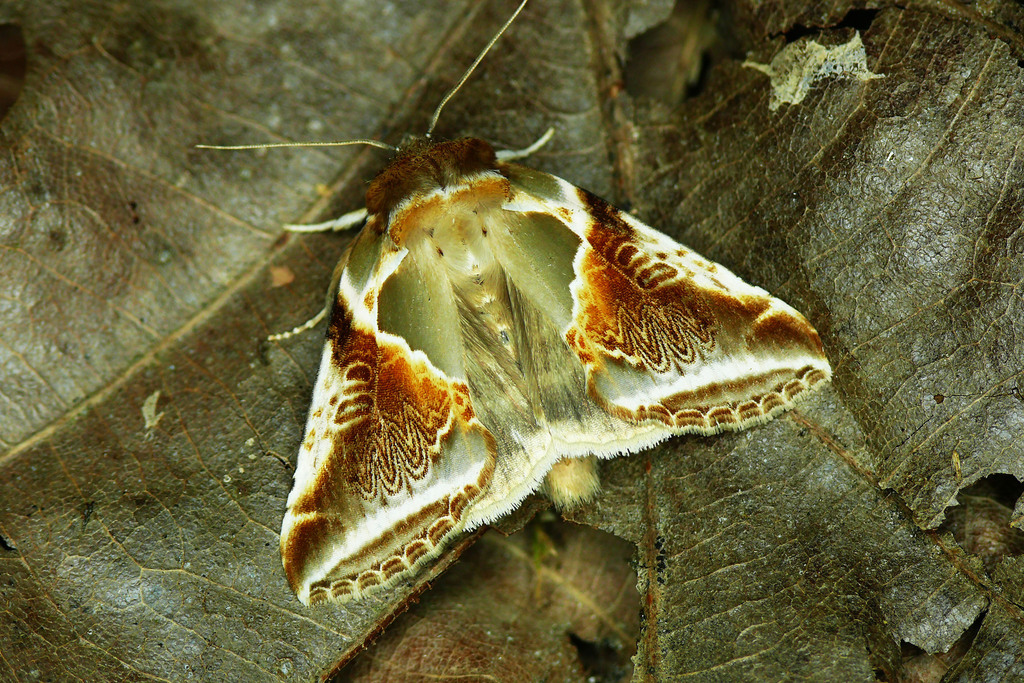
Buff Arches
Habrosyne pyritoides
The buff arches (Habrosyne pyritoides) is a moth of the family Drepanidae. The species was first described by Johann Siegfried Hufnagel in 1766. It is found throughout Europe and is well distributed in the British Isles except the far north of England and all of Scotland. They live in deciduous and coniferous forests with large populations of their foodplants, but also in gardens and parks.
This is a distinctive and attractive species; its grey-brown forewings are marked with bold buff-orange "arches". The hindwings are grey with white margins. The wingspan is 40–45 mm. It flies from June to August[1] and is attracted to light and sugar.
Listen
Looking for field recordings…
Where it lives
Recorded sightings
—
geo-referenced records in GBIF, from museums, herbaria and field observers.
Drag the globe to turn it. Dots are where records exist, not a range map; darker means more records.
In the stacks
Searching the stacks…
Every page naming Habrosyne pyritoides in the Biodiversity Heritage Library →
This page is assembled live from iNaturalist, GBIF, Wikipedia, the Source Library and the Internet Archive. It is not yet part of the hand-edited codex. iNaturalist taxon 322132.