- Animals
- ›Arthropods
- ›Hexapods
- ›Insects
- ›Winged and Once-winged Insects
- ›Beetles
- ›Water, Rove, Scarab, Long-horned, Leaf, and Snout Beetles
- ›Cucujiform Beetles
- ›Longhorn Beetles and Allies
- ›Longhorn Beetles
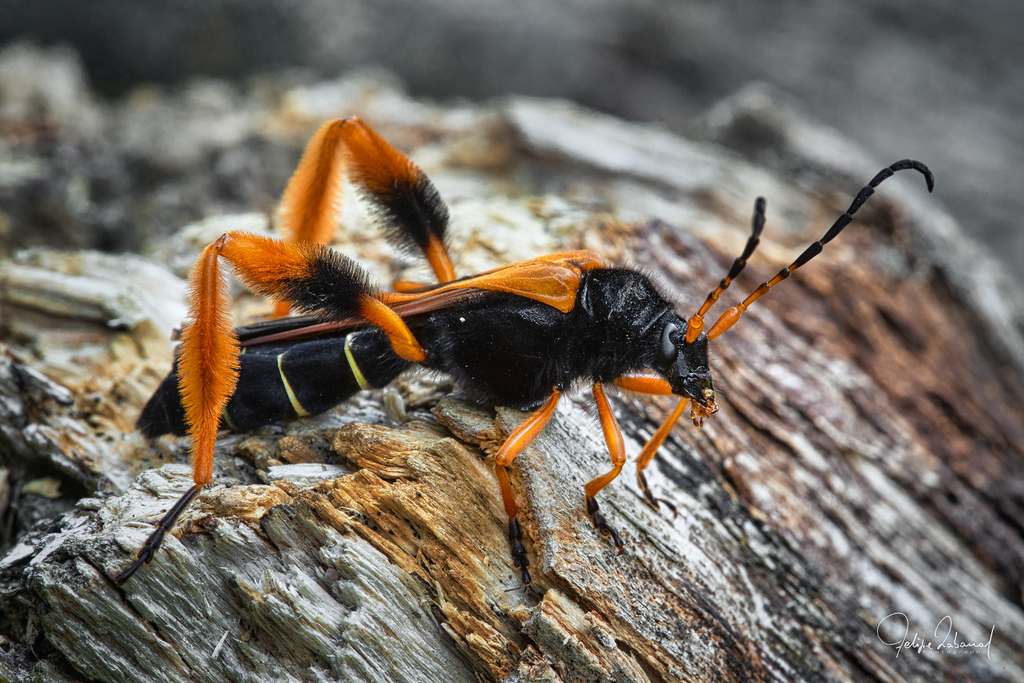
Flower Longhorn Beetles
Lepturinae
Lepturinae, the lepturine beetles or flower longhorn beetles, is a subfamily of the longhorn beetle family (Cerambycidae), containing about 150 genera worldwide. This lineage is most diverse in the Northern Hemisphere. Until recently the subfamily Necydalinae was included within the lepturines, but this has been recently recognized as a separate subfamily. Nine tribes are usually recognized today, with a tenth, Caraphiini, created in 2016. A few genera are of uncertain placement within the subfamily.
Usually among the smaller members of their family, these beetles are of a slender shape – particularly the thorax is markedly less wide than the wings, while the elytra tips are often pointed. They differ from most other longhorn beetles in that the antennae are not directly adjacent to the compound eyes. Hence, the latter are generally oval in outline, rather than having an indentation where the antennae originate, or even being divided by them. In addition, sexual dichromatism is not infrequently seen in lepturines; usually, longhorn beetles are not dimorphic or only have longer antennae in males.
12 branches of this subfamily, most-observed first

Lepturini
tribeLepturini

Rhagiini
tribeRhagiini
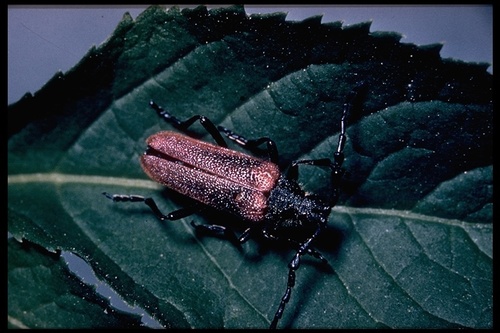
Desmocerini
tribeDesmocerini

Oxymirini
tribeOxymirini

Necydalini
tribeNecydalini
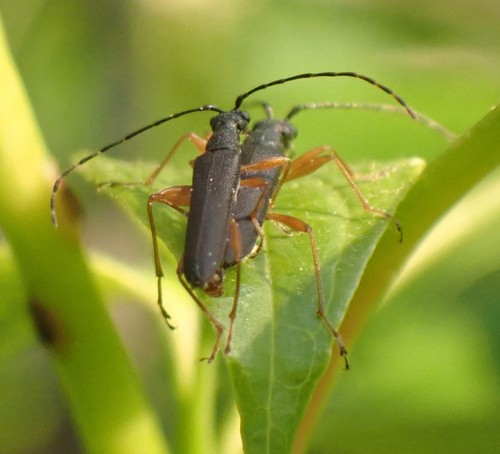
Encyclopini
tribeEncyclopini
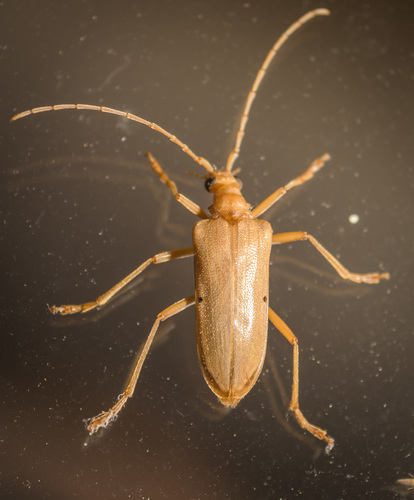
Xylosteini
tribeXylosteini
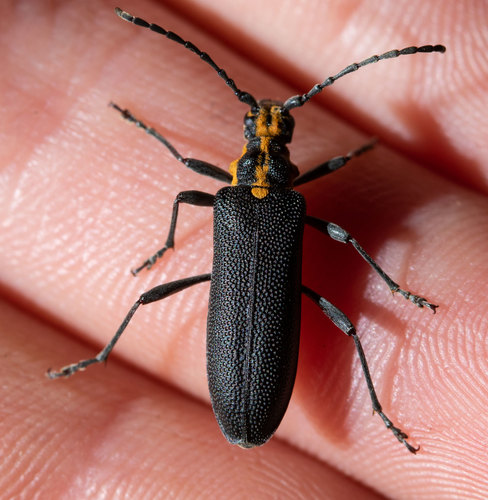
Enoploderini
tribeRhamnusiini

Sachalinobiini
tribeSachalinobiini
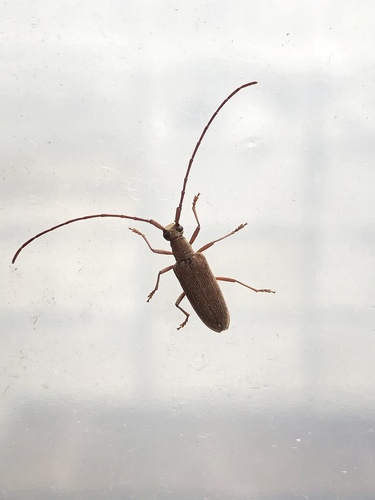
Caraphiini
tribeCaraphiini
Teledapus
genusTeledapus
Teledapalpus
genusTeledapalpus
Where it lives
Recorded sightings
—
geo-referenced records in GBIF, from museums, herbaria and field observers.
Drag the globe to turn it. Dots are where records exist, not a range map; darker means more records.
In the stacks
Searching the stacks…
Every page naming Lepturinae in the Biodiversity Heritage Library →
This page is assembled live from iNaturalist, GBIF, Wikipedia, the Source Library and the Internet Archive. It is not yet part of the hand-edited codex. iNaturalist taxon 321450.