- Plants
- ›Vascular Plants
- ›flowering plants
- ›monocots
- ›Agaves, Orchids, Irises, and Allies
- ›agave and allies
- ›Dragon tree subfamily
- ›nolinas and allies
- ›Nolina
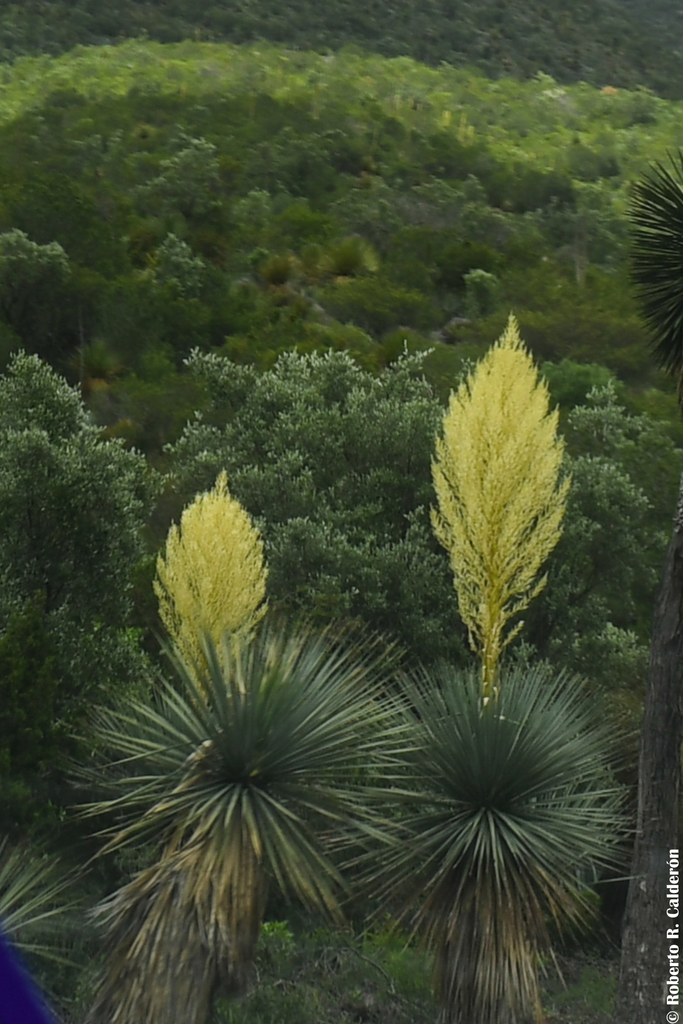
Blue Nolina
Nolina nelsonii
Nolina nelsonii (Blue Nolina or Nelson's Bear Grass), often misspelled Nolina nelsoni, is a flowering plant in the genus Nolina. The species was first described in 1906; in its genus, it is morphologically most similar to Nolina parryi. This extremely drought-tolerant plant is native to the deserts and montane regions in the State of Tamaulipas in northern/northeastern Mexico. It is known to be cold-hardy to at least −12 °C. It develops a trunk measuring from one to several meters high, making it an arborescent member of its genus. The bluish-green leaves, with finely toothed margins, are borne in dense rosettes, each with up to several hundred stiff linear (narrow) leaves up to 70 centimeters long. It is dioecious; upon reaching sexual maturity, its white-flowered inflorescence appears in Spring. The fruit capsules are around 80 mm in length, containing light-brown, spherical to oblong seeds 2–3 mm in diameter. After blooming, the plant's main trunk dies and multiple lateral trunks emerge to take its place.
== References ==
Where it lives
Recorded sightings
—
geo-referenced records in GBIF, from museums, herbaria and field observers.
Drag the globe to turn it. Dots are where records exist, not a range map; darker means more records.
In the stacks
Searching the stacks…
Every page naming Nolina nelsonii in the Biodiversity Heritage Library →
This page is assembled live from iNaturalist, GBIF, Wikipedia, the Source Library and the Internet Archive. It is not yet part of the hand-edited codex. iNaturalist taxon 283783.