
Tutu
Coriaria
Coriaria is the sole genus in the family Coriariaceae, which was described by Linnaeus in 1753. It includes 14 species of small trees, shrubs and subshrubs, with a widespread but disjunct distribution across warm temperate regions of the world, occurring as far apart as the Mediterranean region, southern and eastern Asia, New Zealand (where some are alpine species), the Pacific Ocean islands, and Central and South America.
The leaves are opposite or in whorls, simple, 2–9 centimetres (0.79–3.54 inches) long, without stipules. The flowers are borne in racemes 2–30 cm long, each flower small, greenish, with five small petals. The fruit is a small and shiny black (occasionally yellow or red) berry-like swollen corolla, highly poisonous in several species, though those of C. terminalis are edible. At least a few members of this genus are non-legume nitrogen fixers.
14 branches of this genus, most-observed first
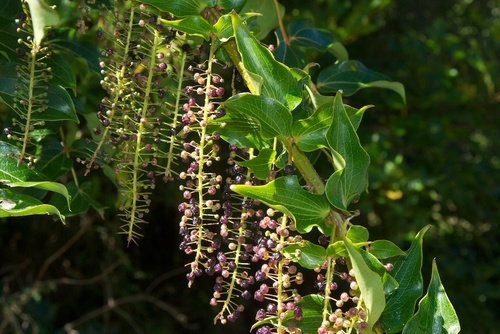
Tree Tutu
speciesCoriaria arborea
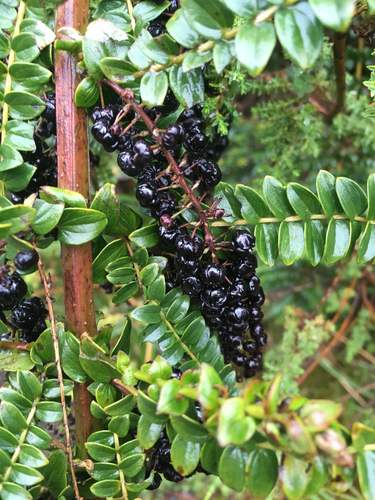
Coriaria ruscifolia
speciesCoriaria ruscifolia
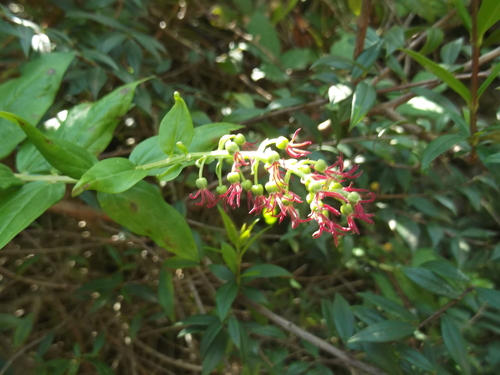
ink plant
speciesCoriaria myrtifolia
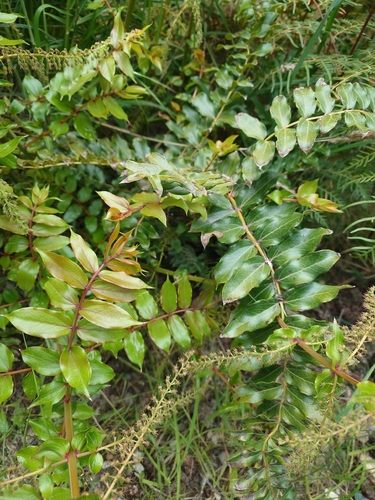
Coriaria sarmentosa
speciesCoriaria sarmentosa
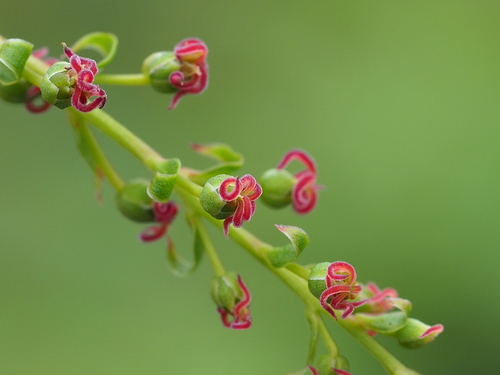
Coriaria intermedia
speciesCoriaria intermedia

Feathery tutu
speciesCoriaria plumosa

Coriaria pteridoides
speciesCoriaria pteridoides
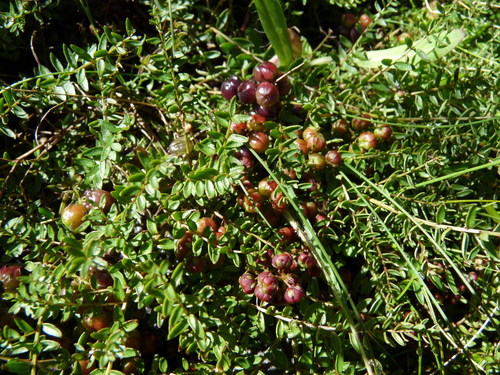
Coriaria angustissima
speciesCoriaria angustissima
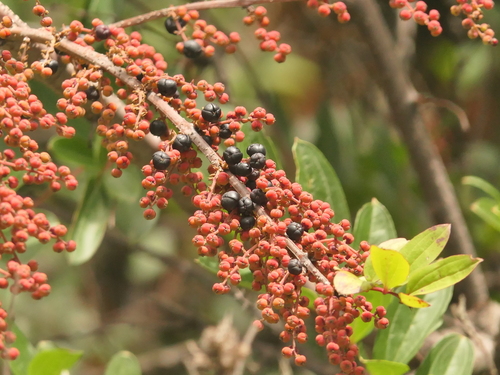
masuri berry
speciesCoriaria nepalensis

Coriaria kingiana
speciesCoriaria kingiana

Coriaria japonica
speciesCoriaria japonica
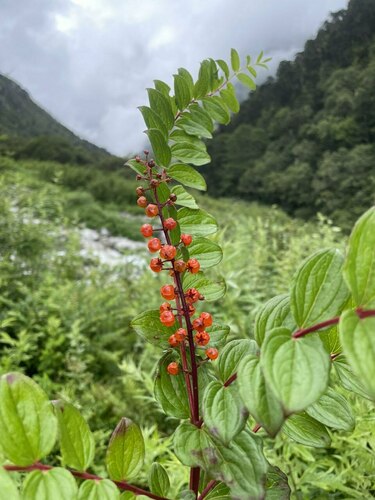
Coriaria terminalis
speciesCoriaria terminalis

Hikurangi tutu
speciesCoriaria pottsiana
Coriaria lurida
speciesCoriaria lurida
Where it lives
Recorded sightings
—
geo-referenced records in GBIF, from museums, herbaria and field observers.
Drag the globe to turn it. Dots are where records exist, not a range map; darker means more records.
In the old herbals & bestiaries


In the stacks
Searching the stacks…
Every page naming Coriaria in the Biodiversity Heritage Library →
This page is assembled live from iNaturalist, GBIF, Wikipedia, the Source Library and the Internet Archive. It is not yet part of the hand-edited codex. iNaturalist taxon 273028.