- Plants
- ›Vascular Plants
- ›flowering plants
- ›Dicots
- ›borages
- ›borage family
- ›Cynoglossoideae
- ›Cynoglosseae
- ›Cynoglossum
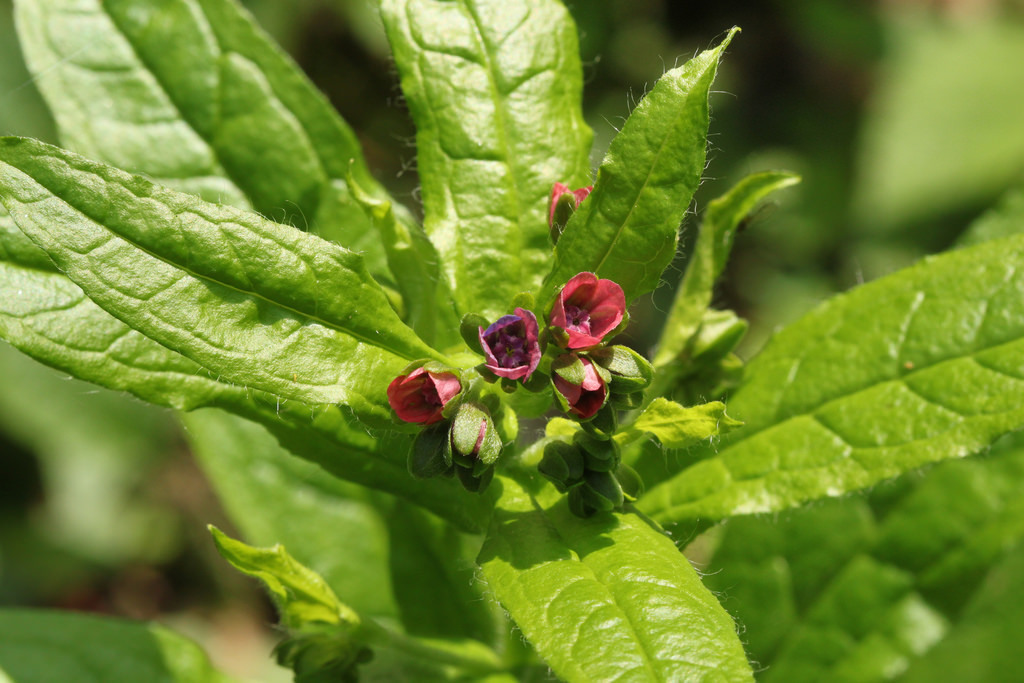
Green Hound's-tongue
Cynoglossum germanicum
Cynoglossum germanicum, the green houndstongue, is a flowering plant species, in the family Boraginaceae, which is native to Europe.
From the article Cynoglossum germanicum on Wikipedia (CC BY-SA), quoted section by section
Description
Cynoglossum germanicum is a biennial or short-lived perennial herbaceous species, growing to a maximum height of 75cm. It is similar to the closely related Cynoglossum officinale, however differs in having glabrous, shiny, light-green leaves and nutlets which are more convex outside and lack a thickened border. The typical habitats of the two species also differ strongly.
Range & habitat
It grows in woodland glades, among deciduous trees, and sometimes hedgerows. It requires warm and nitrogen-rich conditions. It is native to Europe. It has become extinct in Scotland, but persists in England, where it is rare.
Wikipedia: “Habitat and distribution”
In human culture
Cynoglossum comes from the Ancient Greek 'kunoglosson' for hound's or dog's tongue, a reference to the shape and roughness of the leaves. The species epithet germanicum means German, presumably the species was first identified in Germany.
== References ==
Wikipedia: “Etymology”
Where it lives
Recorded sightings
—
geo-referenced records in GBIF, from museums, herbaria and field observers.
Drag the globe to turn it. Dots are where records exist, not a range map; darker means more records.
In the stacks
Searching the stacks…
Every page naming Cynoglossum germanicum in the Biodiversity Heritage Library →
This page is assembled live from iNaturalist, GBIF, Wikipedia, the Source Library and the Internet Archive. It is not yet part of the hand-edited codex. iNaturalist taxon 245582.