- Plants
- ›Vascular Plants
- ›flowering plants
- ›Dicots
- ›Sunflowers, Bellflowers, Fanflowers, and Allies
- ›Sunflowers, Daisies, Asters, and Allies
- ›Asteroideae
- ›paper daisies
- ›cudweeds, everlastings, and pussytoes
- ›Chrysocephalum
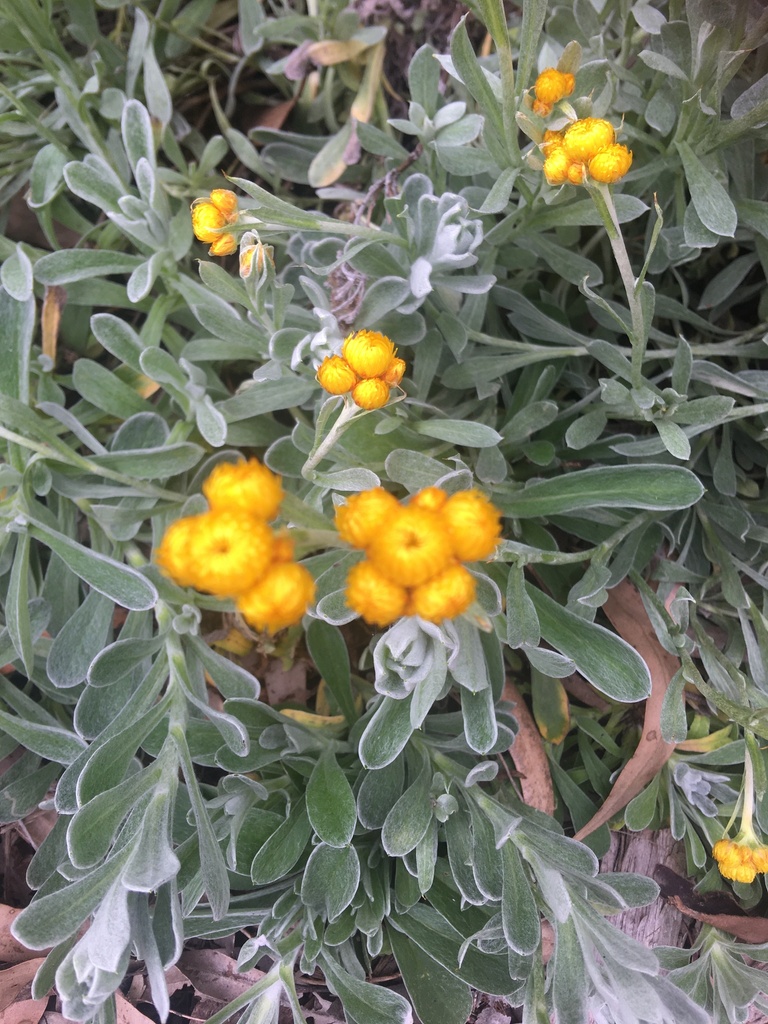
Common Everlasting
Chrysocephalum apiculatum
Chrysocephalum apiculatum, known by the common names common everlasting and yellow buttons, is a perennial herb native to southern Australia. It is a member of the Asteraceae, the daisy family. The name "everlasting" was inspired by its use as a long-lasting cut flower. It is increasing in popularity in Australia as a cottage garden plant, but is still not well known.
From the article Chrysocephalum apiculatum on Wikipedia (CC BY-SA), quoted section by section
Description
The common everlasting grows to around 40 centimeters high, with spreading horizontal stems that turn upwards as they get longer. The elongated silvery grey leaves clasp tightly to the stems and are covered in fine, silky hairs. The flower heads are yellow in color and spherical in shape, around 1 centimeter in diameter each, and often borne in clusters. The florets are minute. Like many daisies, it has seeds which are gradually dispersed on the wind. The seed germinates readily, but has a short viable life.
Range & habitat
The plant grows in full sun on light, well-drained soil in grassy areas. It can tolerate moderately salty wind and dry conditions. Severe pruning will also rejuvenate old plants. It is an important food plant for the Australian painted lady (Vanessa kershawi), a butterfly.
Wikipedia: “Habitat”
Where it lives
Recorded sightings
—
geo-referenced records in GBIF, from museums, herbaria and field observers.
Drag the globe to turn it. Dots are where records exist, not a range map; darker means more records.
In the stacks
Searching the stacks…
Every page naming Chrysocephalum apiculatum in the Biodiversity Heritage Library →
This page is assembled live from iNaturalist, GBIF, Wikipedia, the Source Library and the Internet Archive. It is not yet part of the hand-edited codex. iNaturalist taxon 244345.