- Animals
- ›Arthropods
- ›Hexapods
- ›Insects
- ›Winged and Once-winged Insects
- ›Butterflies and Moths
- ›Hawk, Sphinx, Silk, Emperor, and Allied Moths
- ›Sphinx Moths
- ›Sphinginae
- ›Sphingini
- ›Sphingina
- ›Manduca
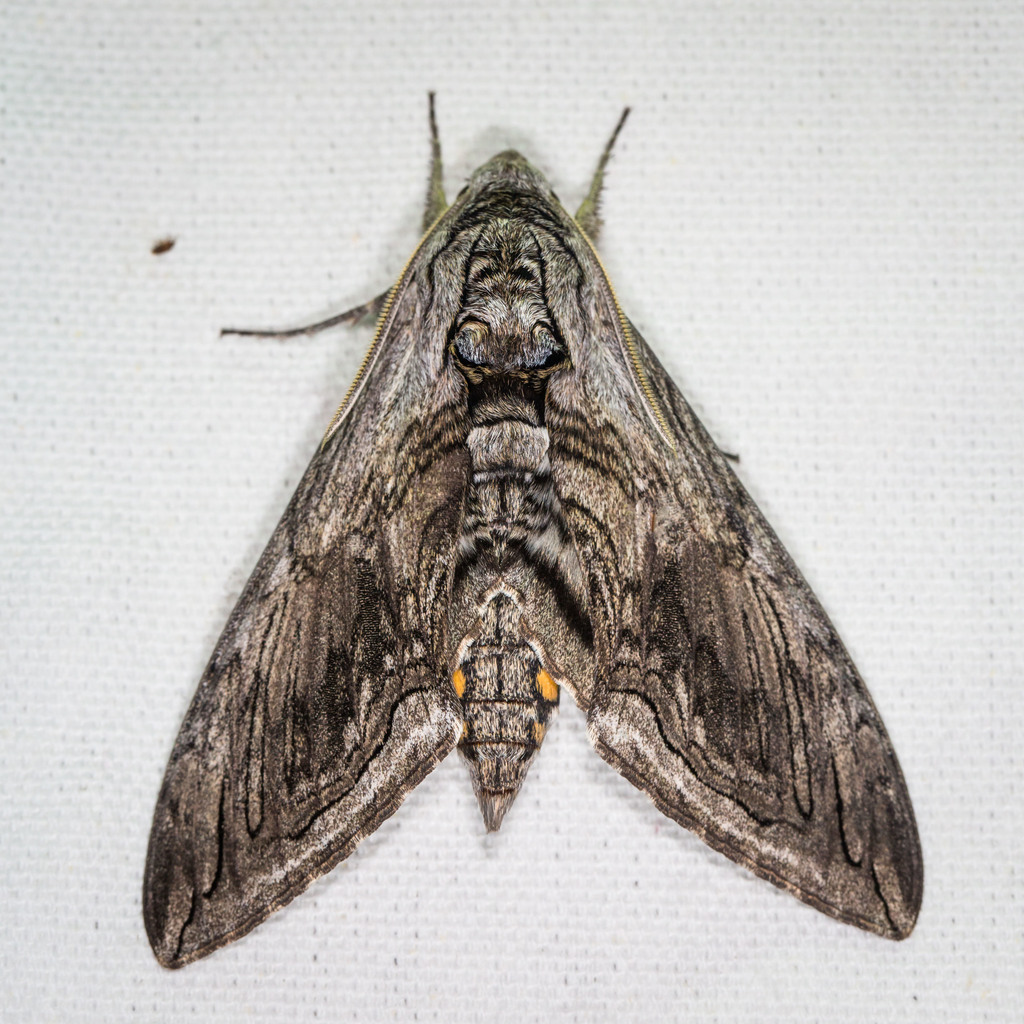
Five-spotted Hawk Moth
Manduca quinquemaculatus
Manduca quinquemaculata, the five-spotted hawkmoth, is a brown and gray hawk moth of the family Sphingidae. The caterpillar, often referred to as the tomato hornworm, can be a major pest in gardens; they get their name from a dark projection on their posterior end and their use of tomatoes as host plants. Tomato hornworms are closely related to (and sometimes confused with) the tobacco hornworm Manduca sexta and Blackburn's sphinx moth Manduca blackburni. This confusion arises because caterpillars of both species have similar morphologies and feed on the foliage of various plants from the family Solanaceae, so either species can be found on tobacco or tomato leaves. Because of this, the plant on which the caterpillar is found does not indicate its species.
From the article Manduca quinquemaculata on Wikipedia (CC BY-SA), quoted section by section
Range & habitat
M. quinquemaculata is found across North America and Australia. The tobacco hornworm, a close relative of the tomato hornworm, tends to dominate the south while tomato hornworms are more prevalent in the northern United States.
Wikipedia: “Range”
What it does
Adults feed on nectar from flowering plants including Datura meteloides, Oenothera caespitosa, and Mirabilis multiflora. Most of the food plants they target have large, fragrant white flowers.
Wikipedia: “Adult diet”
Listen
Looking for field recordings…
Where it lives
Recorded sightings
—
geo-referenced records in GBIF, from museums, herbaria and field observers.
Drag the globe to turn it. Dots are where records exist, not a range map; darker means more records.
In the stacks
Searching the stacks…
Every page naming Manduca quinquemaculatus in the Biodiversity Heritage Library →
This page is assembled live from iNaturalist, GBIF, Wikipedia, the Source Library and the Internet Archive. It is not yet part of the hand-edited codex. iNaturalist taxon 224420.