- Animals
- ›Arthropods
- ›Hexapods
- ›Insects
- ›Winged and Once-winged Insects
- ›Ants, Bees, Wasps, and Sawflies
- ›Narrow-waisted Wasps, Ants, and Bees
- ›Ants, Bees, and Stinging Wasps
- ›Bees and Apoid Wasps
- ›Square-headed Wasps, Sand Wasps, and Allies
- ›Sand Wasps
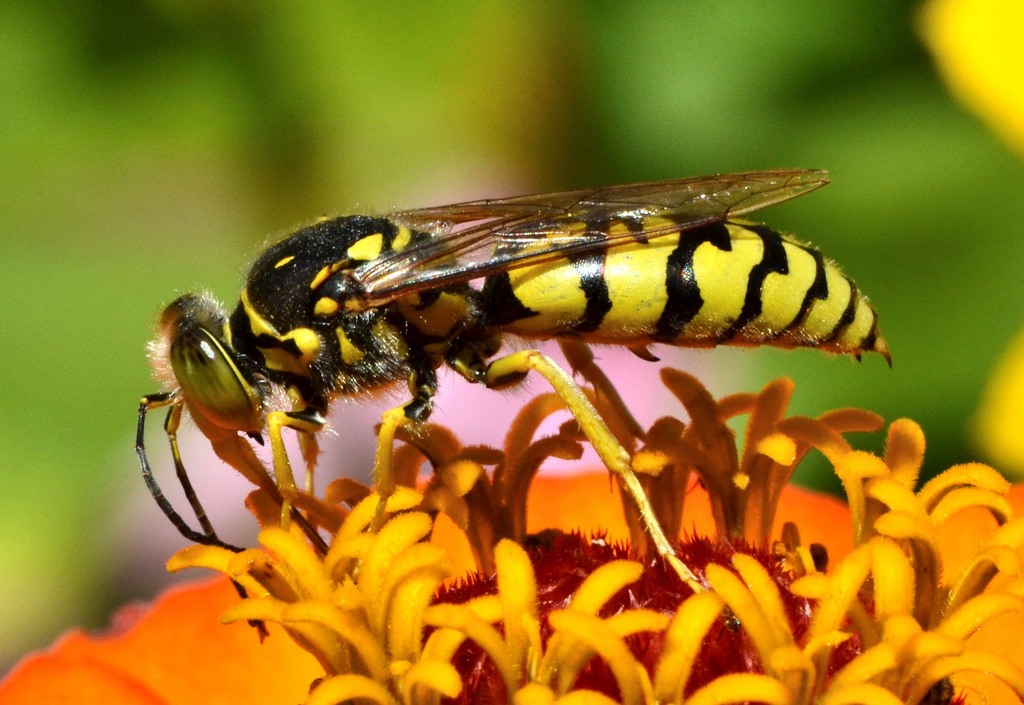
Sand Wasps
Bembicini
The Bembicini, or sand wasps, are a large tribe of bembicid wasps, comprising 20 genera. Bembicines are parasitoids on various groups of insects. The type of prey captured tends to be rather consistent within each genus, with flies (Diptera) being the most common type of prey taken. Nests are typically short, simple burrows, with a single enlarged chamber at the bottom which is stocked with freshly paralysed prey items for the developing wasp larva; the egg may sometimes be laid before the chamber is completely stocked. It is common for numerous females to excavate nests within a small area where the soil is suitable, creating large and sometimes very dense nesting aggregations, which tend to attract various species of parasitic flies and wasps, many of which are cleptoparasites; in some cases, the sand wasps prey on their own parasites (e.g.,), a surprisingly rare phenomenon in the animal kingdom. Although sand wasps are normally yellow and black, some are black and white with bright green eyes.


Where it lives
Recorded sightings
—
geo-referenced records in GBIF, from museums, herbaria and field observers.
Drag the globe to turn it. Dots are where records exist, not a range map; darker means more records.
In the stacks
Searching the stacks…
Every page naming Bembicini in the Biodiversity Heritage Library →
This page is assembled live from iNaturalist, GBIF, Wikipedia, the Source Library and the Internet Archive. It is not yet part of the hand-edited codex. iNaturalist taxon 210927.